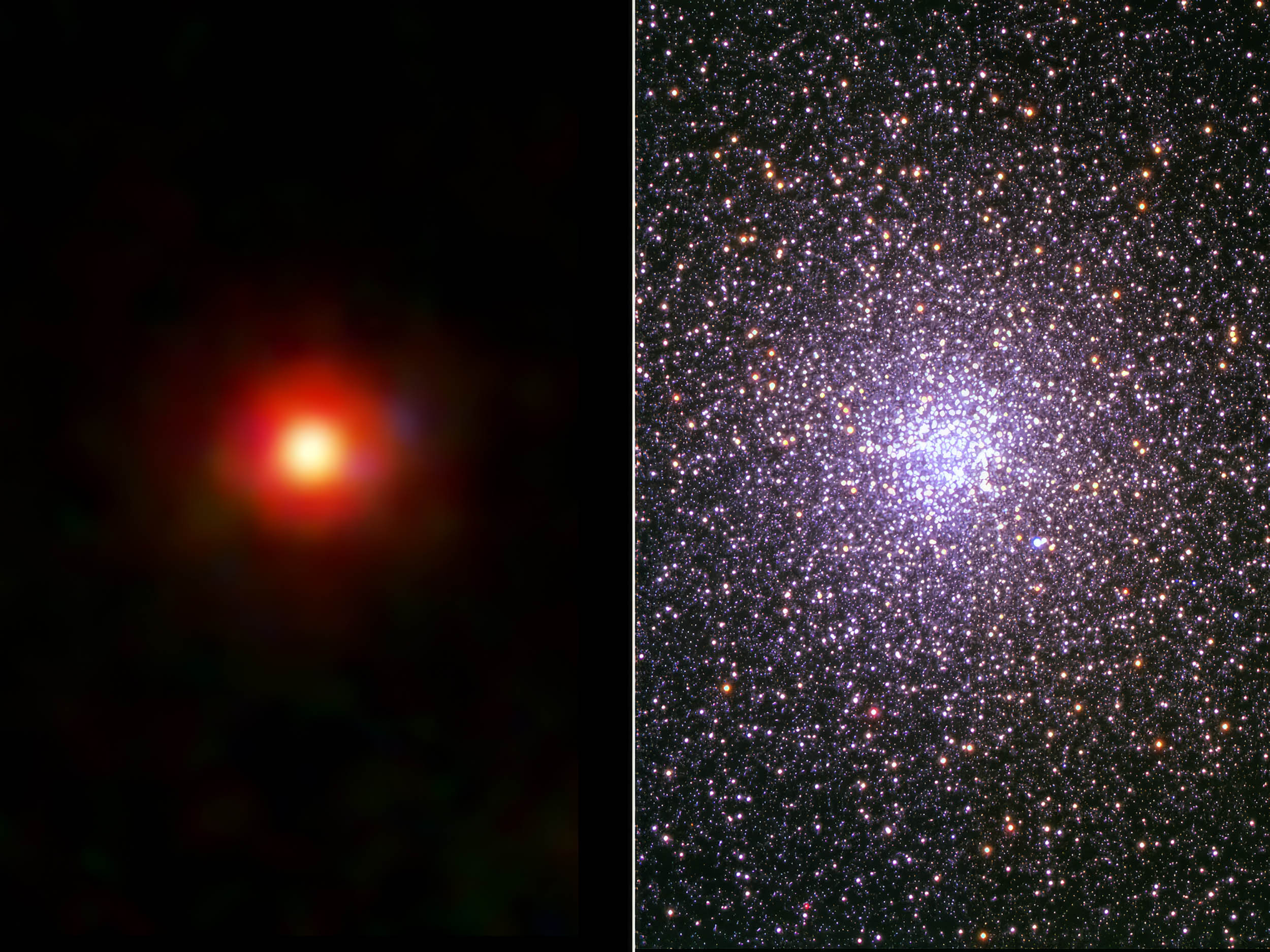
Astronomers have debated the nature of compact red objects detected in the early universe since the Earth spotted them beginning in 2022. Known as Little Red Dots, these objects appeared roughly 600 million years after the Big Bang and seemed to vanish about 1.5 billion years later, according to Space. A new study led by researchers at The University of Texas at Austin suggests that these mysterious objects may represent the earliest stage in the life of globular clusters, acting as newborn star clusters caught in the process of forming.
James Webb Space Telescope Observations Reveal Link to Globular Clusters
Investigating the Chemistry of Ancient Star Groups
Globular clusters are dense collections of ancient stars orbiting galaxies, with the Milky Way containing approximately 150 of them. However, scientists have spent decades trying to explain how these tightly packed groups first formed and why many contain unusual chemical signatures. According to researchers, these clusters typically show unusually high amounts of helium, nitrogen, sodium, and aluminum alongside lower amounts of carbon, oxygen, and magnesium.

This specific pattern indicates nuclear fusion at very high temperatures, much higher than in the cores of even massive normal stars,
said Mike Boylan-Kolchin, a co-author on the study from UT Austin, in a statement published by Space. The research team proposes that a supermassive star with between 1,000 and 10,000 times the mass of the Sun—formed through repeated stellar collisions and mergers in dense early environments—could produce this exact type of extreme heat.
Connecting Past Obscurity to Modern Universes
The new paper argues that a young globular cluster containing a supermassive star at its center could produce nearly the same visual appearance as a Little Red Dot. These may not be just a strange new JWST population with no connection to the universe around us today,
said John Chisholm, an astronomer at UT Austin and lead author on the study, as reported by Earth. Instead, Little Red Dots may persist past the early universe, evolving into something relatively familiar.
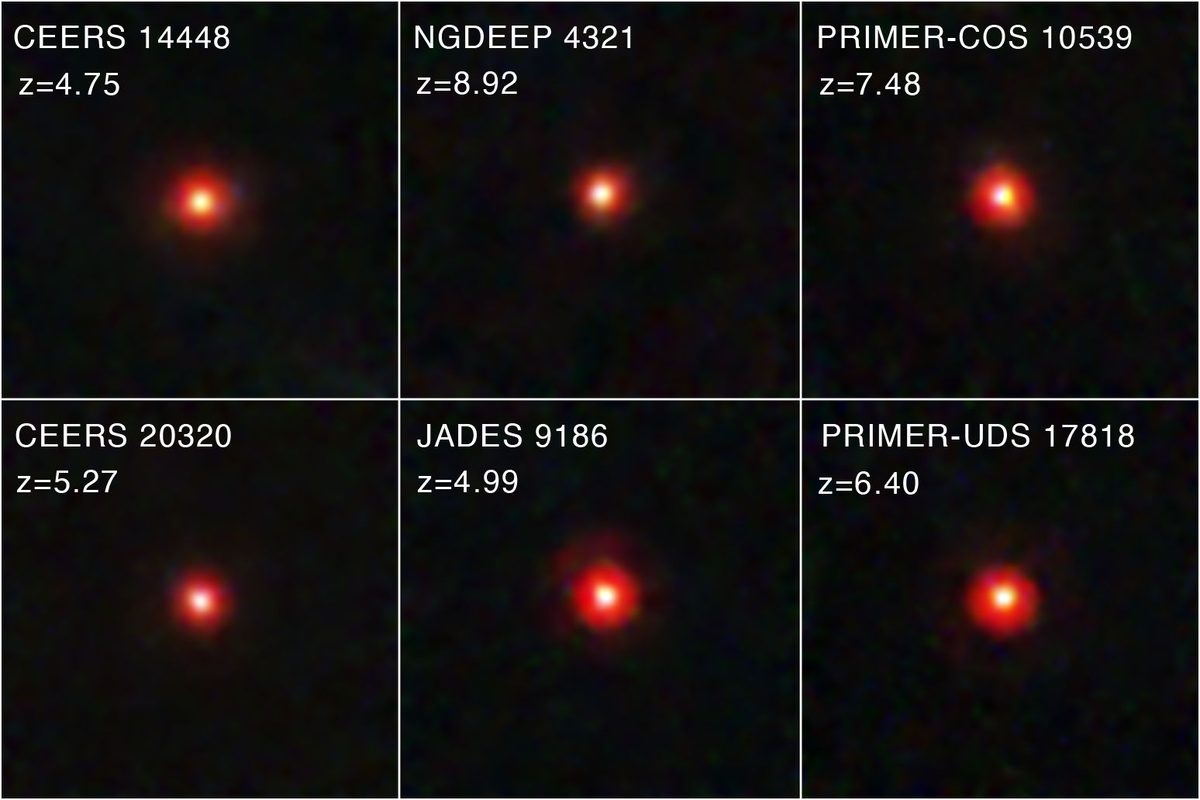
Researchers note that once the central supermassive star dies, the object would no longer possess the bright appearance that initially drew the attention of astronomers, even though the cluster itself could survive for billions of years. This life cycle offers a potential explanation for why Little Red Dots appear during early cosmic epochs and subsequently seem to disappear from observation.
Weighing Timing, Distribution, and Alternative Theories
Beyond chemical patterns, the study highlights that the distribution and estimated masses of Little Red Dots align with modern globular clusters observed in the recent universe. Furthermore, the timeline fits: Little Red Dots emerge around 600 million years after the Big Bang, matching estimates for when the oldest globular clusters began forming.
While the dominant conventional theory suggests Little Red Dots are powered by supermassive black holes consuming gas at the centers of early galaxies, the newly proposed stellar-cluster model provides specific, testable predictions. Future telescope observations will be required to confirm or rule out whether these cosmic objects are indeed baby globular clusters.
- Your Mac is hiding hundreds of useful settings – this $40 lifetime tool unlocks them for you
- YouTube Shorts加入全新縮圖自訂工具,大幅簡化創作者操作流程 – Mashdigi
- China Launches Commercial Space Debris Monitoring Constellation (world-today-news.com)
- China Launches Commercial Space Debris Monitoring Constellation (archyde.com)