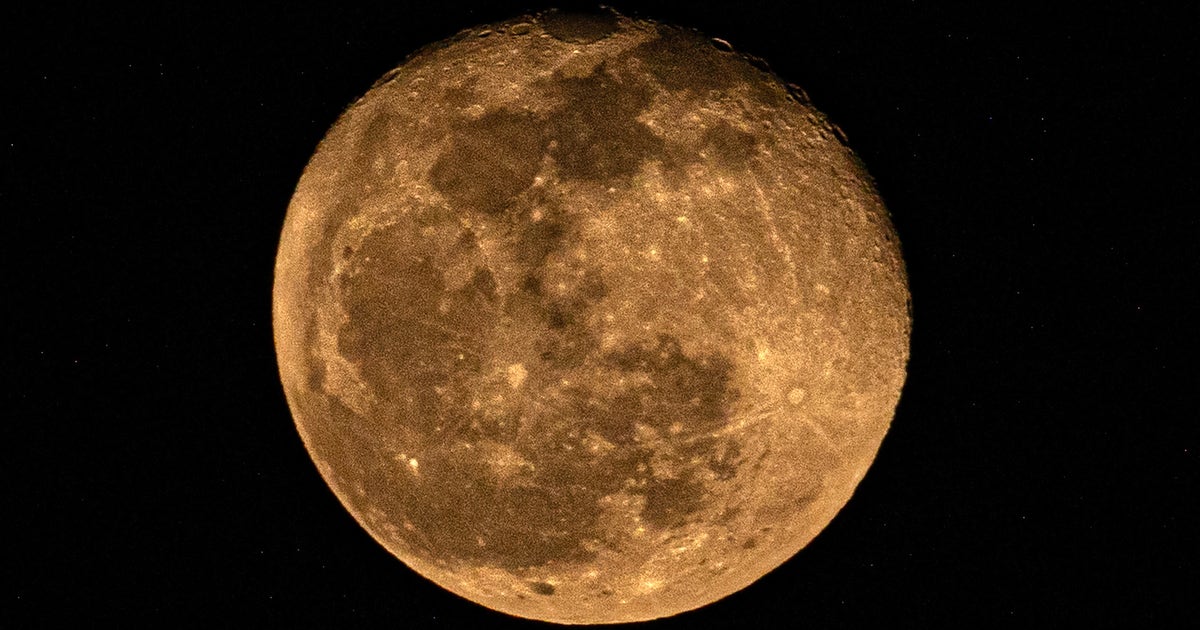
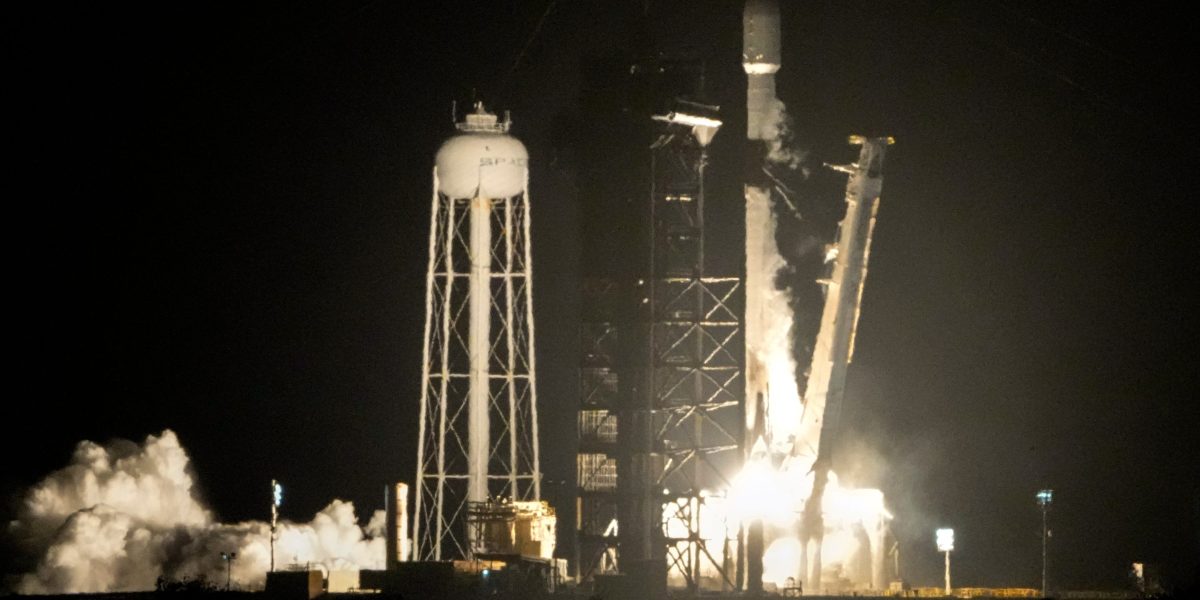
A stray 4-ton SpaceX Falcon 9 upper-stage rocket crashed into the moon on Wednesday morning, travelling at 5,400 mph.
Falcon 9 Upper Stage Impacts the Moon Near Einstein Crater
An abandoned segment of a SpaceX rocket slammed into the moon early on Wednesday. The 40-foot-long Falcon 9 upper stage struck a dusty, barren patch near Einstein Crater on the moon’s sunlit western limb, an area particularly difficult to observe directly from Earth.
While no one observed the collision directly, astronomers confirmed the impact through indirect evidence. A telescope at the Paranal Observatory in Chile detected a sudden shift in emission lines at the predicted time of impact, while the European Southern Observatory’s Very Large Telescope spotted a stream of sodium and lithium stretching for miles into space for at least five to 10 minutes afterwards.
“There’s no doubt in my mind” that the rocket “is now in teeny, little pieces scattered over the moon near Einstein Crater.”
Jonathan McDowell, retired astrophysicist via The Associated Press
Carl Schmidt of Boston University stated he was 100% certain that his team’s observations captured the debris plume.
Orbital Drift and the Growing Problem of Lunar Litter
The abandoned spacecraft originated from a January 2025 mission launched from Cape Canaveral that hoisted two private lunar landers—Firefly Aerospace’s Blue Ghost and ispace’s Resilience—toward the moon. While Blue Ghost successfully touched down as the first private spacecraft to do so, the heavy payload required extra thrust that left the upper stage drifting in a chaotic orbit.
Julianna Scheiman, SpaceX’s director of NASA science and Dragon programs, explained that solar activity mixed with gravity accidentally placed the cylinder on a collision course with the lunar surface. Scheiman noted that the company is actively working with NASA to prevent future wrecks.
Scientists point to the event as a warning sign for space traffic management. In 2022, an untracked Chinese rocket segment unintentionally hit the moon’s far side, creating two craters. With NASA planning a sustainable lunar base and Artemis astronauts slated to touch down by 2028, researchers argue that uncontrolled debris poses an escalating hazard.
“Imagine if that was to hit a crewed lunar base, or if it was to hit somewhere historical, like one of the Apollo sites, or maybe some sensitive equipment, or if the blast zone damaged some scientific equipment or habitation pod.”
Jennifer Millard, astronomer at Fifth Star Labs
Hannah Sergeant of Leicester University warned that sending debris randomly into the moon should not become a habit, noting potential risks to historical sites of special interest. Meanwhile, Dr. Matt Bothwell, an astronomer at the University of Cambridge, characterized the collision as a neat experiment while cautioning that Earth’s orbit is becoming increasingly crowded with human-made objects.
Market Backlash and Stock Price Pressure Follows Earnings Release
The lunar impact coincided with a steep downturn for SpaceX shares following the company’s first quarterly earnings report as a publicly traded entity. Although revenue climbed 92% to $7.81 billion—outpacing consensus estimates of $6.93 billion—investors reacted sharply to a sixfold increase in capital expenditures to $18.4 billion, largely driven by artificial intelligence outlays.
Photo: mirror.co.uk
“As visual metaphors go, the fact a SpaceX rocket crashed into the moon hours after it had delivered its debut quarterly earnings feels almost too on the nose.”
Russ Mould, investment director at AJ Bell, via CNBC
The sell-off pushed the stock down more than 7% in midday trading, eroding Tuesday’s pre-results bounce and dropping the valuation further below its $135 initial public offering price. Chris Beauchamp, chief market analyst at IG, noted that unlike some peers in the AI space, SpaceX does not yet generate meaningful levels of cash flow outside of its profitable satellite internet division, Starlink.
Further market testing arrives on Thursday, when an investor lockup expiry takes effect, potentially releasing more than 900 million shares for sale by insiders whose entry points sat well below the IPO price.
Definitive visual proof of the fresh crater will require aerial imagery from orbit. NASA’s Lunar Reconnaissance Orbiter is scheduled to fly over the impact zone and transmit high-resolution photos of the site, with space agency officials expecting those images next week.
SpaceX Falcon Rocket Crashes Into Moon? Falcon Rocket Stage Could Leave Massive Crater on the Moon