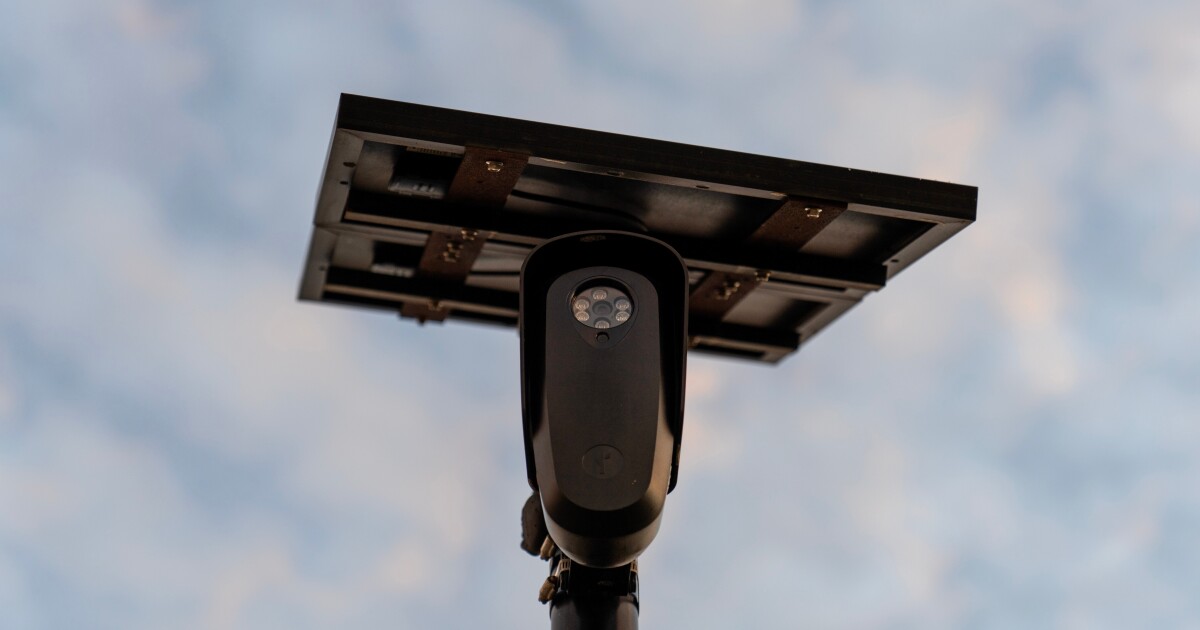
Automated license plate readers like Flock Safety cameras are proliferating across U.S. roads, tracking vehicle movements. While law enforcement praises the nationwide network for solving crimes, a growing backlash from privacy advocates, civil liberties groups, and local communities has sparked protests, lawsuits, and contract cancellations nationwide.
The Rapid Rise of Automated License Plate Readers Across America
What started as a quiet rollout has transformed into a nationwide surveillance infrastructure. Automated license plate reader systems, primarily built by tech company Flock Safety, have expanded rapidly since beginning to appear across the country in 2020. Public estimates suggest roughly 90,000 Flock-branded cameras now operate in the United States, while the company reports that more than 12,000 customers use its products across every state except Alaska.

The physical footprint of the technology is deliberately unobtrusive. Most devices look like small black boxes mounted on utility poles or roadside signs, powered by small solar panels or batteries rather than hardwired into municipal power grids. Because they rely on cellular connections to transmit data to the cloud, municipalities and private entities can install them quickly.
How Flock Cameras Track Vehicles and Build Searchable Movement Records
Unlike ordinary traffic monitors or toll cameras, Flock units are designed to capture far more than a simple string of letters and numbers. Artificial intelligence and machine learning software then analyze those images to extract what the company calls a vehicle fingerprint.
The software analyzes images of vehicles and extracts characteristics such as license plates . . .
These features include vehicle make, model, color, body style, damage, aftermarket wheels, bumper stickers, and roof racks. According to security experts, these details become searchable entries in a cloud database, allowing investigators to query partial license plate numbers or specific vehicle configurations. Police departments use the system to receive instant alerts when a camera detects a plate tied to a stolen vehicle, missing person, or arrest warrant.
However, privacy advocates argue that connecting these local sightings into a national network changes the constitutional calculus of public observation. While an individual camera captures only a single moment, a synchronized network aggregates those data points over time.
A network is different, particularly when it involves lots of cameras, because over time it will become a comprehensive record of someone's movements.
Law Enforcement Defense Versus Bipartisan Privacy Backlash
Police agencies defend the technology as an indispensable investigative asset. In Abilene, Texas, the police department positions 13 fixed Flock cameras along major arterial routes at an annual cost of 70,000 dollars. Police emphasize that the system cannot record conversations, identify drivers or passengers, employ facial recognition, or track vehicles continuously via GPS.

Abilene Police Chief Rondell Seratte noted that officers must have a legitimate law enforcement purpose to query the database, with each search fully documented and reviewable.
Yet, opposition to the technology has galvanized an unusual political coalition. Chad Marlow, a senior policy counsel at the ACLU, observed that resistance spans the entire ideological spectrum. Libertarians view the infrastructure as government overreach, MAGA supporters worry about deep state surveillance, and traditional conservatives object on small-government principles.
Systemic Errors, Data Sharing, and Community Rebellions
Growing public resistance has been accelerated by revelations regarding data sharing. Reports that federal agencies, including divisions of Immigration and Customs Enforcement, gained access to portions of Flock-connected networks sparked intense municipal pushback. More than 50 municipalities have canceled, rejected, or suspended their contracts, with cities like Dayton, Ohio, temporarily covering cameras with trash bags.
Civil liberties organizations, including the Institute for Justice and ACLU affiliates, continue to file lawsuits challenging mass vehicle tracking.
Related reading