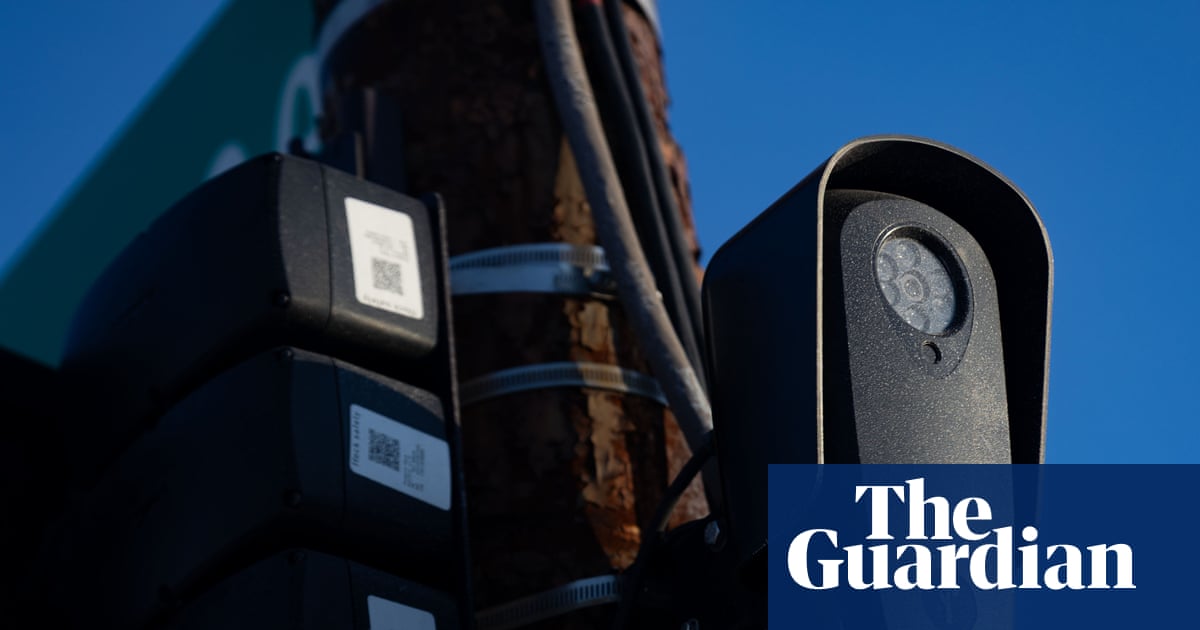
According to safety advocates, roadside camera installations—such as a black metal rod with a camera and solar panel standing at the bottom of a tree-lined hill on a narrow two-lane rural road in Greene County, Ohio—lack critical safety features like breakaway plates close to the ground.
US Safety Experts Warn Flock Safety Camera Poles Pose Driver Crash Risks
Steve Eimers, a Tennessee-based safety advocate known online as the Guardrail Guy, has been documenting these potential physical dangers on social media, noting that attention has focused heavily on the cameras themselves rather than their crashworthy elements at the bottom. Under Federal Highway Administration guidelines, sign poles and rods located within clear zones are required to be breakaway, yielding, or shielded by a barrier or crash cushion. According to the National Safety Council, crashes between motor vehicles and fixed barriers accounted for 26% of vehicle deaths nationwide in 2024.
While the Ohio Department of Transportation states that license plate readers on uncurbed facilities must be at least 8 feet from the nearest edge of a travel lane, the Beavercreek police department—Flock’s customer in the Ohio case—stated that Flock is responsible for all installations and that all cameras in its jurisdiction received appropriate approval.
Growing Scrutiny Over Data Sharing and Privacy Concerns
Beyond roadside safety debates, Flock Safety faces mounting pushback from communities and law enforcement agencies over data privacy, surveillance reach, and the security of its shared databases. As the largest manufacturer of automatic license plate readers in the country, Flock operates an estimated 80,000 to 100,000 cameras—or over 120,000 cameras according to broader tracking figures—spanning thousands of communities and roughly 5,000 law enforcement agencies across 49 states.
The system records license plates, vehicle makes, models, colors, and other characteristics, compiling the data into a searchable database accessible by police agencies near and far. While law enforcement agencies do not need a warrant or subpoena to access information shared by another department, critics and civil liberties organizations have raised red flags over data sharing, lack of account security, and insufficient auditing controls.
In Los Angeles, the LAPD suspended its work with Flock Safety after a three-year agreement expired. An LAPD official stated that the department paused its use until we can get those data, privacy, security and sharing concerns ironed out through a contractual relationship.
The suspension followed an inspector general’s audit report recommending that the department halt the deployment of new automatic license plate readers and new contracts until enforceable data security and privacy requirements are established.
Communities Severing Contracts Amid Misuse Incidents
A growing grassroots movement has prompted multiple municipalities across the United States to reevaluate their relationships with Flock Safety, leading several local governments to cut ties entirely. In Wisconsin, cities including Kaukauna, Grand Chute, Appleton, Oshkosh, Sturgeon Bay, Verona, and Dane County have parted ways with the system. Kaukauna let its three-year contract expire on June 30 after local discussions regarding system misuse and surrounding community withdrawals. Grand Chute dropped Flock entirely to expand its relationship with a competing vendor, Axon.

Similar pushback has occurred in Massachusetts, where at least nine communities out of approximately 106 contracting with Flock have recently cut ties following resident complaints. These include Cambridge, Framingham, and Salem.
Public apprehension has been heightened by reported incidents of system misuse. In Wisconsin, a Menasha police officer was charged with felony misconduct in public office after prosecutors alleged he used the Flock system to track an ex-girlfriend’s car while off duty. Milwaukee officers similarly used the technology to search for ex-girlfriends, with one instance involving more than 120 searches.
Law Enforcement Defense of Crime-Solving Capabilities
Despite growing pushback and safety warnings, police departments and company representatives continue to defend the technology as an essential crime reduction tool. Law enforcement agencies credit the automated plate readers with recovering stolen property, tracking vehicles of missing persons, and locating fleeing suspects.

Proponents point to high-profile cases where the technology aided investigations, including the pinpointing of a gunman who killed two students and wounded nine others at Brown University in December, as well as instances of recovering stolen luxury vehicles within hours. Flock states that its technology has helped police find more than 10,000 missing people nationwide, asserting that the systems remain vital assets for public safety operations despite ongoing debates over civil liberties and roadway hazards.