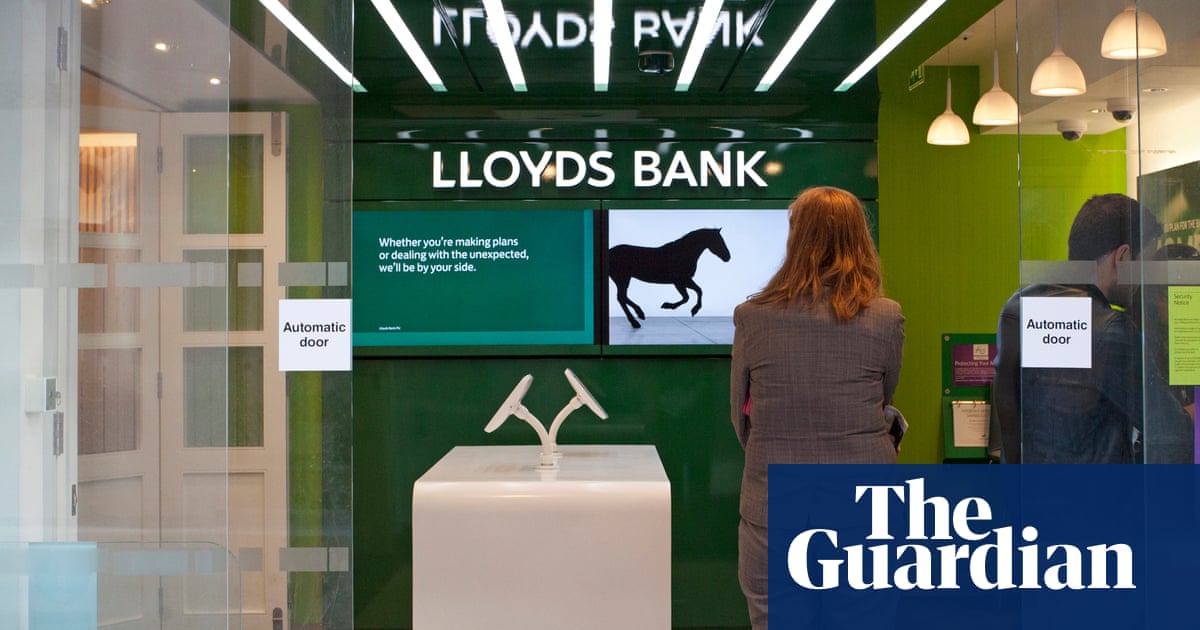
Chief Executive Charlie Nunn announced the four-year Accelerate 2030
strategy, which includes a £13 billion business investment and potential workforce impacts.
Lloyds Banking Group is charting a digital-first course after posting stronger-than-expected financial results for the first half of the year.
Capitalizing on this momentum, the banking group has outlined a sweeping operational overhaul. Chief Executive Charlie Nunn unveiled a new four-year strategy, dubbed Accelerate 2030, which will launch in January 2027 following the conclusion of the bank’s current five-year plan. The incoming strategy involves pumping more than £13 billion into the business through the end of the decade to modernize its technological backbone and deepen its deployment of automation.
The Accelerate 2030 Strategy and Agentic AI Deployment
Central to the Accelerate 2030 framework is an aggressive push into artificial intelligence. Having confirmed that it remains on track to achieve more than £2 billion in gross cost savings between 2022 and 2026, leadership has targeted an additional £2 billion in cost reductions by 2030.
Nunn emphasized that the upcoming phase will lean heavily on advanced automation, including agentic AI systems capable of autonomous decision-making. According to the bank, these tools will unlock services the institution has not previously been able to offer.
“We do think that there are new opportunities with agentic AI to both differentiate our services and grow more efficiently, i.e. provide services we’ve never been able to provide. So being able to provide investment advice to anyone in the UK that wants to talk to us with really well-trained agents.”
Charlie Nunn, Chief Executive, Lloyds Banking Group
The strategy also entails rolling out AI-powered advice tailored for wealth management and workplace pensions, alongside the Lloyds Smart Wallet, a new product designed to provide alternative payment options and customer rewards. In parallel, Lloyds is pursuing international expansion by growing its corporate and institutional bank in the United States and Europe—marking a distinct pivot away from the post-2008 financial crisis retrenchment.
Workforce Implications and the Human Element of Automation
The ambition to extract £2 billion in structural savings through technology has inevitably sparked concerns over job security. When pressed by journalists regarding staffing levels, Nunn stopped short of setting numerical workforce reduction targets, though he acknowledged that the operational shift would alter day-to-day tasks across the organization.

“It is going to impact work, it is going to require us to continue to reskill people and hire new people. But that’s been my history for 30-odd years in financial services.”
Charlie Nunn, Chief Executive, Lloyds Banking Group
To execute the initial technical buildout, Lloyds is actively recruiting 300 specialized tech experts by September to build its proprietary AI infrastructure. At the same time, the lender continues to manage its physical footprint. Nunn noted that the bank’s remaining 550 branches will remain part of the core proposition, though their operations will increasingly follow customer data and digital behavior rather than relying purely on traditional foot traffic. The sweeping changes follow a series of recent brand adjustments, including the decision to scrap the Halifax brand and transition operations directly to the Lloyds name.
Market Response and Regulatory Watchpoints
Financial markets reacted favorably to the dual announcements of second-quarter outperformance and long-term tech spending. Lloyds reported a statutory second-quarter profit of £2.3bn between April and June—representing a 14% jump from the same period last year. The strong showing allowed executives to lift shareholder payouts, declaring a 1.58p per share dividend alongside a £1 billion share buyback program executed at the half-year mark.
Market analysts note that the bank’s strategic departure from traditional lending into advanced digital wealth services remains a demanding path. Chris Beauchamp, chief market analyst at IG, observed that while Nunn’s pivot continues to deliver results, international expansion into competitive overseas corporate banking remains a significant undertaking where success is far from guaranteed.
Keep reading