NASA’s James Webb Space Telescope has captured a mid-infrared view of the nearby galaxy Centaurus A, revealing intricate dusty structures and intense activity 11 million light-years from Earth. Simultaneously, Hubble data highlights the star-forming processes within intermediate spiral galaxy NGC 4536.
Two powerful space observatories are offering fresh structural insights into distant galactic engines. Observations released by NASA showcase how modern instruments decode complex stellar systems, bringing clarity to the mechanisms driving rapid star birth and black hole evolution.
Infrared Insights into Centaurus A
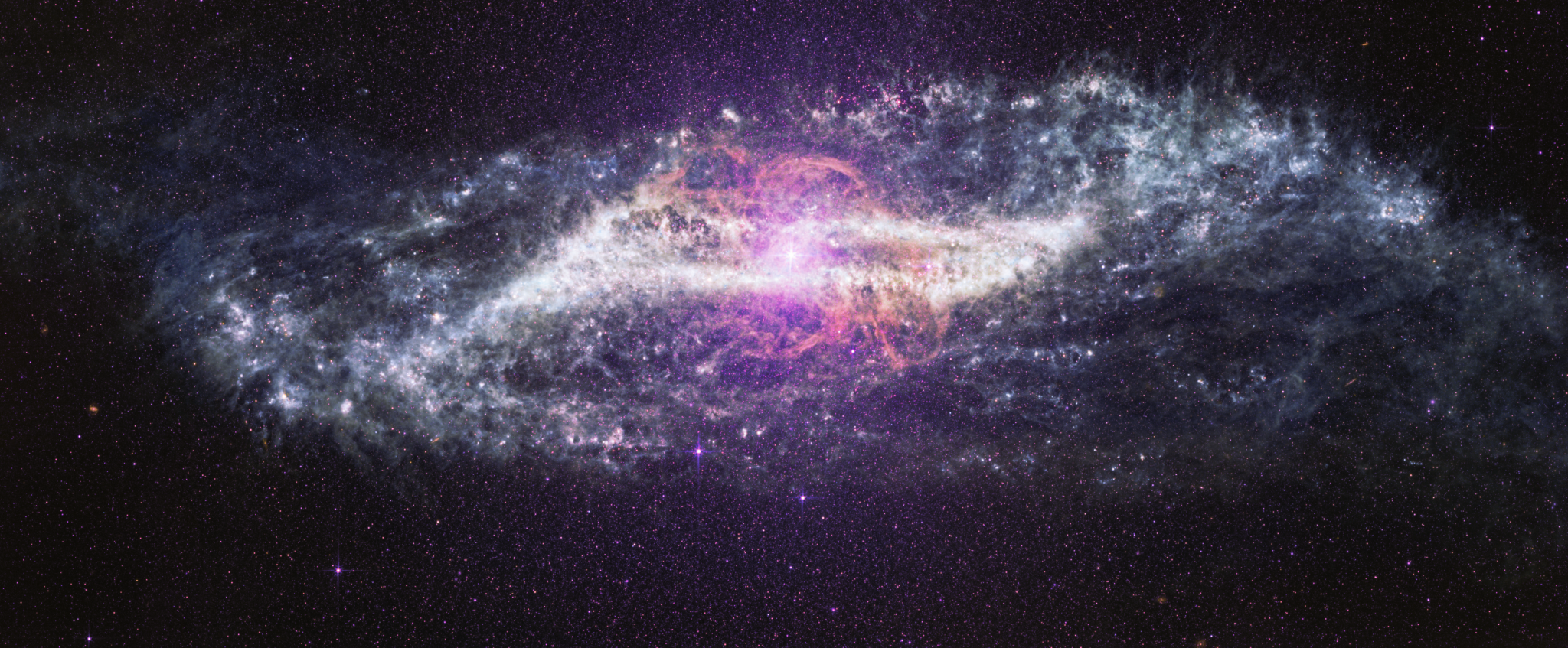
Located 11 million light-years away from Earth, Centaurus A sits at a relatively close distance in cosmic terms. Unlike typical nearby galaxies, it exhibits high levels of activity, functioning as a natural laboratory for researchers studying how galaxies and black holes grow and evolve side by side.
The imagery highlights the anatomy of the galaxy, allowing astronomers to examine formations that remain invisible to standard optical telescopes.
The image processing for this visual was completed by Alyssa Pagan (STScI), Joseph DePasquale (STScI), and Macarena Garcia Marin (ESA Office at STScI), utilizing data captured by NASA, ESA, CSA, and STScI.
Star Formation Dynamics in NGC 4536
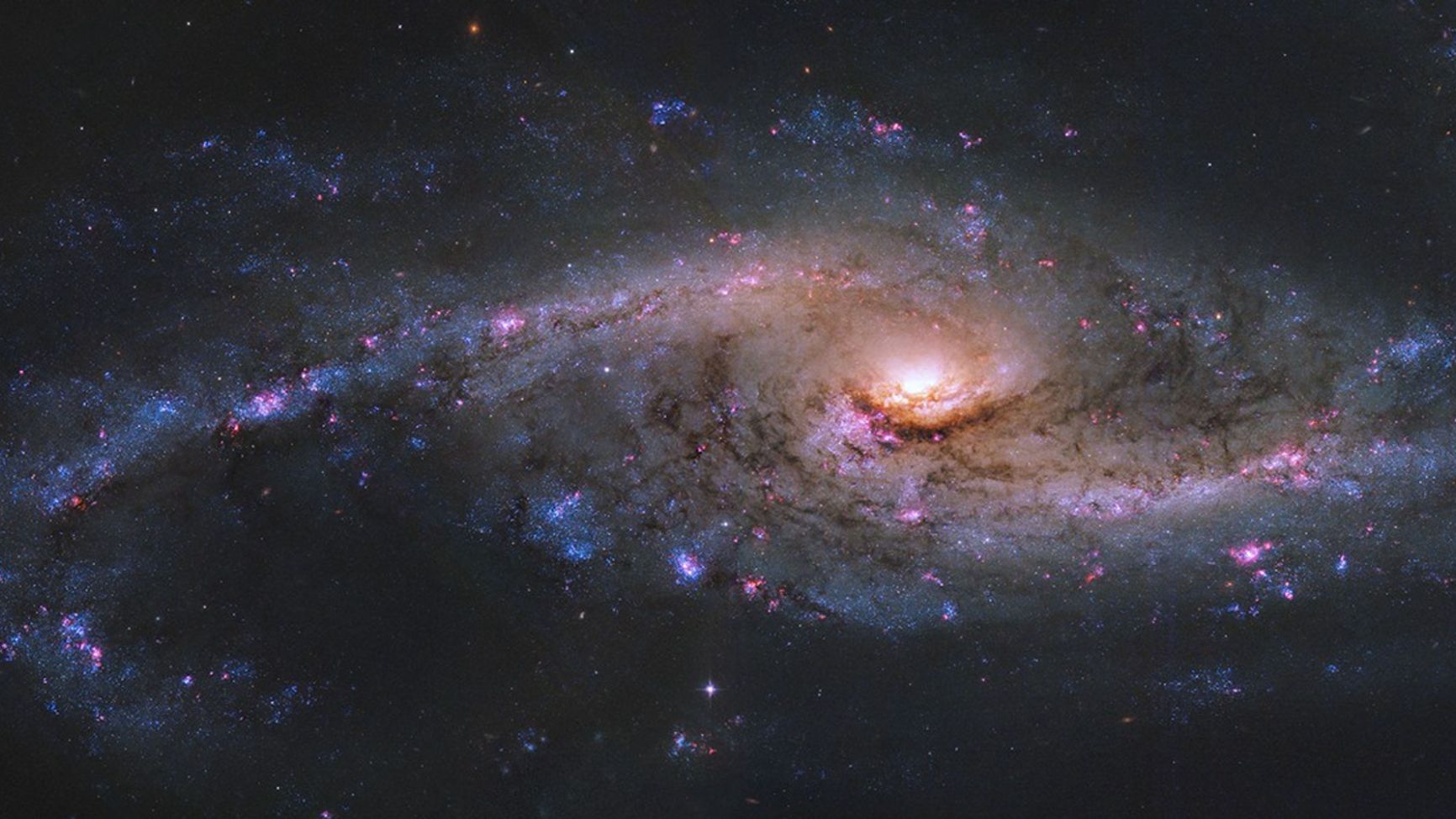
While MIRI probed Centaurus A, the Hubble Space Telescope turned its focus toward NGC 4536, an intermediate spiral galaxy situated roughly 50 million light-years away in the constellation Virgo. The system features sweeping spiral arms speckled with clusters of young blue stars and vibrant pink clumps of ionized hydrogen gas. It is classified as an intermediate galaxy because it possesses a prominent central structure while falling between a barred spiral galaxy and an unbarred spiral galaxy.
NGC 4536 is classified as a starburst galaxy because it maintains an exceptionally high rate of star formation compared to the average rate observed in most other galaxies. According to agency statements, this rapid stellar expansion is fueled by ionized hydrogen gas seen among dark lanes of dust that drive the rapid birth of new stars.
“Starburst galaxies can happen due to gravitational interactions with other galaxies or ― as seems to be the case for NGC 4536 ― when gas is packed into a small region,”
NASA officials, Space
The bar-like structure running through NGC 4536 may funnel gas inward toward the center, creating a dense region where star formation is highly active. This dynamic is visible in the Hubble image, which captures a bright ring around the galaxy’s nucleus. Additionally, the galaxy belongs to the M61 Group of galaxies, which forms part of the Virgo Cluster—an assembly of galaxies at the center of the Virgo Supercluster. The gravitational tug of neighboring galaxies compresses gas within a galaxy, triggering star formation.
Stellar Life Cycles and Supernova Heating
The intense pace of star formation inside these systems creates a distinctive lifecycle for the resulting stellar populations. Rapidly born stars consume their fuel quickly before ending their existence in violent cosmic events.
“Starburst galaxies birth lots of hot blue stars that burn fast and die quickly in explosions that unleash intense ultraviolet light,”
NASA officials, Space
Ultraviolet light, which appears in blue in the Hubble image from these stellar explosions (also known as supernovae), heats the surrounding gas and creates ionized clouds of glowing hydrogen. These areas, called HII regions, are depicted in red in the image, marking the aftermath of heavy stellar turnover.
Investigating Local Universe Environments
The recent Hubble image released by NASA on March 8 was taken as part of a larger initiative to study galactic environments in the local universe and the connection between young stars and cold gas. Researchers are specifically targeting galaxies like NGC 4536, which feature star clusters and molecular clouds.
By combining infrared observations of systems like Centaurus A with ultraviolet and optical imagery of starburst spirals, astronomers continue to map the timelines of galactic archaeology and stellar evolution.
Related reading