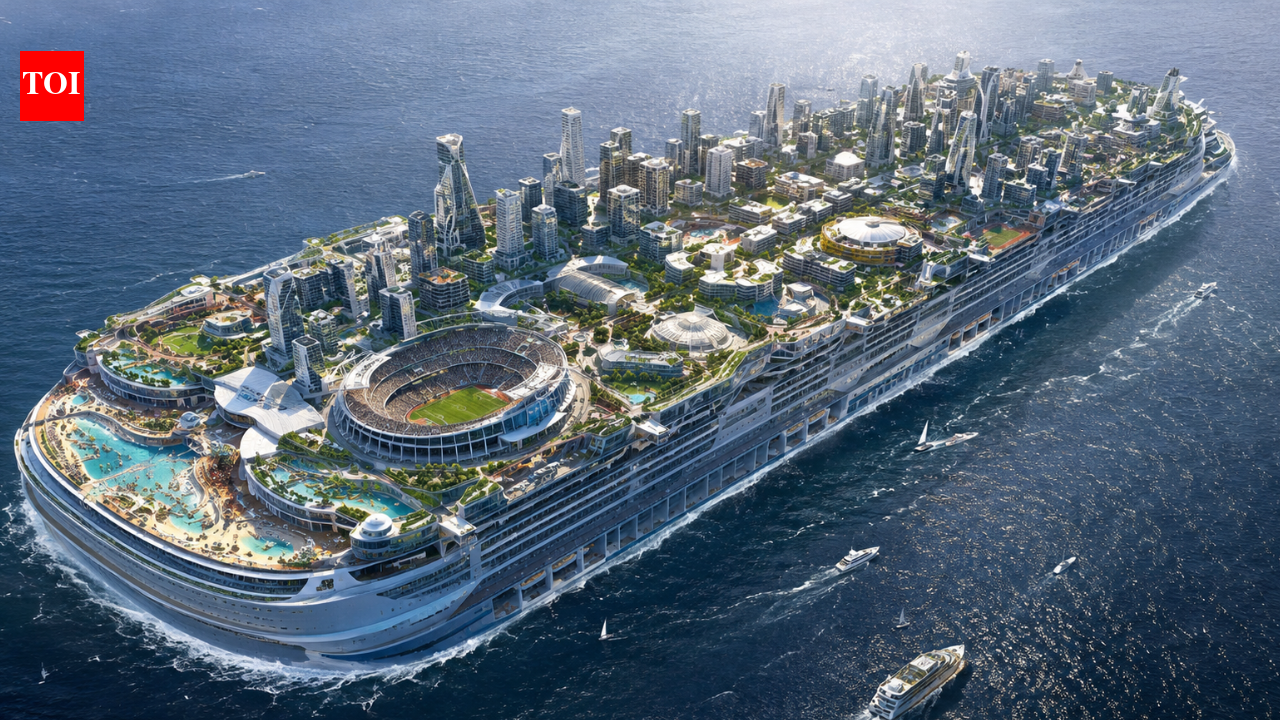
The concept of a floating city has long captured the human imagination, moving from the realms of science fiction into the serious planning stages of maritime engineering. Recently, visions of a massive, self-sustaining megaship designed to house 80,000 residents have circulated globally, sparking debates about the future of urban living, climate adaptation, and ocean-based infrastructure. As we look toward the horizon of 2026, the prospect of permanent, high-density residential structures at sea remains a complex intersection of naval architecture, international maritime law, and economic viability.
When discussing a floating city, the discourse often centers on the logistical challenges of creating a stable, habitable environment that functions as a microcosm of a land-based metropolis. Projects of this scale, which some conceptual models estimate to require investments in the billions of dollars, aim to offer more than just accommodation; they propose to integrate schools, healthcare facilities, dining, and even massive entertainment venues, such as a 15,000-seat stadium, to ensure long-term self-sufficiency. These designs are frequently positioned as solutions to rising sea levels or as experiments in modular, sovereign living.
The Engineering and Regulatory Reality
Constructing a vessel capable of housing 80,000 people requires unprecedented advancements in structural integrity and buoyancy technology. Unlike traditional cruise ships, which are designed for mobility and temporary occupancy, a stationary or semi-stationary floating city must contend with the persistent forces of open-ocean currents and weather patterns. According to the International Maritime Organization (IMO), any structure intended for long-term habitation at sea must adhere to strict safety, environmental, and stability regulations, including the International Convention for the Safety of Life at Sea (SOLAS).
the legal status of such a structure remains a subject of intense scrutiny. International maritime law, primarily governed by the United Nations Convention on the Law of the Sea (UNCLOS), provides a framework for vessels and artificial islands. However, a “floating city” often exists in a gray area between these two definitions. Determining whether such a structure falls under the jurisdiction of a flag state or a coastal state is a critical hurdle for any developers looking to move beyond the concept phase.
Infrastructure and Self-Sufficient Living
For a floating city to be viable, it must act as a closed-loop system. This includes advanced desalination processes for fresh water, renewable energy generation—likely through a combination of solar, wind, and wave energy—and sophisticated waste management systems. The inclusion of schools, restaurants, and large-scale public spaces like a 15,000-seat stadium implies a need for a robust supply chain or the capacity for on-site food production, such as vertical farming or aquaculture.
The economic model for such a project is equally demanding. With estimates for mega-projects of this scale reaching into the $16 billion range, the financial burden rests on either private consortiums or public-private partnerships. Investors must weigh the high capital expenditure against the long-term utility of the structure. Currently, there is no single, globally recognized facility that matches the scale of an 80,000-resident floating city, meaning that any attempt to build one would serve as the first major pilot program of its kind.
What Happens Next?
As of June 2026, there is no official record of a construction project of this magnitude currently underway or approved for development. While firms continue to publish conceptual renders and engineering feasibility studies, these remain speculative. The next phase for any such endeavor would involve formal submission of environmental impact assessments and safety protocols to relevant maritime authorities, as well as the securing of significant, multi-year funding commitments.

As an observer of global infrastructure, I find these concepts fascinating—not necessarily because they will be built tomorrow, but because they challenge our conventional understanding of “home” and “city.” We will continue to monitor official filings and maritime industry updates for any movement on these floating city initiatives. What are your thoughts on the feasibility of living at sea? We invite you to join the conversation below and share your perspective on whether this is the future of human settlement or a technological pipe dream.
Keep reading