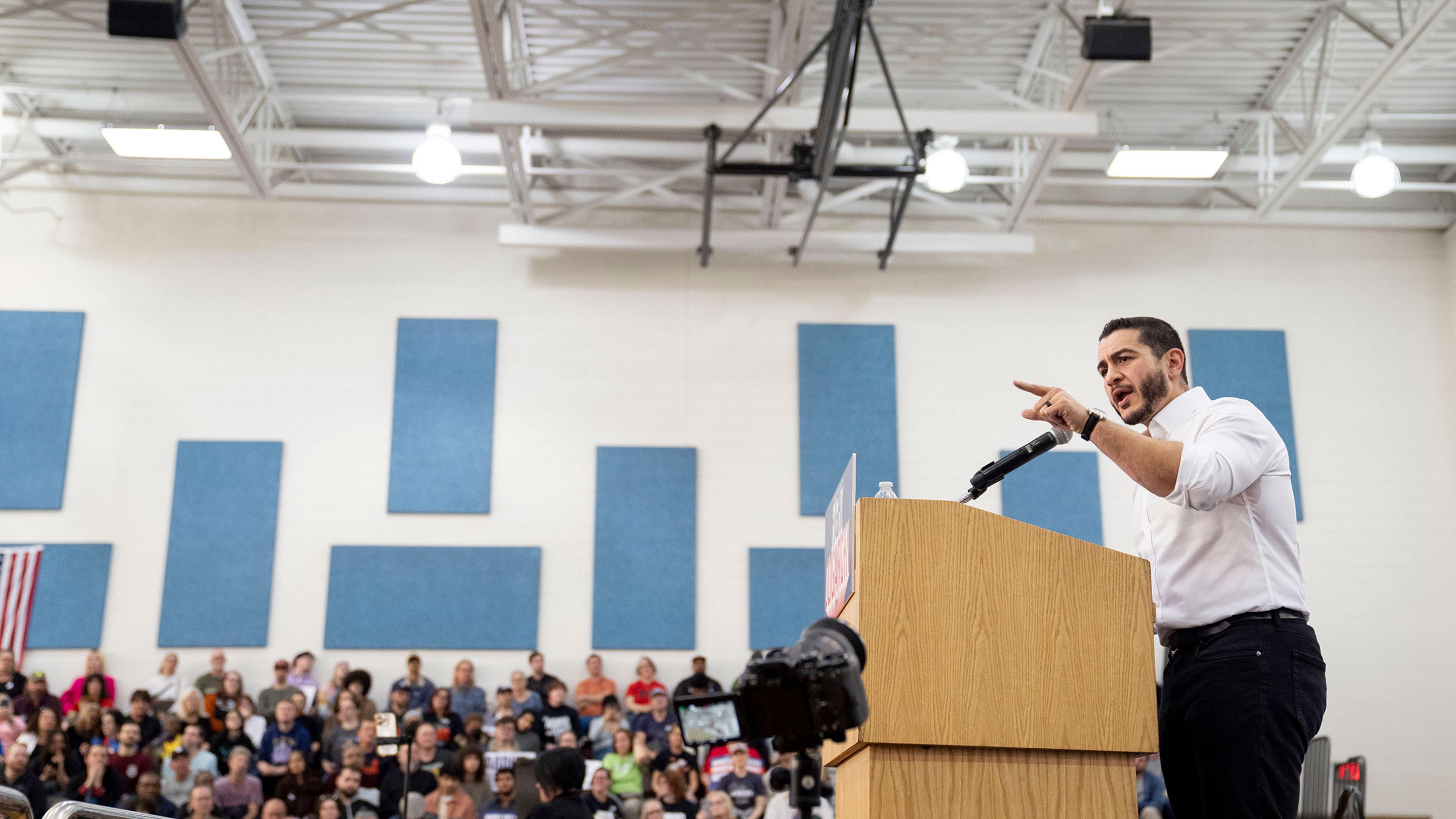
Democratic Senate candidate Abdul El-Sayed is mounting an insurgent campaign in Michigan, challenging both the Republican nominee and the established leadership of his own party. As the August 4 primary approaches, El-Sayed has positioned himself as an anti-establishment force, leveraging a platform that includes calls for Medicare for All and a 7% wealth tax on billionaires. His campaign, which has gained momentum following the suspension of state senator Mallory McMorrow’s candidacy, now faces the scrutiny of a Democratic establishment concerned about party unity and electability in a critical swing state.
The race for the Michigan Senate seat has become a focal point for national Democratic strategists, particularly as the party attempts to navigate internal divisions regarding policy, ideology, and the U.S. alliance with Israel. While party leaders have historically favored candidates who emphasize moderate, consensus-driven platforms, El-Sayed’s campaign operates on the assumption that Michigan voters are increasingly receptive to candidates willing to confront entrenched corporate and political power. According to reports, El-Sayed has secured key endorsements from the United Auto Workers, Senator Bernie Sanders, and U.S. Representative Alexandria Ocasio-Cortez.
The Ideological Divide Within the Democratic Party
The current contest in Michigan underscores a broader debate within the Democratic Party regarding the most effective strategy for winning elections in battleground states. One faction, supported by figures like U.S. Representative Haley Stevens and former Michigan Democratic Party chairman Lon Johnson, advocates for a centrist approach designed to reassure swing voters and maintain a broad coalition. In contrast, the progressive wing, represented by El-Sayed, argues that party caution has become a political liability, suggesting that voters are actively seeking candidates who promise to challenge the status quo.

This ideological tension is particularly visible in the differing stances on the U.S. relationship with Israel. While Stevens has received significant financial backing from the American Israel Public Affairs Committee (AIPAC) and supports continued weapon sales to Israel, El-Sayed has characterized Israel’s actions in Gaza as genocide, a position that resonates with segments of Michigan’s large Arab and Muslim population. The state, which has seen shifting voter loyalties in recent presidential cycles—voting for Donald Trump in 2016 and 2024, and Joe Biden in 2020—serves as a laboratory for these competing political theories.
Campaign Alliances and Public Perception
El-Sayed’s campaign has drawn both support and criticism for his public alliance with Hasan Piker, a prominent Twitch streamer and progressive commentator. Piker’s influence among young voters is significant, yet his past remarks—including controversial comments regarding the September 11 attacks and the conflict between Israel and Hamas—have made him a polarizing figure. While Republican nominee Mike Rogers has used these ties to frame El-Sayed as an extremist, the candidate has repeatedly declined to denounce the streamer. El-Sayed contends that his refusal to back down from his principles, even under pressure from the political establishment, is a key reason for his campaign’s resonance with voters who feel alienated by traditional political posturing.
The Republican response, led by former Representative Mike Rogers, has focused on labeling El-Sayed’s platform as radical. Spokespeople for the National Republican Senatorial Committee have criticized his proposals as “crippling tax hikes” and have accused him of attempting to import policies they associate with New York’s progressive wing to the Midwest. Despite these attacks, El-Sayed maintains that his message of getting money out of politics and addressing the cost of living remains the most pressing concern for the electorate.
Background and Political Trajectory
Born to Egyptian immigrant parents and raised in Bloomfield Hills, Michigan, El-Sayed’s path to the Senate race has been marked by his work in public health and government. After serving as the health director for the city of Detroit during its post-bankruptcy recovery, he launched an unsuccessful bid for governor in 2018. That campaign, while ultimately failing to secure the nomination, helped establish his reputation as a progressive voice. His professional background includes a medical degree from Columbia University and a doctorate from Oxford, where he studied as a Rhodes Scholar.

His transition into the current Senate race was prompted by the decision of incumbent Senator Gary Peters not to seek reelection. Following a text message exchange with U.S. Representative Rashida Tlaib, who encouraged him to run, El-Sayed entered the contest in April 2025. Since then, his campaign has utilized a digital-first strategy, including his podcast, American Dissected, and various social media platforms to reach voters directly, bypassing traditional media structures that he argues are influenced by the same corporate interests he aims to regulate.
What Happens Next in the Michigan Primary
The primary election is set for August 4, 2025. As the date approaches, the focus will likely remain on whether the progressive coalition that El-Sayed has built is sufficient to secure a victory against Stevens and the broader party establishment. Regardless of the outcome, the campaign serves as a significant indicator of the current strength of progressive movements within the Democratic Party and the evolving political landscape of Michigan. Voters are encouraged to check the Michigan Secretary of State’s official website for updates on polling locations and voter registration requirements ahead of the primary.