AEX Index Slumps as Dutch Chip Stocks Lead Market Decline
Amsterdam’s benchmark AEX index closed sharply lower on Tuesday, dragged down by steep losses in the semiconductor sector as investors reacted to a mix of global tech concerns and rising oil prices. The index, which tracks the performance of the 25 largest Dutch-listed companies, fell to 1,003 points—a decline of 0.8%—marking its second consecutive session of losses and erasing earlier gains that had briefly pushed it near record highs.
The sell-off was particularly pronounced among chip-related stocks, with industry heavyweights ASML, ASM International and BE Semiconductor Industries (BESI) among the day’s biggest losers. ASML, Europe’s most valuable technology company, saw its shares drop by 3.37%, while BESI plummeted 5.12%, reflecting broader anxieties about the semiconductor industry’s near-term outlook. The declines came as global markets grappled with mixed signals on tech demand, supply chain disruptions, and geopolitical tensions affecting key manufacturing hubs.
Despite the downturn, the AEX’s losses were partially cushioned by gains in other sectors, including energy, where rising oil prices provided a modest lift. The broader European market also showed resilience, with the Euronext 100 index closing slightly lower but outperforming the AEX. Analysts noted that the day’s trading reflected a cautious sentiment among investors, who remain wary of overvalued tech stocks and potential macroeconomic headwinds.
Chip Sector Under Pressure
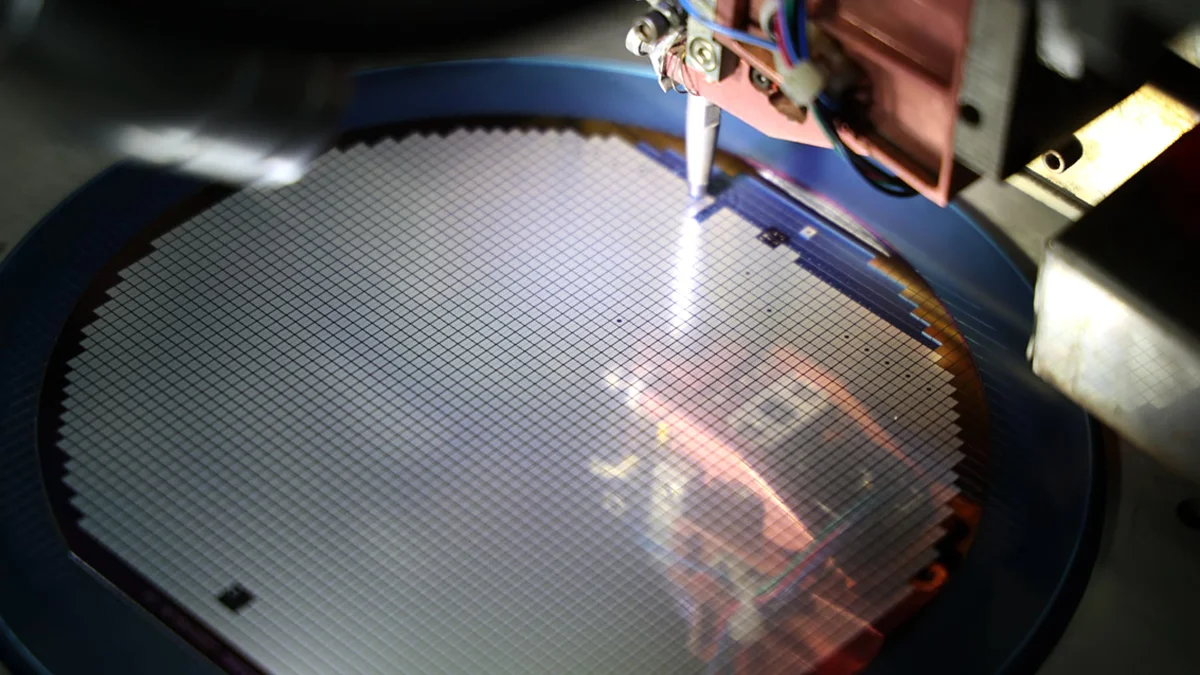
The semiconductor industry bore the brunt of Tuesday’s market decline, with ASML, ASM International, and BESI leading the downturn. ASML, a critical player in the global chipmaking supply chain, saw its shares fall by 3.37% to €1,171.80, extending a recent slide that has seen the stock drop nearly 10% over the past month. The company, which supplies lithography machines essential for producing advanced semiconductors, has faced scrutiny over its exposure to cyclical demand and geopolitical risks, particularly in China, a key market for its equipment.

ASM International, another Dutch semiconductor equipment manufacturer, also experienced a sharp decline, with its shares dropping 2.94% to €812.00. The company, which specializes in deposition and epitaxy technologies, has been impacted by delays in capital expenditure from major chipmakers, who are reassessing their expansion plans amid economic uncertainty. Meanwhile, BESI, a leading provider of assembly equipment for the semiconductor industry, saw its shares tumble 5.12% to €235.30, reflecting concerns about weaker-than-expected demand for its packaging solutions.
The underperformance of these stocks mirrored broader trends in global tech markets, where investors have grown increasingly cautious about the sector’s valuation. In the U.S., the Nasdaq Composite index also closed lower on Tuesday, with semiconductor stocks among the biggest decliners. The Philadelphia Semiconductor Index (SOX), a key benchmark for the industry, fell by 1.5%, underscoring the sector’s vulnerability to shifting market sentiment.
Oil Prices Provide a Counterbalance
While the chip sector struggled, rising oil prices offered a rare bright spot for the AEX, supporting shares of energy companies and helping to limit the index’s overall decline. Brent crude oil, the international benchmark, rose by 1.2% to $89.50 per barrel, driven by supply concerns and geopolitical tensions in key producing regions. The increase in oil prices provided a lift to energy stocks, including those of Royal Dutch Shell and other Dutch-listed firms with exposure to the sector.
The upward movement in oil prices came as markets digested reports of potential supply disruptions in the Middle East, as well as signs of strengthening demand in Asia. Analysts noted that the rise in oil prices could provide some relief to the AEX, which has a relatively high weighting in energy stocks compared to other European indices. However, the gains were not enough to offset the broader market decline, particularly in the tech sector.
Market Sentiment and Outlook
The AEX’s decline on Tuesday reflected a cautious mood among investors, who are weighing a range of factors, including monetary policy, economic growth, and geopolitical risks. The European Central Bank (ECB) is widely expected to maintain its current interest rate policy in the near term, but investors remain attuned to any signals about future rate cuts, which could provide a boost to equities. Meanwhile, economic data from the eurozone has been mixed, with recent reports showing sluggish growth in Germany and France, the region’s two largest economies.
For the AEX, much of the near-term outlook will depend on the performance of its largest constituents, particularly ASML and other tech-related stocks. The semiconductor industry remains highly cyclical, and its fortunes are closely tied to global demand for electronics, automotive components, and industrial equipment. Any signs of a slowdown in these sectors could weigh further on the AEX, while a rebound in tech demand could assist stabilize the index.
In the broader European context, the AEX’s performance has been closely watched as a barometer for investor sentiment toward the region’s tech and industrial sectors. While the index has outperformed many of its peers in recent months, Tuesday’s decline served as a reminder of the market’s vulnerability to external shocks. Analysts expect volatility to persist in the coming weeks, particularly as investors await further clarity on economic policy and corporate earnings.
Key Takeaways
- AEX Index Falls: The AEX closed at 1,003 points, down 0.8% on Tuesday, as losses in the semiconductor sector weighed on the broader market.
- Chip Stocks Lead Declines: ASML, ASM International, and BESI were among the biggest losers, with shares dropping 3.37%, 2.94%, and 5.12%, respectively, amid concerns about tech demand and supply chain disruptions.
- Oil Prices Rise: Brent crude oil increased by 1.2% to $89.50 per barrel, providing support to energy stocks and partially offsetting the AEX’s losses.
- Market Sentiment Cautious: Investors remain wary of overvalued tech stocks and potential macroeconomic headwinds, with volatility expected to persist in the near term.
- Outlook Tied to Tech: The AEX’s performance will likely depend on the semiconductor sector’s recovery, as well as broader economic and geopolitical developments.
What’s Next?
Investors will be closely watching the next round of corporate earnings reports from Dutch-listed companies, particularly in the tech and energy sectors, for further clues about the market’s direction. ASML is scheduled to release its first-quarter earnings on April 30, 2026, which could provide insights into the company’s outlook and the broader semiconductor industry’s health. Economic data from the eurozone, including inflation figures and GDP growth estimates, will be key indicators of the region’s economic trajectory.
For those tracking the AEX, the next major checkpoint will be the release of the European Central Bank’s monetary policy statement on May 8, 2026. Any signals about future interest rate cuts or changes to the bank’s economic outlook could have significant implications for the index and broader European markets.
We’ll continue to monitor these developments and provide updates as new information becomes available. Have thoughts on the market’s recent moves? Share your insights in the comments below, and don’t forget to follow World Today Journal for the latest in global business news.
Worth a look