Researchers have developed a new method using physics-informed artificial intelligence to measure the flow of fluid through the brain, potentially offering a non-invasive way to track the clearance of metabolic waste linked to neurodegenerative conditions. By integrating MRI data with specialized neural networks, the team mapped the velocity of cerebrospinal fluid, a critical component of the glymphatic system that functions primarily during sleep to remove proteins such as amyloid beta.
This development addresses a longstanding challenge in neurology: the difficulty of observing fluid dynamics within the living human brain without invasive procedures. The findings, published in Science Advances, provide a quantitative look at how waste-clearing fluids move at varying speeds through different brain regions. This research was supported by the National Institutes of Health (NIH) through the National Center for Complementary and Integrative Health and the BRAIN Initiative, according to official university records.
The Mechanics of Brain Waste Clearance
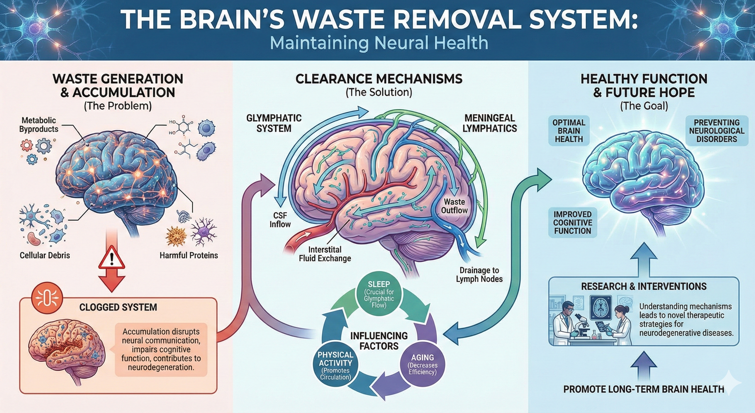
The glymphatic system serves as a waste management network for the central nervous system. First characterized in 2012 by neuroscientist Maiken Nedergaard, the system relies on the circulation of water-like fluid to flush out metabolic byproducts that accumulate during daily neural activity. When this system fails to function efficiently, the buildup of proteins—specifically amyloid beta—is widely associated with the progression of Alzheimer’s disease.
While previous studies established the existence of this system, measuring the exact velocity of the fluid in a living subject has remained technically elusive. “If you want to image whole brains, an MRI is a great approach because it gives you a three-dimensional view,” explains Douglas Kelley, a professor in the mechanical engineering department at the University of Rochester. “But an MRI has serious limitations, too, the biggest of which is that it does not capture the fluid flow velocity, at least not for flows this slow.”
Applying Physics-Informed AI to MRI Data
To overcome the limitations of standard imaging, researchers utilized physics-informed artificial intelligence. By feeding MRI data—specifically videos showing the movement of contrast agents (dye) through brain tissue—into a neural network, the team was able to calculate the speed of fluid flow and the permeability of the tissue. This computational approach allows for a level of detail previously restricted to microscopic observation of tiny, isolated sections of brain matter.
The study reveals a dual-speed system for waste removal. The fluid moves at a relatively rapid pace, measured at a few microns per second, within the open regions surrounding the brain, such as the space between the skull and the brain tissue. Conversely, the fluid penetrates the deep, dense tissue of the brain at a rate approximately 50 times slower. Understanding these distinct flow rates is essential for identifying when and where the clearance process might be failing in patients with cognitive impairments.
Clinical Implications and Future Research
The current study utilizes baseline measurements derived from animal models, specifically mice, to train the AI tools. The ultimate goal for the research team—which includes collaborators from Brown University and the University of Copenhagen—is to transition these methods to human clinical settings. The ability to monitor glymphatic circulation could transform how clinicians approach the early detection of neurodegenerative disorders.

“We hope to someday be able to see whether an Alzheimer’s patient has poor circulation in their brain or even screen for poor circulation earlier in life to try to stave off Alzheimer’s,” says Kelley. Beyond Alzheimer’s, researchers are also investigating whether the technique could identify disruptions in fluid circulation following traumatic brain injuries, such as concussions. By providing a clear, non-invasive window into brain physiology, this integration of AI and MRI technology represents a significant step toward objective, early-stage diagnostics.
The researchers intend to continue refining these models to compare fluid flow across different demographics, including healthy versus diseased brains and young versus aging brains. As the project moves toward human application, the medical community awaits further validation of these techniques in clinical trials. Readers interested in the progress of these initiatives can follow updates through the NIH BRAIN Initiative project database, which documents ongoing research into neuro-technological advancements.
Keep reading