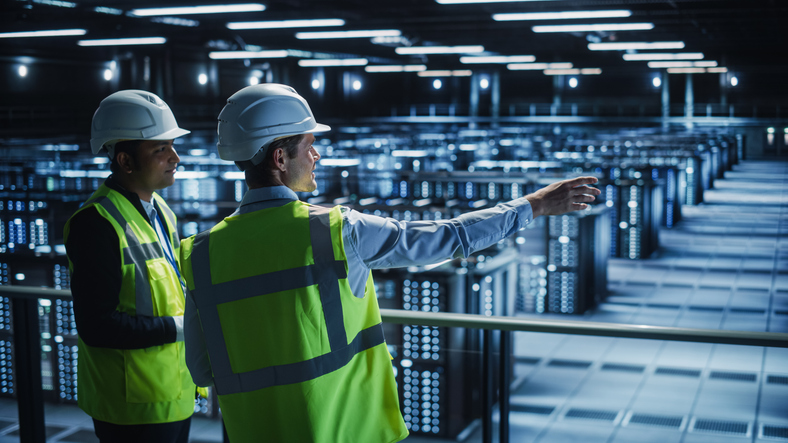
The global surge in generative artificial intelligence has triggered a fundamental architectural crisis within the world’s data centers. For decades, the industry relied on a predictable playbook: scale out with standardized server racks, cool them with massive fans, and optimize for general-purpose cloud computing. However, the arrival of Large Language Models (LLMs) and the massive GPU clusters required to train them have rendered that playbook obsolete.
Today, the industry is undergoing a rapid transition toward data center optimization for AI, a process that requires a total reimagining of power delivery, thermal management, and security protocols. The “AI tax”—the staggering amount of electricity and water required to retain high-performance chips from melting—has forced operators to move beyond incremental efficiency gains toward radical infrastructure overhauls.
As a technology journalist who has tracked the evolution of software engineering from the early cloud era to the current AI gold rush, I have observed that the bottleneck is no longer just about the quality of the code or the size of the dataset. It’s now a physical problem. The challenge is how to cram more compute power into the same square footage without crashing the local power grid or violating environmental mandates.
This optimization effort is not merely a technical necessity. it is a financial and regulatory imperative. With energy costs rising and governments imposing stricter carbon reporting requirements, the data centers of 2026 are being built as highly specialized “AI factories” rather than the general-purpose warehouses of the past.
The Hardware Pivot: Managing the Power Wall
The shift from Central Processing Units (CPUs) to Graphics Processing Units (GPUs) has fundamentally changed the power profile of the modern data center. While a traditional server rack might have operated at 5 to 15 kilowatts (kW), AI-ready racks are now pushing 50kW, 100kW, or even more. This massive increase in power density creates what engineers call the “Power Wall,” where the existing electrical infrastructure simply cannot deliver enough current to the chip.
To combat this, operators are moving toward higher-voltage power distribution. By bringing 415V or even 480V power closer to the rack, data centers can reduce energy loss during conversion and shrink the amount of heavy copper cabling required. This is a critical component of AI-ready infrastructure, as it allows for the denser packing of GPUs, such as the NVIDIA H100 or the newer Blackwell series, which demand unprecedented levels of energy to maintain peak performance.
Beyond the power delivery, the most visible change is the death of the “cold aisle” and the rise of liquid cooling. Air cooling—the practice of blowing chilled air across heat sinks—is physically incapable of removing heat from a chip that generates 700W to 1,000W of thermal energy. The industry is pivoting toward Direct-to-Chip (DTC) cooling, where liquid-cooled plates sit directly on the processor, and Immersion Cooling, where entire servers are submerged in non-conductive dielectric fluid.
According to the International Energy Agency (IEA), data centers and other AI-related computing facilities could observe their electricity consumption double by 2026, reaching levels comparable to the entire energy consumption of a country like Germany. This trajectory makes the move to liquid cooling not just an optimization, but a survival strategy for the industry.
Sustainability and the ‘Water Wall’
While electricity is the primary concern, water has emerged as the second great bottleneck. Data centers traditionally use evaporative cooling towers to shed heat, a process that consumes millions of gallons of water daily. AI workloads exacerbate this problem; the more heat a GPU generates, the more water is evaporated to keep the facility cool.
This has led to the rise of Water Usage Effectiveness (WUE) as a key performance metric, alongside the more established Power Usage Effectiveness (PUE). PUE measures the ratio of total facility power to the power delivered to IT equipment, with a score of 1.0 being the theoretical perfect. While hyperscalers like Google and Microsoft have pushed PUE levels down to around 1.1 to 1.2, the focus is now shifting toward “water-neutral” or “water-positive” operations.
To achieve sustainable data center design, operators are implementing several new strategies:
- Closed-Loop Cooling: Moving away from evaporative towers toward closed-loop systems that recycle the same water indefinitely, drastically reducing the draw on local municipal sources.
- Waste Heat Recovery: In colder climates, data centers are partnering with municipalities to pipe the excess heat from AI clusters into district heating systems for homes and offices.
- Alternative Energy Sourcing: Because the grid cannot keep up with AI demand, we are seeing a resurgence in nuclear energy. Major tech firms are investing in Small Modular Reactors (SMRs) to provide a constant, carbon-free “baseload” of power that wind and solar cannot provide alone.
The urgency is driven by public and regulatory pressure. In many regions, data center permits are now being tied to the operator’s ability to prove they will not deplete local aquifers, turning sustainability from a corporate social responsibility (CSR) goal into a legal requirement for expansion.
Fortifying the Core: AI-Driven Security
As data centers become more concentrated hubs of immense value—housing not only proprietary data but the incredibly expensive GPUs themselves—they have become prime targets for sophisticated attacks. The security landscape is shifting because the exceptionally technology being hosted in these centers, AI, is being used to attack them.
The evolution of ransomware is a primary concern. Modern attackers are using AI to automate the reconnaissance phase of an attack, scanning for vulnerabilities in data center management software in minutes rather than days. This “AI-enhanced” threat model allows for more precise, automated exploit chains that can bypass traditional perimeter defenses.

In response, data center security is moving toward a Zero Trust architecture. In a Zero Trust environment, no user or device is trusted by default, regardless of whether they are inside or outside the network perimeter. Every request for access to a server or a database must be continuously verified. This is particularly critical for AI clusters, where a single compromised administrative account could allow an attacker to steal a proprietary model or encrypt petabytes of training data.
the physical security of these facilities is being upgraded. Given the extreme cost of high-end AI chips, “insider threat” mitigation has become a priority. This includes biometric access controls, AI-powered surveillance that can detect anomalous behavior in real-time, and strict “air-gapping” for the most sensitive training environments.
The goal is to create a symbiotic defense: using AI to detect patterns of attack that are too fast for human operators to see, and using hardware-level security to ensure that even if the software layer is breached, the underlying data remains encrypted and inaccessible.
The Future of the AI Factory
The transition toward optimized data centers is effectively a transition from “general purpose” to “application specific.” We are moving toward a world where the physical building is designed around the specific needs of the chip. Which means the architecture is no longer just about rows of racks; it is about the integration of power, cooling, and compute into a single, fluid system.
One of the most significant emerging trends is the rise of Edge AI data centers. Rather than sending every request back to a massive central hub, companies are deploying smaller, highly optimized “micro-data centers” closer to the end-user. This reduces latency and distributes the power load, preventing any single point of failure on the electrical grid.
For the global economy, this shift means that the “AI race” is as much about civil engineering and energy policy as it is about software. The companies that win will not necessarily be those with the best algorithms, but those who can most efficiently manage the physics of heat and power.
| Feature | Traditional Cloud DC | AI-Optimized “AI Factory” |
|---|---|---|
| Primary Compute | CPU-heavy (General Purpose) | GPU/TPU-heavy (Accelerated) |
| Power Density | 5kW – 15kW per rack | 50kW – 100kW+ per rack |
| Cooling Method | Forced Air / CRAC units | Liquid-to-Chip / Immersion |
| Energy Focus | PUE (Power Efficiency) | PUE + WUE (Water Efficiency) |
| Security Model | Perimeter-based Defense | Zero Trust / AI-Driven Detection |
The next critical checkpoint for the industry will be the release of the updated energy efficiency standards from the ASHRAE (American Society of Heating, Refrigerating and Air-Conditioning Engineers), which typically sets the global benchmarks for data center thermal guidelines. These updates will likely codify the shift toward liquid cooling as the mandatory standard for high-density AI workloads.
As we move further into 2026, the integration of AI into the very fabric of the data center—using AI to manage its own power and cooling in real-time—will be the final step in this optimization journey. The data center is no longer just a place where AI lives; it is becoming an AI-driven entity in its own right.
What are your thoughts on the environmental trade-off of the AI boom? Do you believe nuclear energy is the only viable path forward for sustainable compute? Let us know in the comments below.
Related reading