
In a move to align regional schooling with global benchmarks, Kim Seong-geun, a preliminary candidate for the North Chungcheong Province Superintendent of Education, has announced a strategic vision to implement the international standardization of Chungbuk education
. The proposal centers on a fundamental shift in how students interact with technology, moving beyond basic computer science to a comprehensive mastery of digital environments.
Central to this ambition is the introduction of Media and Artificial Intelligence Literacy, commonly referred to as MAIL. By integrating this framework into the regional curriculum, Kim aims to transform North Chungcheong Province into a hub for future-ready education, ensuring that students are not merely consumers of technology but critical thinkers capable of navigating an AI-driven global economy.
This initiative arrives at a critical juncture for South Korean education. As the nation grapples with the rapid integration of generative AI in classrooms, the focus is shifting from technical proficiency to cognitive agility. Kim’s platform suggests that for a province to remain competitive, its educational standards must mirror those of the world’s most advanced economies, specifically citing frameworks established by the Organisation for Economic Co-operation and Development (OECD).
The Architecture of International Standardization
The concept of international standardization
in this context does not refer to a rigid, one-size-fits-all curriculum, but rather to the adoption of global competency standards. According to Kim’s platform, the goal is to ensure that a diploma from a school in North Chungcheong Province carries the same weight and signifies the same skill sets as those from leading educational systems worldwide.
By aligning regional goals with the OECD’s educational frameworks, the proposal seeks to bridge the gap between rural and urban educational outcomes. The strategy focuses on shifting the pedagogical approach from rote memorization to competency-based learning, where students are evaluated on their ability to solve complex, real-world problems using digital tools.
This approach is designed to address the “digital divide” that often persists in regional provinces. By standardizing the quality of AI and media instruction, the initiative intends to provide students in smaller towns the same intellectual scaffolding as those in Seoul’s high-tech districts.
Decoding the MAIL Framework: Media and AI Literacy
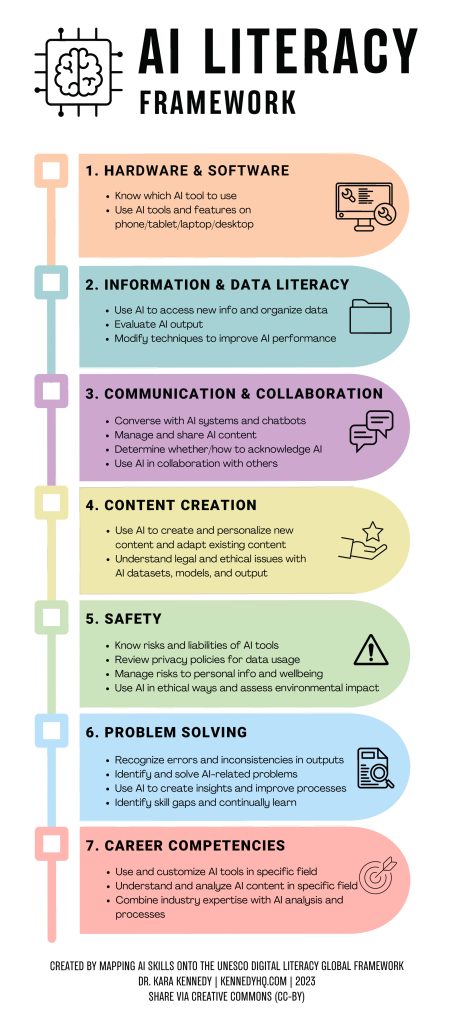
The cornerstone of Kim’s innovative agenda is the introduction of the MAIL (Media and Artificial Intelligence Literacy) framework. Unlike traditional ICT (Information and Communication Technology) classes that often focus on software operation, MAIL is an interdisciplinary approach that blends media studies with AI ethics and logic.
The framework focuses on three primary pillars:
- Critical Consumption: Teaching students to distinguish between AI-generated misinformation, deepfakes and verified factual reporting.
- Algorithmic Understanding: Moving beyond the “black box” of AI to understand how data inputs influence algorithmic outputs and the potential for inherent bias.
- Creative Co-production: Utilizing AI as a collaborative tool for research, art, and problem-solving, rather than a replacement for human critical thought.
The emphasis on “Media” within the MAIL acronym is particularly significant. In an era of algorithmic echo chambers, the ability to analyze the source and intent of information is viewed as a survival skill. By linking AI literacy with media literacy, the proposal aims to protect students from the psychological and social pitfalls of the digital age while empowering them to leverage AI for academic excellence.
Why AI Literacy Matters for the Global Student
As a technology editor with a background in computer science, I view the shift toward AI literacy as a necessary evolution. The industry is moving away from requiring every student to be a coder and toward requiring every student to be an “AI orchestrator.”

The OECD has long emphasized the importance of transformative competencies
—the ability to create new knowledge, reconcile tensions, and take responsibility for one’s actions. Integrating AI literacy into the core curriculum allows students to develop these competencies by interacting with systems that can synthesize vast amounts of data instantly, forcing the human student to focus on the higher-order tasks of verification, synthesis, and ethical judgment.
For North Chungcheong Province, this means moving toward a model where AI is not a separate subject, but a layer integrated into history, science, and language arts. For example, a history student might use AI to simulate a historical debate, while simultaneously using their media literacy skills to critique the AI’s potential biases in representing that era.
Implementation Challenges and Regional Impact
While the vision is ambitious, the path to international standardization faces several practical hurdles. The primary challenge lies in teacher readiness. Implementing a MAIL framework requires educators to be proficient not only in the tools they are teaching but in the philosophy of AI ethics.
Kim’s proposal suggests a systemic overhaul of teacher training, potentially involving partnerships with global tech institutions and universities to ensure that the instructors are as current as the technology they oversee. Without a robust support system for educators, there is a risk that “standardization” remains a policy goal rather than a classroom reality.
the success of this initiative depends on infrastructure. While South Korea boasts some of the world’s fastest internet speeds, the equitable distribution of high-performance hardware capable of running sophisticated AI models across all schools in the province remains a critical requirement.
Key Takeaways of the Proposed Education Shift
| Feature | Traditional ICT Education | Proposed MAIL Framework |
|---|---|---|
| Primary Goal | Software proficiency & coding | Critical thinking & AI orchestration |
| Approach | Tool-centric (How to use X) | Competency-centric (Why X works) |
| Media Focus | Basic digital citizenship | Combating misinformation & bias |
| Standard | National/Regional guidelines | International (OECD) benchmarks |
The Broader Context of South Korean Education Reform
Kim’s proposal does not exist in a vacuum. It aligns with a broader national trend in South Korea to modernize the classroom. The Ministry of Education has already signaled a move toward introducing AI-powered digital textbooks, aiming to provide personalized learning paths for students based on their individual progress and struggle points.
However, the “international standardization” angle adds a layer of geopolitical ambition. By explicitly tying regional education to OECD standards, the initiative seeks to make North Chungcheong students more competitive in international university admissions and the global job market. This reflects a growing realization that the “K-Education” model, while successful in producing high test scores, must evolve to produce the creative and critical thinkers required by the Fourth Industrial Revolution.
The integration of AI literacy is also a response to the rise of generative AI tools like ChatGPT and Claude, which have disrupted traditional homework and assessment models. Rather than banning these tools, the MAIL framework suggests embracing them as “cognitive prosthetics” that, when used correctly, can elevate the ceiling of what a student can achieve.
What Happens Next?
The proposal currently stands as a central pillar of Kim Seong-geun’s campaign for the North Chungcheong Province Superintendent of Education. The coming months will likely see more detailed policy papers outlining the specific budgetary requirements and the timeline for teacher retraining.
As the election cycle progresses, voters and educational stakeholders will be looking for concrete plans on how the “International Standardization” will be measured. Will there be new regional assessments? Will there be a certification process aligned with OECD competencies? These details will determine whether the plan is a viable roadmap or a high-level aspiration.
The next confirmed checkpoint for the educational community will be the official candidate registration and the subsequent public debates, where the specifics of the MAIL framework’s implementation are expected to be scrutinized by educators and parents alike.
We want to hear from you. Do you believe international standardization is the key to solving regional educational gaps, or should local contexts take priority over global benchmarks? Share your thoughts in the comments below.