In an era where the boundaries between digital artifice and human reality are increasingly blurred, a recent viral sensation from China has sparked a global conversation about the nature of authenticity. What began as a simple gesture of encouragement for students facing one of the world’s most grueling academic challenges has instead turned into a debate over whether the person on screen is even real.
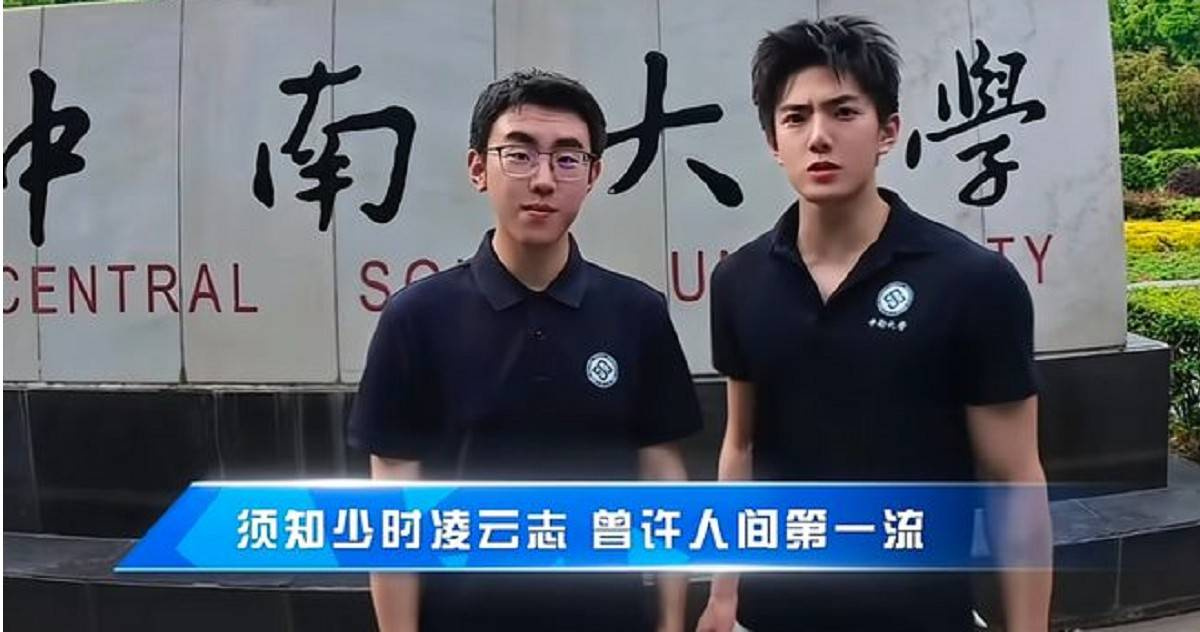
A male student from Central South University (CSU) has become an overnight internet sensation after a video surfaced showing him offering words of support to candidates preparing for the Gaokao, China’s rigorous national college entrance examination. However, the reaction from social media users was not merely one of admiration for his message, but of profound skepticism regarding his physical existence. His appearance—characterized by striking symmetry and a physique that many deemed “too perfect”—led a wave of netizens to claim he was an AI-generated model rather than a living person.
This phenomenon, where human features are so polished that they trigger the “uncanny valley” response, highlights a growing cultural anxiety: in a world saturated with deepfakes and sophisticated generative AI, can we still believe what we see with our own eyes?
The Viral Moment: When Perfection Triggers Skepticism
The video, which quickly permeated platforms like Douyin and Weibo, featured the student—reportedly standing at 181cm (approximately 5’11”)—offering motivation to high school seniors. As the footage circulated, the focus shifted rapidly from his message to his aesthetic. Users pointed to his facial structure and athletic build, suggesting that the level of “perfection” displayed was more consistent with high-end AI rendering than with the typical appearance of a university student.
The suspicion of being an artificial entity became so widespread that it defined the discourse surrounding his sudden fame. For many, the visual data presented in the video felt “uncanny,” a term used to describe the sense of unease felt when an artificial object looks almost, but not quite, human. This skepticism is not unfounded; the rapid advancement of generative AI has made it increasingly difficult to distinguish between high-definition video and algorithmic simulations.
However, the “AI student” is very much a person of flesh and bone. In response to the digital scrutiny, the student addressed the rumors directly, clarifying his identity and confirming his status as a real individual. He also addressed the most common question trailing his newfound fame: his relationship status. He confirmed that he is currently single, a response that only added to the fervor of the social media commentary.
Beyond the Aesthetic: A Record of Academic Excellence
While the internet focused on his appearance, the student’s academic trajectory offers a much more grounded and impressive narrative. Far from being a mere digital construct, he is a high-achieving scholar at Central South University, a prominent research university located in Changsha, Hunan Province.

The distinction of his academic standing became clear when reports surfaced regarding his future educational path. It has been noted that he has been recommended for postgraduate studies at Tongji University, one of China’s most prestigious institutions, particularly renowned for its engineering and architecture programs. This process, known in China as “Baoyan” (保研), is a highly competitive system where top-performing undergraduate students are granted admission to graduate programs without the need to sit for the standard national entrance exams.
The juxtaposition of his viral “aesthetic” fame with his rigorous academic success provides a necessary counterbalance to the superficiality of the initial online reaction. It serves as a reminder that the individuals captured in viral moments often possess complex, multi-dimensional lives that exist far beyond the scope of a 15-second video clip.
The “AI Suspicion” Phenomenon and the Erosion of Trust
The reaction to the Central South University student is a microcosm of a much larger sociological shift. As generative AI becomes more integrated into social media, the “baseline” for what constitutes a “real” human image is shifting. When perfection becomes a commodity that can be generated with a prompt, the human eye begins to treat perfection as a red flag.
This “AI suspicion” carries several implications for the future of digital communication:
- The Death of Visual Evidence: The traditional assumption that “seeing is believing” is being dismantled. As AI models become more capable of simulating human skin texture, lighting, and micro-expressions, visual media loses its status as a reliable record of reality.
- The New Standard of Authenticity: We are entering an era where “flaws” may become a hallmark of authenticity. Imperfections—asymmetries, uneven skin tones, or candid movements—may soon serve as the primary indicators that a person is real.
- The Rise of Algorithmic Skepticism: Users are developing a reflexive skepticism toward highly polished content. This can lead to a “trust deficit,” where even genuine human achievements or moments are dismissed as manufactured.
The case of the CSU student demonstrates that even without malicious intent, the mere presence of high-quality visual content can trigger a defensive skepticism in a public that has been conditioned by the rise of synthetic media.
Contextualizing the Gaokao: Why the Message Mattered
To understand why the student’s video gained such traction, it is essential to understand the cultural weight of the Gaokao. For millions of students in China, the Gaokao is not merely an exam; it is a life-defining event that determines university placement, career trajectories, and social mobility.

The period surrounding the Gaokao is characterized by intense national focus and significant psychological pressure on adolescents. A “senior” (学长) offering encouragement is a traditional and well-received gesture. The student’s decision to use his platform to support those undergoing this transition added a layer of social value to his video, even as the conversation eventually pivoted toward his physical appearance.
By attempting to provide a moment of levity and support during a high-stress period, the student inadvertently became a lightning rod for the tensions between traditional human connection and the new, digital-first reality of the 21st century.
Key Takeaways
- The Incident: A Central South University student went viral for a video encouraging Gaokao candidates.
- The Controversy: His “perfect” appearance led widespread accusations that he was an AI-generated entity.
- The Reality: The student is a real person, currently single, and a high-achieving academic.
- Academic Achievement: He has reportedly been recommended for postgraduate studies at Tongji University.
- Cultural Impact: The event highlights the growing difficulty in distinguishing human reality from AI simulation on social media.
As the digital landscape continues to evolve, the intersection of human achievement and algorithmic perfection will undoubtedly produce more such moments of confusion. For now, the student remains a symbol of a generation navigating a world where the line between the real and the rendered is thinner than ever.
There are no further official updates scheduled regarding this individual’s academic transition to Tongji University at this time.
What do you think about the rise of “AI suspicion” on social media? Is perfection becoming a reason for distrust? Share your thoughts in the comments below and share this article with your network.
Keep reading