
Corporate leaders are increasingly shifting their focus from the speculative hype surrounding generative artificial intelligence to the practical realities of human-centric deployment and rigorous governance. Recent discussions at the Gartner Application Innovation & Business Solutions Summit highlighted that while agentic AI—systems capable of autonomous decision-making—is rising, the most successful organizations are those that prioritize human ingenuity and clear operational guardrails over rapid, unchecked adoption.
According to Gartner research, the enterprise generative AI market is projected to reach $143 billion by 2027, yet many firms currently struggle with “pilot purgatory,” where projects fail to scale due to a lack of strategic alignment. Industry analysts emphasize that the transition from simple chatbots to autonomous agents requires a fundamental rethink of business processes, shifting the focus from simply “using AI” to “integrating AI” into existing human workflows.
The Evolution Toward Agentic AI Systems
The industry is moving beyond basic large language models toward agentic AI, which involves software capable of executing complex tasks by planning and interacting with external tools. Unlike traditional AI, which requires constant human prompting for every step, agentic systems operate with a degree of autonomy that allows them to navigate workflows independently. This shift is not merely technical; it represents a change in how businesses define productivity.
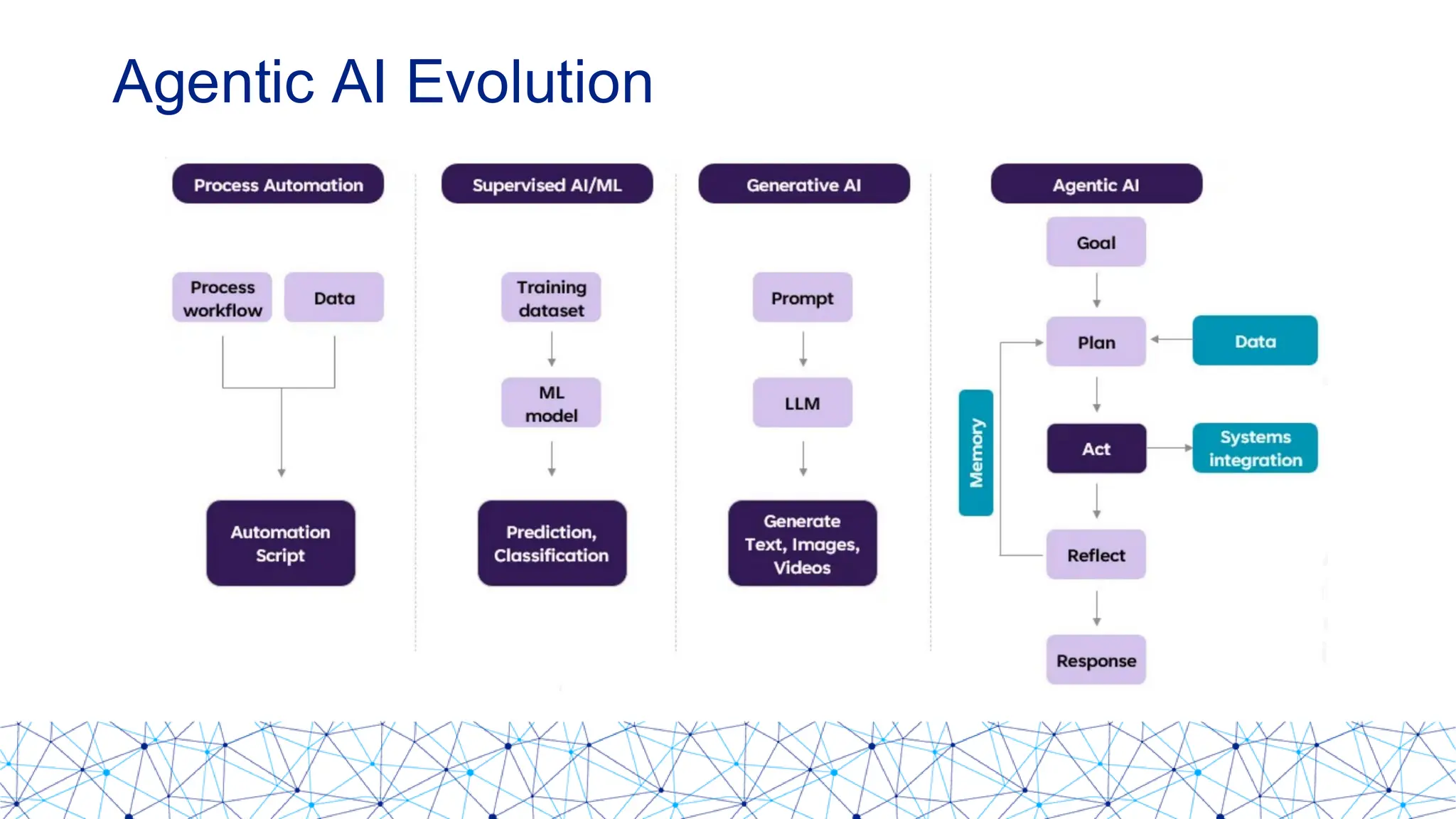
However, this autonomy introduces significant risks regarding reliability and data security. Organizations deploying these systems must establish robust AI Risk Management Frameworks, as recommended by the National Institute of Standards and Technology (NIST). Without these frameworks, businesses remain vulnerable to “hallucinations”—where AI generates incorrect or nonsensical information—and potential data privacy breaches. The consensus among summit participants was that human oversight remains the primary defense against these operational failures.
Addressing Common Strategic Mistakes in AI Adoption
Many organizations have attempted to implement AI without first establishing clear governance, a move that often leads to fragmented results and wasted investment. Gartner analysts identified that the most common mistake is treating AI as a “standalone project” rather than a foundational shift in infrastructure. When companies fail to integrate AI into their core business logic, the technology becomes a cost center rather than a driver of efficiency.

Furthermore, the rush to automate has often overlooked the importance of human-in-the-loop systems. By automating processes without considering the nuances of human decision-making, companies risk alienating both employees and customers. According to the OECD Principles on Artificial Intelligence, systems should be designed with transparency and explainability to ensure that users can understand and challenge the outputs generated by AI models.
Human Ingenuity as the Competitive Advantage
Despite the rapid advancement of machine intelligence, the summit underscored that human ingenuity is the ultimate differentiator. AI excels at processing vast datasets and identifying patterns, but it lacks the contextual understanding and ethical reasoning required for complex problem-solving. Leaders are encouraged to view AI as a “co-pilot” that augments human capabilities rather than a replacement for professional judgment.

To remain competitive, firms must invest in “upskilling” their workforces. This involves training employees not just on how to use new tools, but on how to critically evaluate AI-generated content. As noted by the World Economic Forum’s Future of Jobs Report, the demand for analytical and creative thinking skills is rising as routine tasks become increasingly automated. Organizations that cultivate a culture of continuous learning are better positioned to leverage AI effectively while maintaining ethical standards.
Establishing Governance and Ethical Guardrails
Governance is no longer an optional component of AI strategy; it is a regulatory and operational necessity. With the implementation of the EU AI Act, which categorizes AI systems based on risk, companies operating internationally must ensure their models comply with strict transparency and safety standards. This legal environment necessitates a shift toward “responsible AI” practices, where compliance is baked into the development lifecycle from the start.

Key governance practices include:
- Data Provenance: Ensuring that the data used to train models is ethically sourced and free from bias.
- Continuous Monitoring: Implementing real-time auditing to detect performance drift in autonomous agents.
- Clear Accountability: Defining who is responsible for the decisions made by agentic systems, particularly when errors occur.
The path forward for business leaders involves balancing the excitement of innovation with the discipline of risk management. By focusing on human-centric design and rigorous governance, organizations can build sustainable AI strategies that provide long-term value.
The next major checkpoint for global AI governance will be the upcoming international discussions on the implementation of the United Nations High-Level Advisory Body on Artificial Intelligence recommendations, which are expected to provide further guidance on cross-border standards. Readers are encouraged to share their experiences with AI implementation in the comments below or join the conversation on our social media channels.