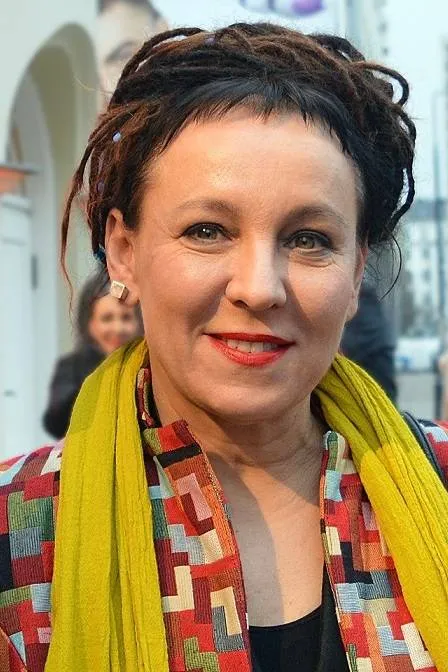
Nobel Prize-winning novelist Olga Tokarczuk has addressed recent social media speculation regarding her use of artificial intelligence in her writing. Through a formal statement shared via her publisher, Tokarczuk clarified that she has not used AI to write her upcoming novel, explaining that she only utilizes the technology as a tool for preliminary research and fact-checking.
The controversy arose following remarks made by the author during a live public event, which led to widespread discussion online about the role of automation in high literature. Tokarczuk’s response aims to distinguish between the use of digital tools for information gathering and the actual creative process of authorship.
Clarifying the Remarks: A Misunderstanding at a Public Event
The debate surrounding Tokarczuk’s creative process gained momentum after her comments at a public engagement were interpreted by some as an admission of using generative AI to compose her prose. To prevent further misinformation, Tokarczuk provided a direct rebuttal via Lit Hub, emphasizing that public remarks can often be “incorrectly understood.”
The author was explicit in her denial of using AI for the actual composition of her work. She stated that her forthcoming book, which is scheduled for publication in Polish in the fall of 2026, was not written using artificial intelligence or with the assistance of any other person. Tokarczuk noted that she has maintained a practice of writing alone for several decades.
Defining the Boundary: Research Tool vs. Authorial Voice
While Tokarczuk rejected the idea that AI is a co-writer, she did not rule out the technology’s role in her preparatory work. She described her use of artificial intelligence as being consistent with how most people utilize modern technology: as a mechanism for “faster documenting and checking of facts.”
Tokarczuk’s approach to digital tools involves a strict layer of human oversight. She explained that whenever she uses AI for preliminary research, she follows a rigorous verification process. This includes cross-referencing any information obtained through digital tools with traditional sources, such as books, libraries, and physical archives.
This distinction is critical in the current literary climate. As generative models become more capable of mimicking human prose, the distinction between using a search-based tool for data and using a generative tool for text becomes a central point of contention for authors and publishers alike. Tokarczuk’s stance positions her as a user of technology for efficiency rather than an adopter of technology for creation.
The Implications for Literary Integrity
The reaction to Tokarczuk’s clarification highlights a broader tension within the global literary community. The controversy touches on fundamental questions of authorship, the value of human experience in storytelling, and the definition of “originality” in an age where information can be synthesized instantly.
By emphasizing her reliance on archives and libraries, Tokarczuk reinforces the traditional relationship between the writer and the historical record. Her clarification serves as a defense of the solitary writing process, asserting that while the speed of research may change, the act of creation remains a strictly human endeavor.
For the literary world, the outcome of this discussion will likely influence how authors discuss their workflows and how readers perceive the authenticity of modern texts. Tokarczuk’s firm stance provides a blueprint for authors who wish to integrate modern technological efficiencies without compromising their creative autonomy.

Essential Details Regarding the Clarification:
- The Author’s Stance: Tokarczuk has not used AI to write any of her texts, including her upcoming novel.
- The Use Case: AI is used strictly for faster preliminary research and fact-checking.
- Verification Protocol: All AI-assisted research is manually verified through books, libraries, and archives.
- Upcoming Release: A new novel is set to be published in Polish in the fall of 2026.
- History of Authorship: The author has written independently for several decades.
The next significant milestone in this story will be the release of Tokarczuk’s new novel in late 2026, which will allow readers and critics to evaluate her work in its full context.
What are your thoughts on the use of AI as a research tool in creative writing? Do you believe it changes the nature of authorship? Share your comments below and share this article with your network.