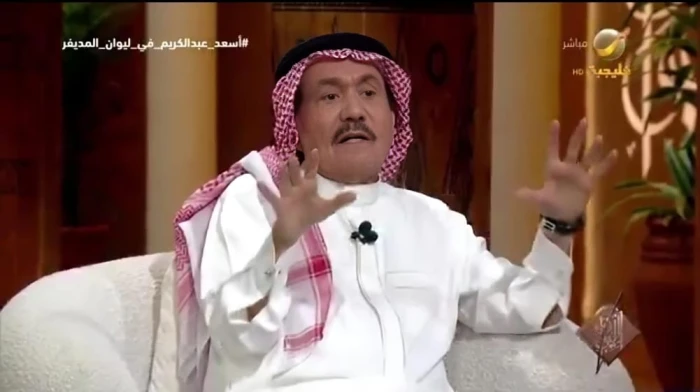
Riyadh, Saudi Arabia – Recent comments from prominent Saudi football figure, As’ad Abdul Karim, have shed light on the dynamics within the Al-Ittihad club during the tenure of former president Mansour Al-Bilawi. Abdul Karim, a long-standing member of Al-Ittihad’s board of honor, addressed long-standing speculation regarding a perceived power struggle and his eventual diminishing role in the club’s decision-making processes. The discussion unfolded during an appearance on the “Al-Liwan” program broadcast on Rotana Khalijia television on February 25, 2026, according to reports from Gulf Channels and Al-Marsd.
Abdul Karim’s statements directly address claims of a deliberate attempt to sideline him, a narrative that has circulated within Saudi football circles for some time. He clarified his involvement in player acquisitions, specifically mentioning his role in initial negotiations with Osamah Hawsawi while the player was at Al-Wahda. He stated that Al-Bilawi was present during these discussions, suggesting a collaborative, rather than adversarial, beginning to their working relationship. This initial collaboration, however, evolved as Al-Bilawi became more directly involved with player recruitment.
Shifting Dynamics and a Diminished Role
As Al-Bilawi became more integrated into the club’s operations and established direct contact with players and agents, Abdul Karim’s influence gradually decreased. He explained that while respect and appreciation remained, his role transitioned from leading negotiations to providing oversight and offering opinions. “With the passage of time, and with Al-Bilawi’s interaction with the group, things subsided and direct contacts were made, but respect and appreciation remained,” Abdul Karim reportedly said. This shift, he indicated, wasn’t the result of malice but a natural consequence of Al-Bilawi’s increasing involvement.
The core of Abdul Karim’s account centers on a gradual change in the power structure within Al-Ittihad. He emphasized that he harbors no ill will towards Al-Bilawi or anyone who may have preferred his reduced involvement. “I do not blame anyone who wanted my non-continuation, and everyone is free in himself. I did what I had to do at Al-Ittihad,” he stated. This sentiment suggests a pragmatic acceptance of the changing landscape within the club and a willingness to acknowledge the autonomy of others.
Early Involvement in Player Transfers
Abdul Karim’s recollections provide a glimpse into the intricacies of player transfers at Al-Ittihad. His initial involvement with Osamah Hawsawi, a prominent Saudi defender, highlights his early influence in shaping the club’s squad. Hawsawi joined Al-Ittihad in 2011, and Abdul Karim’s account suggests he played a key role in bringing the player to the club. Gulf Channels reported on these details from the Rotana Khalijia broadcast.
The mention of subsequent player negotiations, though not specifically named, indicates a broader pattern of Abdul Karim’s involvement in building the Al-Ittihad team. This early period of active participation contrasts with his later role, which he describes as more supervisory. The transition underscores the evolving dynamics between Abdul Karim and Al-Bilawi, and the increasing centralization of decision-making power within the presidency.
Acceptance and a Focus on Past Contributions
Abdul Karim’s concluding remarks reflect a sense of closure and a focus on his past contributions to Al-Ittihad. He explicitly stated he does not hold anyone accountable for his diminished role, emphasizing individual agency and the right to pursue different paths. This perspective suggests a mature and considered response to a situation that could easily have been interpreted as a personal affront. His statement, “I did what I had to do at Al-Ittihad,” conveys a sense of fulfillment and a recognition of his own accomplishments.
The interview as well touched upon the broader context of club management and the challenges inherent in navigating complex relationships within a high-profile sporting organization. While Abdul Karim did not delve into specific details of disagreements or conflicts, his account implicitly acknowledges the competitive nature of football administration and the potential for shifting alliances.
Mansour Al-Bilawi’s Initial Support
Interestingly, a separate report from TikTok, attributed to Rotana Khalijia, reveals that As’ad Abdul Karim actually insisted on nominating Mansour Al-Bilawi for the presidency of Al-Ittihad, despite significant opposition. This TikTok video highlights a previously unrevealed aspect of their relationship, suggesting a period of strong mutual support before the dynamics shifted. This adds a layer of complexity to Abdul Karim’s recent statements, indicating a nuanced history with Al-Bilawi.
This earlier endorsement underscores the evolving nature of their professional relationship. It suggests that Abdul Karim initially saw Al-Bilawi as a capable leader and actively championed his candidacy, despite reservations from others. The subsequent shift in dynamics, as described in the Rotana Khalijia interview, therefore appears to be a result of internal developments rather than a pre-existing animosity.
Implications for Al-Ittihad’s Future
Abdul Karim’s reflections offer a valuable historical perspective on Al-Ittihad’s internal workings during a significant period in the club’s history. While the specific details of the power dynamics may be of primary interest to Al-Ittihad supporters, the broader themes of leadership, collaboration, and the evolution of roles within a sporting organization resonate universally. The club, consistently a major force in Saudi football, continues to navigate the challenges of maintaining competitiveness in a rapidly evolving landscape.
The Saudi Pro League has seen significant investment in recent years, attracting high-profile international players and increasing the pressure on clubs to deliver success. Al-Ittihad, like its rivals, faces the ongoing task of balancing financial sustainability with sporting ambition. Understanding the historical context of internal dynamics, as revealed by figures like Abdul Karim, can provide valuable insights into the club’s current challenges and future prospects.
As Al-Ittihad looks ahead, the lessons from past experiences – including the shifting relationship between Abdul Karim and Al-Bilawi – could inform its approach to leadership and team building. The club’s ability to foster a collaborative environment and effectively manage internal dynamics will be crucial to its continued success in the increasingly competitive Saudi Pro League.
The next key date for Al-Ittihad will be the resumption of the Saudi Pro League season following the Ramadan break, with matches scheduled to begin in late March 2026. Fans and analysts will be closely watching the club’s performance and assessing its progress towards its stated goals. Further updates on Al-Ittihad’s activities can be found on the official Saudi Pro League website. Readers are encouraged to share their thoughts and perspectives on this developing story in the comments section below.
Related reading