
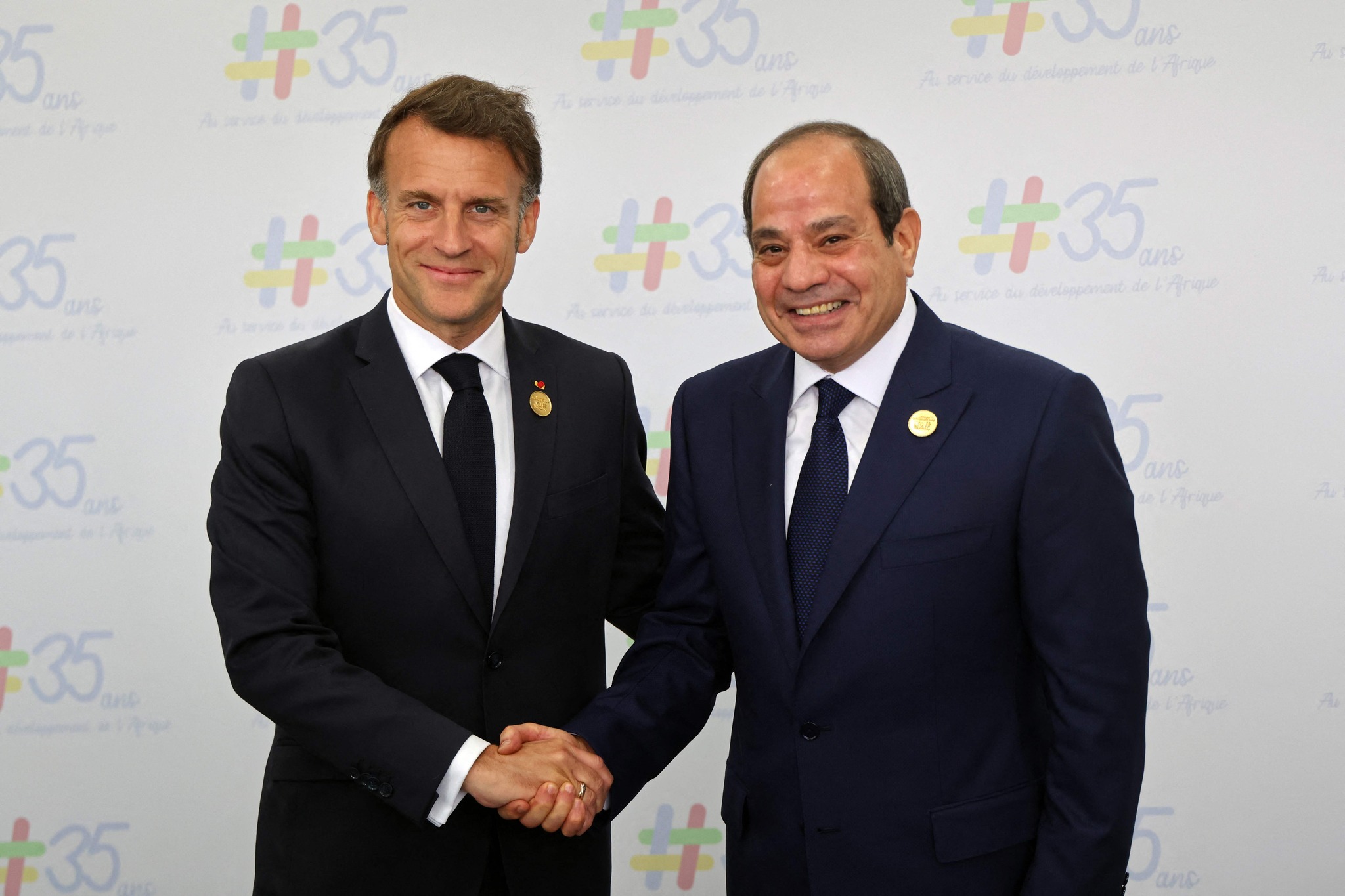
Al-Sisi and Macron Reaffirm Egypt and France Strategic Partnership to Bolster Regional Stability
Egyptian President Abdel Fattah Al-Sisi and French President Emmanuel Macron met in New Borg El Arab on May 9, 2026, to reaffirm their commitment to the Egypt and France strategic partnership. The high-level talks, held on the sidelines of the inauguration of the new campus of Senghor University, focused on the critical need for de-escalation across the Middle East and the strengthening of bilateral ties across multiple economic and educational sectors.
The meeting underscores a deepening diplomatic alignment between Cairo and Paris, which was formally elevated to a strategic partnership during President Macron’s visit to Egypt in April 2025. According to the Egyptian presidency, the discussions were attended by senior officials from both nations and addressed a broad spectrum of regional developments, bilateral cooperation, and the shared goal of preserving security in a volatile geopolitical climate.
For President Al-Sisi, the visit reflects the robustness of the ties between the two nations and serves as a bridge to further strengthen relations between Egypt and the European Union. For President Macron, the engagement is a testament to France’s commitment to the Mediterranean region and its role in supporting African development through cultural and scientific cooperation.
Education as a Diplomatic Bridge: The Senghor University Initiative
A central pillar of the visit was the inauguration of the new campus of Senghor University. Affiliated with the International Organisation of La Francophonie, the university specializes in training African professionals and leaders, positioning itself as a critical hub for capacity-building across the continent.

President Macron described the university project as “a remarkable global initiative” that enhances scientific and cultural cooperation throughout the Francophone world. He further emphasized that La Francophonie “belongs to everyone who chooses to embrace the French language,” framing the linguistic community as a primary driver for Africa’s future development.
The financial commitment to the institution is significant; the French president praised Egypt’s investment of €60 million in the university to ensure its operational success and growth. This investment is complemented by Egypt’s commitment to providing scholarships for African students, a move President Al-Sisi described as essential for empowering youth and preparing qualified professionals to tackle development challenges.
Beyond the university, France maintains a substantial educational footprint in Egypt. President Macron noted that approximately 60 French schools currently operate across the country, reinforcing the cultural and intellectual bonds between the two nations. Al-Sisi characterized the university as “a key pillar” in assisting African nations in the formulation of effective national policies, while praising France’s ongoing role in advancing African capacity-building efforts.
Navigating Middle East Volatility and the Path to Peace
Regional security dominated a significant portion of the expanded discussions. President Al-Sisi reviewed Egypt’s ongoing efforts to contain tensions in the Middle East, warning that continued instability poses a direct threat to global security, specifically citing potential disruptions to international trade, transportation, and supply chains.

The leaders focused heavily on the war in Gaza. President Al-Sisi detailed Egypt’s diplomatic efforts to consolidate the current ceasefire agreement and advance the second phase of the deal. Key priorities discussed included the facilitation of humanitarian aid entry into the enclave and the implementation of long-term reconstruction efforts.
Addressing the broader Israeli-Palestinian conflict, Al-Sisi expressed grave concern over escalating violations in the occupied West Bank. He reiterated that the only viable path to a lasting peace is a political process based on the two-state solution. This framework envisions the establishment of an independent Palestinian state along the 4 June 1967 borders, with East Jerusalem serving as its capital.
President Macron praised Egypt’s role in these regional de-escalation initiatives and expressed hope for a swift resolution to the crisis. He characterized the relationship between the two countries as a stabilizing force, stating, “The alliance between Egypt and France is an alliance for peace and stability.”
Addressing Lebanon and Mediterranean Unity
The dialogue extended beyond Gaza to the situation in Lebanon. Both leaders stressed the imperative of preserving peace and stability in the Levant, noting that the complexity of modern global challenges requires closer international cooperation. They agreed on the importance of strengthening ties among Mediterranean countries to foster shared prosperity and development, aiming to give future generations the opportunity to reconnect a region often divided by geopolitical strife.
Strategic Synergy: Trade, Investment, and Sovereignty
Beyond diplomacy and education, the two leaders explored ways to expand cooperation in tangible economic sectors. President Al-Sisi emphasized the need to intensify collaboration in trade, investment, industry, and transport. These efforts are designed to serve the mutual interests of both Cairo and Paris while integrating Egypt more deeply into the European economic framework.

On the matter of national security, Al-Sisi reaffirmed Egypt’s unwavering support for the sovereignty, security, and stability of all Arab states. He explicitly rejected any infringement on the territorial integrity or national resources of these nations, a position that aligns with France’s stated goal of supporting regional stability.
The partnership is viewed not merely as a bilateral agreement but as a strategic asset for the broader region. By combining France’s influence within the European Union and the Francophone world with Egypt’s leadership in the Arab world and Africa, the two nations aim to create a coordinated front against regional fragmentation.
Key Takeaways from the Al-Sisi-Macron Summit
- Strategic Partnership: Reaffirmed the elevation of ties established in April 2025, focusing on peace, stability, and EU-Egypt relations.
- Educational Investment: Egypt has invested €60 million in the new Senghor University campus to train African leaders.
- Gaza and West Bank: Discussions focused on the second phase of the Gaza ceasefire and a two-state solution based on 1967 borders.
- Regional Security: Emphasis on preventing the disruption of global trade and supply chains caused by Middle East instability.
- Francophone Influence: Recognition of the ~60 French schools in Egypt and the role of the French language in African development.
The meeting concluded with a mutual agreement to maintain a high frequency of communication to address emerging crises in the Mediterranean and Middle East. The next scheduled checkpoint for the partnership will involve follow-up discussions on the implementation of the second phase of the Gaza ceasefire and the formalization of new trade agreements in the transport and industry sectors.
World Today Journal encourages readers to share this report and join the conversation in the comments below regarding the role of educational diplomacy in regional stability.