
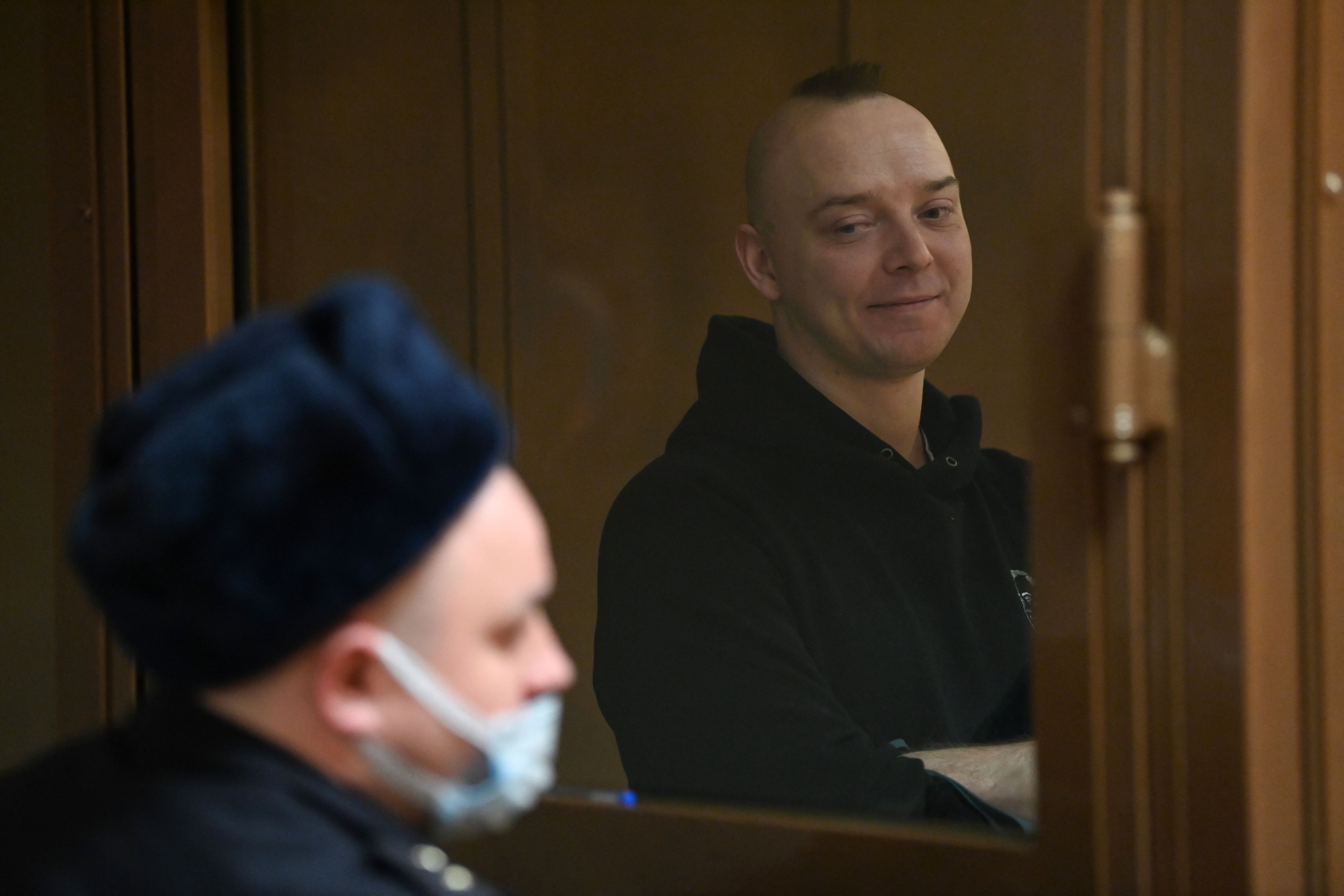
The sentencing of Ivan Safronov to 22 years in prison has become a focal point for international human rights advocates, signaling a deepening crisis for independent journalism within the Russian Federation. Once a respected voice reporting on the complexities of military and space industries, Safronov now finds himself in a high-security penal colony, thousands of kilometers from his home, following a trial shrouded in secrecy.
Amnesty International has officially designated Safronov as a prisoner of conscience, asserting that his imprisonment is not the result of legitimate espionage but a calculated effort to silence a journalist who exercised his right to freedom of expression. The designation underscores a growing pattern of using “high treason” charges to criminalize professional reporting and intimidate those who probe the inner workings of the Russian state.
The case of Ivan Safronov is not merely a legal dispute over classified information; This proves a stark illustration of the narrowing space for dissent and investigative reporting in Moscow. By targeting a journalist with a sentence that effectively amounts to a life term for many, the Russian authorities have sent a chilling message to the remaining independent media outlets and the lawyers who defend them.
As the international community calls for his immediate and unconditional release, the details of Safronov’s case reveal a systemic failure of due process, where closed-door proceedings and questionable evidence replaced the transparency required for a fair trial.
The Charges: High Treason and Article 275
Ivan Safronov’s legal ordeal began on July 7, 2020, when he was detained by officers of the Federal Security Service (FSB) in Moscow. The state’s case against him centered on Article 275 of the Russian Criminal Code, which governs “high treason.” The authorities alleged that Safronov had passed classified information regarding Russia’s national defense and security to a representative of a NATO country’s intelligence service.
Prior to his arrest, Safronov had built a distinguished career as a military journalist, contributing extensive reporting to prominent newspapers including Kommersant and Vedomosti. His work focused on Russia’s military-technical cooperation with foreign states, corruption within the defense sector, and the intricacies of the space industry. Shortly before his detention, his expertise led him to a role as an adviser to the Director General of Roskosmos, the Russian Space Agency.
The prosecution’s narrative attempted to blur the line between professional journalistic sourcing, and espionage. However, independent observers and legal experts have noted a critical lack of credible evidence to substantiate the claim that Safronov acted as a foreign agent or intentionally compromised national security. Instead, the evidence presented appeared to be a mischaracterization of standard journalistic activities—gathering information and maintaining contacts within the defense community.
A Trial Behind Closed Doors
The judicial process leading to Safronov’s conviction was marked by severe fair-trial violations. On September 5, 2022, the Moscow City Court sentenced Safronov to 22 years of imprisonment. The proceedings were conducted largely behind closed doors, a common practice in Russian “state secret” cases that effectively prevents public scrutiny and limits the ability of the defense to challenge the prosecution’s claims.

Marie Struthers, Amnesty International’s Eastern Europe and Central Asia Director, has been vocal about the irregularities of the trial. She stated, “The Russian authorities have not presented credible evidence that Ivan Safronov committed high treason. They conducted an unfair trial behind closed doors and issued a chilling 22-year sentence, apparently motivated by the desire to punish him for his journalistic work.”
The secrecy of the trial ensured that the “evidence” remained shielded from independent verification. This lack of transparency is a hallmark of political prosecutions in Russia, where the state can leverage the classification of documents to justify the detention of individuals without revealing the actual nature of the alleged crime to the public or the international community.
The Cost of Defense: Reprisals Against Lawyers
The assault on the rule of law in the Safronov case extended beyond the defendant himself. His legal team—including Ivan Pavlov, Evgueny Smirnov, and Dmitry Talantov—faced significant pressure and direct prosecution. The targeting of defense lawyers is a strategic move designed to isolate prisoners and discourage legal professionals from taking on high-profile political cases.
By subjecting Safronov’s lawyers to reprisals, the Russian state signaled that the act of defending a “traitor” is, in itself, a dangerous endeavor. This environment of intimidation creates a “defense vacuum,” where the accused is left without robust legal representation, further compromising the integrity of the judicial outcome.
According to Amnesty International, these reprisals, combined with continuing pressure on Safronov to reveal his journalistic sources, demonstrate a “system determined to silence journalists and punish those defending their rights.” The demand for sources is particularly egregious in a journalistic context, as it violates the fundamental professional ethic of source protection, which is essential for investigative reporting on state corruption and military failures.
Exile Within His Own Country: The Krasnoyarsk Colony
Following his conviction, Ivan Safronov was transferred to a high-security penal colony in Krasnoyarsk. The location of his imprisonment is a detail of significant psychological and practical cruelty: the colony is situated over 4,000 kilometers away from his home and family in Moscow.
This practice of “geographic isolation” is frequently used by Russian authorities to make it nearly impossible for families to visit their loved ones and for lawyers to maintain regular contact with their clients. By placing Safronov in a remote region of Siberia, the state effectively severs his ties to his support system and the international media community that continues to advocate for his release.
The conditions in high-security colonies in the Krasnoyarsk region are known to be grueling, adding a layer of physical hardship to the mental toll of a 22-year sentence. The distance serves as a physical manifestation of the state’s desire to erase Safronov from the public consciousness.
The Broader Assault on Independent Journalism
The designation of Ivan Safronov as a prisoner of conscience reflects a wider, systematic crackdown on freedom of expression in Russia. For years, the Russian government has expanded the definition of “foreign agents” and “undesirable organizations,” but the use of high treason charges represents an escalation in the severity of the punishment.
When a journalist is sentenced to two decades in prison for their work, it creates a pervasive atmosphere of fear. Other reporters, particularly those covering the military and security apparatus, are forced to choose between self-censorship and the risk of a similar fate. This erosion of the press leads to a vacuum of reliable information, which is especially dangerous during times of geopolitical conflict.
Marie Struthers emphasized that “Ivan Safronov’s case is emblematic of the Russian authorities’ assault on independent journalism and freedom of expression.” The case serves as a warning that no amount of professional prestige or official affiliation—even as an adviser to a state agency like Roskosmos—can protect a journalist if their reporting is deemed inconvenient to the Kremlin.
Key Implications of the Safronov Case
- Criminalization of Sourcing: The case establishes a dangerous precedent where the act of maintaining professional contacts for reporting is equated with espionage.
- Judicial Opacity: The use of closed-door trials for treason charges removes the possibility of a fair and public defense.
- Legal Intimidation: The prosecution of defense lawyers limits the ability of political prisoners to receive a competent legal defense.
- Psychological Warfare: The placement of prisoners in remote colonies like Krasnoyarsk is used to isolate dissidents from their families and legal counsel.
Call for Action and Global Response
The international human rights community continues to demand that the Russian authorities immediately and unconditionally release Ivan Safronov and quash his conviction. The insistence on his release is grounded in the belief that he was imprisoned solely for exercising his right to freedom of expression and for his professional work as a journalist.

For the global community, the Safronov case is a reminder of the fragility of press freedom. The transition from a journalist to a “prisoner of conscience” can happen rapidly when the legal system is weaponized against the truth. Ensuring that journalists and lawyers can perform their duties without fear of reprisals is not just a Russian domestic issue, but a global imperative for the maintenance of human rights.
The ongoing pressure from organizations like Amnesty International is vital in keeping Safronov’s name in the public eye, preventing the state from successfully isolating him in the depths of Siberia. The demand remains clear: the Russian authorities must ensure that the legal system is used for justice, not as a tool for political silencing.
There are currently no officially scheduled hearings for the appeal or review of Ivan Safronov’s sentence, as the Russian judicial system has largely upheld the original ruling. International observers continue to monitor the situation for any shifts in the legal status of political prisoners in Russia.
We invite our readers to share this story and join the conversation on the state of press freedom globally. Your engagement helps keep these critical human rights issues in the spotlight.