The Hague Erupts: Examining the Violence at an Anti-Immigration Protest and its Political Context
The Hague,netherlands,witnessed significant unrest on Saturday,September 20,2024,as a presentation against immigration policies descended into violence.Clashes between right-wing protesters and riot police resulted in injuries, property damage, and a heightened sense of political tension just weeks before a crucial snap election. This article provides a comprehensive overview of the events, the key players involved, and the broader implications for the Netherlands.
What Happened in The Hague?
The protests began peacefully enough, with hundreds gathering at the Malieveld in The Hague. The demonstration was spurred by a social media call to action from a woman known online as “Els Rechts” (“Els Right”), advocating for stricter asylum laws and a reduction in immigration. However, the situation rapidly deteriorated.
Here’s a breakdown of the key events:
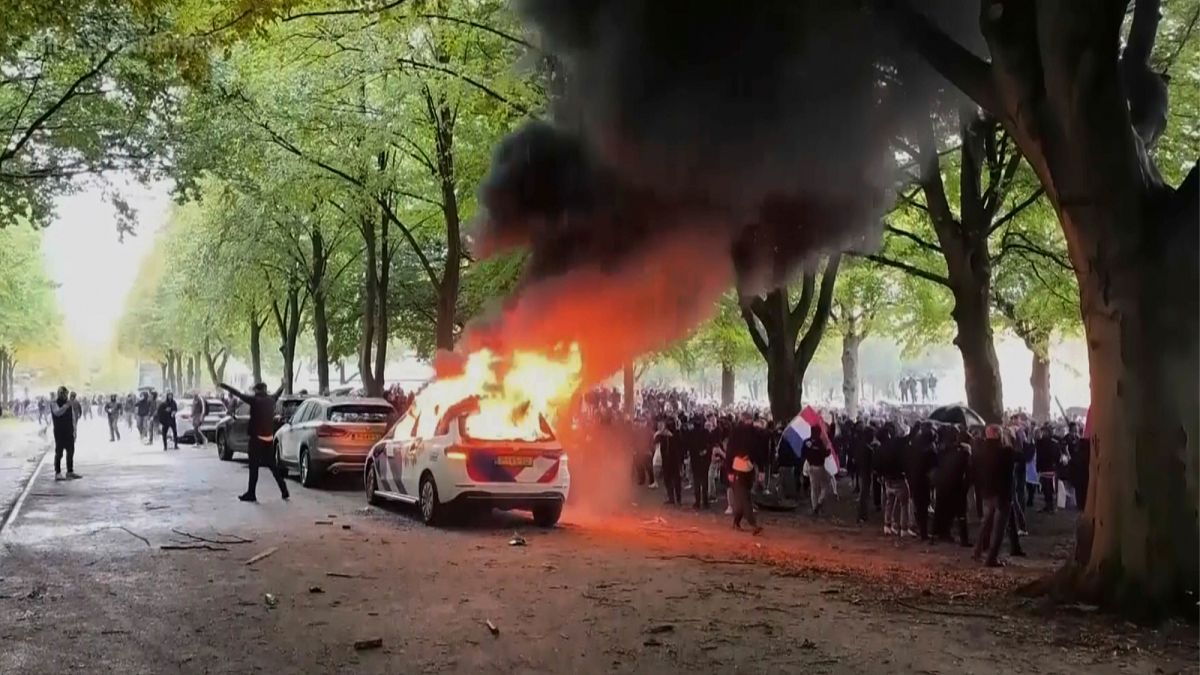
* escalation of Violence: A segment of protesters, many clad in black and displaying Dutch flags alongside symbols associated with far-right groups, began throwing stones and bottles at police officers.
* Vehicle Arson: One police patrol vehicle was set ablaze, escalating the severity of the confrontation.
* Police response: law enforcement responded with tear gas and a water cannon in an attempt to disperse the increasingly volatile crowd.
* targeted Vandalism: Protesters briefly blocked a highway and vandalized the offices of the D66, a center-left political party, smashing windows.
Reactions from Political Leaders
The violence drew swift and strong condemnation from across the political spectrum.
* Rob Jetten (D66 Leader): Jetten, whose party’s office was targeted, firmly denounced the attacks on X (formerly twitter), stating that attempts to intimidate his party would fail. He emphasized the importance of defending the Netherlands against extremist violence.
* Dick Schoof (Caretaker Dutch Prime Minister): Schoof described the scenes as “shocking and bizarre,” labeling the attacks on police and the D66 office as “completely unacceptable.” He expressed confidence in law enforcement’s ability to identify and prosecute those responsible. Schoof reiterated the importance of peaceful demonstration, stating, “Ther is always room for demonstrations, never for violence.”
* Geert Wilders (PVV Leader): While declining an invitation to speak at the demonstration,Wilders,leader of the far-right Party for Freedom (PVV),also condemned the violence as “unacceptable.”
The Role of “Els rechts”
“Els Rechts,” the individual who initially called for the protest, quickly distanced herself from the violence that unfolded. In a post on X, she expressed her assumption that the demonstration would remain peaceful and stated she would not have organized it had she foreseen the escalation. her denunciation,however,does little to diminish the impact of her initial call to action.
The Political Backdrop: A Nation on the Brink of Elections
The timing of these events is notably significant. The Netherlands is preparing for a snap election on October 29th, triggered by the collapse of the ruling coalition. This collapse stemmed from disagreements over migration policy, specifically after far-right leader Geert Wilders withdrew his ministers.
This political instability has created a fertile ground for heightened tensions surrounding immigration. The upcoming election is expected to be closely contested, with the PVV currently leading in polls. The events in The Hague underscore the deep divisions within Dutch society regarding immigration and integration.
Understanding the Underlying Issues
The protest and subsequent violence are symptomatic of broader anxieties within the Netherlands regarding immigration. these concerns include:
* Strain on Public Services: Some citizens express concerns about the capacity of public services, such as healthcare and education, to accommodate a growing population.
* Cultural Integration: Debates surrounding cultural integration and the preservation of Dutch identity are ongoing.
* Asylum System: The asylum system is a frequent point of contention, with calls for stricter regulations and faster processing times.
* Economic Impact: Concerns about the economic impact of immigration, particularly regarding employment and social welfare, are also prevalent.
What’s Next for the Netherlands?
The events in The Hague represent a critical moment for the Netherlands. The snap election will be a defining moment, perhaps shifting the contry’s political landscape.
Here are key areas to watch:
*
Related reading