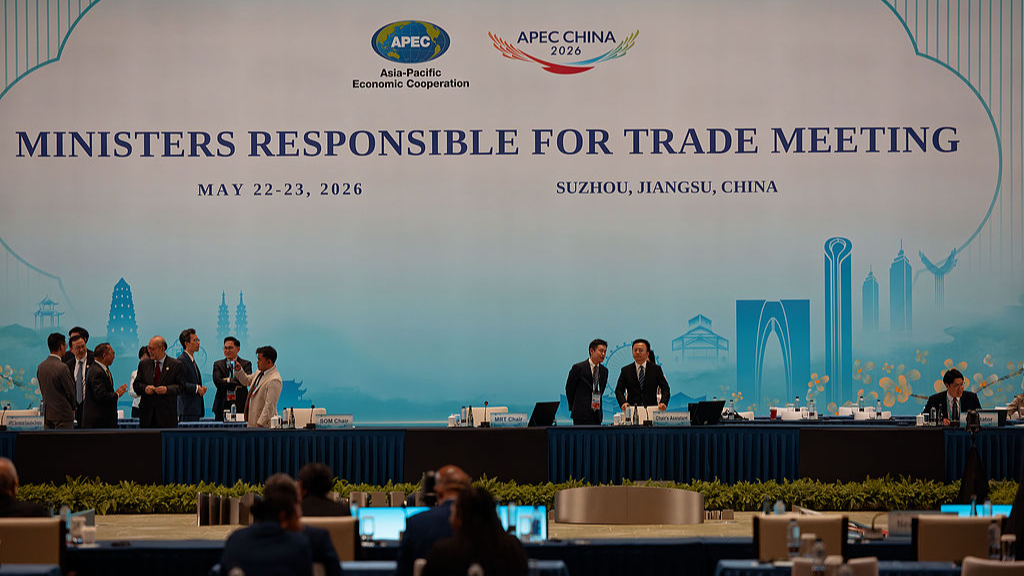
Suzhou, China — The 32nd Asia-Pacific Economic Cooperation (APEC) Trade Ministers’ Meeting has concluded with the adoption of the Suzhou Declaration, a landmark statement that outlines concrete measures to strengthen regional trade resilience, accelerate digital economy integration, and address pressing supply chain vulnerabilities. Hosted by China under its 2026 APEC chairmanship—dubbed “China Year”—the meeting brought together trade officials from all 21 member economies to chart a course for sustainable economic recovery in the Asia-Pacific region.
The declaration, issued on May 26, 2026, follows months of negotiations focused on stabilizing post-pandemic trade flows, reducing barriers to cross-border data transfers, and fostering closer cooperation between governments and private sector stakeholders. Analysts describe the Suzhou Declaration as a pragmatic response to recent disruptions, including geopolitical tensions, climate-related supply chain bottlenecks, and the rapid evolution of digital trade norms.
Key among the declaration’s provisions is a commitment to enhance supply chain transparency, with member economies agreeing to share real-time data on critical goods movements and coordinate risk mitigation strategies. The text also emphasizes the need to harmonize digital trade regulations, a priority given the growing importance of e-commerce and cross-border data flows in regional trade. The declaration reaffirms APEC’s support for sustainable and inclusive trade policies, aligning with broader global efforts to integrate environmental and social considerations into economic planning.
What the Suzhou Declaration Covers: A Breakdown of Key Commitments
The Suzhou Declaration is structured around five core pillars, each addressing a critical challenge facing the Asia-Pacific region:
1. Strengthening Supply Chain Resilience
Trade ministers acknowledged that supply chain fragility remains a top concern, exacerbated by recent geopolitical tensions and natural disasters. The declaration calls for:
- Enhanced data sharing among member economies to identify and mitigate bottlenecks in real time.
- Support for regional supply chain diversification, reducing over-reliance on single-source production hubs.
- Collaboration with the private sector to invest in resilient infrastructure**, particularly in logistics and digital connectivity.
Chinese Trade Minister Wang Wentao emphasized during the meeting that “no single economy can address supply chain challenges alone,” urging collective action to restore stability. Official APEC statements highlight that this pillar directly responds to disruptions seen in semiconductor manufacturing and agricultural product distribution over the past two years.
2. Advancing Digital Trade and Cross-Border Data Flows
The declaration dedicates significant attention to digital trade**, recognizing it as a growth driver for the region. Key actions include:
- Harmonization of data localization laws to facilitate cross-border data transfers while respecting privacy standards.
- Expansion of trusted trading partner frameworks** to streamline customs procedures for digital goods.
- Promotion of e-commerce standards** that support small and medium-sized enterprises (SMEs) in accessing global markets.
Ministers noted that over 60% of APEC’s total trade now involves digital components, according to a 2025 APEC Economic Policy Report cited during the meeting. The declaration urges members to accelerate digital infrastructure investments, particularly in less-developed economies.
3. Promoting Sustainable and Inclusive Trade
Reflecting global priorities, the Suzhou Declaration underscores the need to align trade policies with sustainable development goals (SDGs)**. Ministers committed to:
- Integrate environmental and social clauses** into trade agreements to reduce carbon footprints and labor exploitation risks.
- Support green trade corridors** that prioritize low-emission shipping and logistics.
- Enhance trade capacity-building** for developing economies, including technical assistance and financing.
This pillar builds on APEC’s existing Sustainable Connectivity Principles, first adopted in 2021, and expands their application to trade policy frameworks. APEC’s official guidance on sustainable trade was referenced multiple times during negotiations.
4. Addressing Trade Barriers and Facilitating Market Access
The declaration reaffirms APEC’s long-standing commitment to trade liberalization** while acknowledging new challenges, including:
- Reducing non-tariff barriers** such as complex regulatory approvals and licensing requirements.
- Promoting transparency in trade remedies** to prevent protectionist measures from escalating.
- Encouraging regional value chain integration** to boost intra-APEC trade.
Ministers also called for accelerated negotiations** on the APEC Services Trade Facilitation Agreement**, a project stalled since 2020 due to divergent national interests. The Suzhou Declaration sets a timeline for restarting discussions by the end of 2026.
5. Enhancing Regional Economic Cooperation
To implement the declaration’s provisions, APEC members agreed to:
- Establish a Supply Chain Resilience Task Force** to monitor global trade flows and recommend policy responses.
- Launch a Digital Trade Innovation Hub** to pilot new cross-border data transfer mechanisms.
- Conduct annual trade policy reviews** to track progress and identify emerging challenges.
China’s role as host for 2026 was pivotal in securing these commitments, with officials highlighting the need for “1+1>2” synergy**—where bilateral cooperation between major economies (e.g., China-U.S., China-EU) can drive broader regional progress. This concept was echoed in remarks by Chinese Trade Minister Wang Wentao during the meeting.
China’s “China Year” and the Suzhou Declaration: What’s Next?
As APEC’s 2026 chair, China has framed its leadership around three themes: innovation, connectivity, and sustainability**. The Suzhou Declaration aligns with these priorities, particularly through its focus on digital trade and green supply chains. However, analysts note that the declaration’s success will hinge on implementation**—a challenge given APEC’s consensus-based decision-making process.

Looking ahead, the next critical checkpoint is the APEC Economic Leaders’ Meeting**, scheduled for November 2026 in Hangzhou, China. Leaders are expected to:
- Review progress on the Suzhou Declaration’s supply chain and digital trade initiatives.
- Discuss new trade tensions**, including those related to semiconductor exports and agricultural subsidies.
- Launch pilot projects under the declaration’s task forces, with initial results due by mid-2027.
The declaration also sets the stage for the 2027 APEC chairmanship**, which will rotate to Thailand**. Thai officials have already signaled interest in building on the Suzhou Declaration’s digital trade provisions, particularly in Southeast Asia.
Who Benefits? Stakeholders and Regional Impact
The Suzhou Declaration’s provisions are designed to benefit multiple stakeholders across the Asia-Pacific:
| Stakeholder Group | Key Benefits | Potential Challenges |
|---|---|---|
| Large Multinational Corporations (MNCs) | Simplified cross-border data transfers, reduced supply chain risks, and clearer digital trade rules. | Implementation delays could prolong uncertainty for long-term investments. |
| Small and Medium Enterprises (SMEs) | Access to digital trade tools, capacity-building programs, and expanded market access. | Limited resources may hinder participation in new initiatives. |
| Developing Economies (e.g., Vietnam, Indonesia, Papua New Guinea) | Technical assistance, financing for supply chain upgrades, and sustainable trade support. | Competing priorities may slow adoption of new standards. |
| Consumers | More stable prices for goods, greater product variety, and potentially lower tariffs on essential items. | Environmental trade-offs if sustainability measures are not strictly enforced. |
Economists project that if fully implemented, the Suzhou Declaration could boost APEC’s intra-regional trade by 3–5% annually** over the next five years. However, Financial Times analysis warns that geopolitical risks—particularly U.S.-China tensions—could undermine progress if not managed carefully.
Expert Reactions: What Analysts Are Saying
Reactions to the Suzhou Declaration have been largely positive, though some experts caution that the devil lies in the details:
“The Suzhou Declaration is a significant step forward, especially in supply chain resilience and digital trade. The challenge now is ensuring that the commitments translate into concrete actions—something APEC has struggled with in the past.”
“China’s leadership on this declaration is a strategic move to position itself as a stable force in regional trade. However, without U.S. And EU buy-in on critical issues like data flows, the declaration’s impact will be limited.”
Chinese officials have emphasized that the declaration is “inclusive and balanced,”** avoiding language that could alienate any member economy. This approach reflects APEC’s tradition of consensus-based decision-making**, where all 21 economies must agree to any binding measure.
How to Stay Updated: Official Resources and Next Steps
For readers seeking further details, the following resources provide official updates and implementation tracking:
- APEC Suzhou Declaration 2026 (Full Text)
- Meeting Transcripts and Ministerial Statements
- Supply Chain Task Force Updates
- Digital Trade Innovation Hub Announcements
The next major APEC event is the APEC Senior Officials’ Meeting (SOM)**, scheduled for August 2026 in Beijing. This gathering will begin the process of operationalizing the Suzhou Declaration’s commitments. The APEC Business Advisory Council (ABAC)** will also release its annual report in September, offering private-sector perspectives on the declaration’s feasibility.
Key Takeaways: What the Suzhou Declaration Means for Global Trade
- Supply chains are the top priority: The declaration signals a shift toward proactive risk management, with real-time data sharing as a cornerstone.
- Digital trade is no longer optional: Members recognize that cross-border data flows and e-commerce must be prioritized to maintain competitiveness.
- Sustainability is embedded in trade policy: For the first time, APEC is explicitly linking trade agreements to environmental and social outcomes.
- Implementation will determine success: Past APEC declarations have often lacked follow-through; stakeholders will watch closely for actionable steps.
- China’s leadership is strategic: By hosting the 2026 chairmanship and pushing for the Suzhou Declaration, China aims to counterbalance U.S. Influence in the region.
As the Asia-Pacific region navigates post-pandemic recovery and geopolitical uncertainties, the Suzhou Declaration offers a roadmap for cooperation. Whether it can deliver tangible results will depend on the political will of member economies—and their willingness to move beyond rhetoric to action.
What do you think? Will the Suzhou Declaration lead to meaningful trade reforms, or will it join past APEC agreements in good intentions unfulfilled? Share your views in the comments below, and follow World Today Journal for ongoing coverage of APEC’s 2026 initiatives.
Worth a look