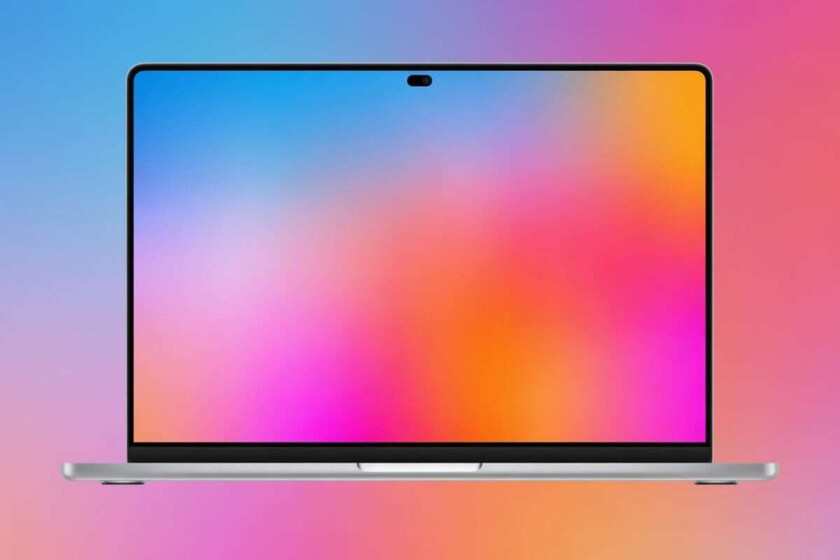
Apple has selected Samsung Display to supply roughly 2.5 million OLED touchscreen panels for upcoming 14-inch and 16-inch MacBook Pro laptops, leaving rival suppliers LG Display and BOE out of the initial production run slated to begin in August at Samsung’s facility in Asan, South Korea.
Apple is preparing one of the most substantial hardware overhauls in the history of its flagship portable computers. Supply chain reports indicate that the company has entrusted Samsung Display with an exclusive contract to produce organic light-emitting diode (OLED) touchscreen panels for forthcoming 14-inch and 16-inch MacBook Pro laptops. The initial order calls for roughly 2.5 million units, marking a definitive shift away from Apple’s long-standing prohibition against touch-enabled Mac displays. Ming-Chi Kuo was the first and Mark Gurman vino después, having outlined the concept of the MacBook Ultra featuring a touch screen, a thinner design, and an M6 chip.
Samsung Secures Exclusive Production Run in Asan
Mass production for the new panels is expected to begin around August at Samsung’s advanced 8.6-generation facility in Asan, South Korea, ahead of a potential laptop release targeted for late 2026 or early 2027. This display technology brings features already established in premium smartphones and the latest iPad Pro directly to Apple’s portable workstation line. The panels incorporate advanced technological specifications, including oxide transistors, a two-layer tandem emission structure, and integrated touch functionality built straight into the display layer without adding extra thickness to the device chassis.
By working directly with Apple from the early development stages, Samsung aligned its manufacturing conditions and panel specifications to capture total control over the initial rollout, leaving LG Display and BOE out of this first batch. This single-source strategy represents a departure from Apple’s traditional component sourcing practices, which normally rely on multiple vendors to keep component costs manageable and protect against supply chain delays.
Why LG Display and BOE Were Left Out
Rival manufacturers LG Display and China’s BOE Technology Group were sidelined from this development cycle due to existing factory workloads and technical limitations. While Samsung deployed its newer 8.6-generation line capable of processing larger glass sheets more efficiently for laptop-sized displays, LG evaluated utilizing its older 6th-generation manufacturing infrastructure.
That same official noted that entry into the MacBook Pro OLED supply chain will not happen until 2029 at the earliest for LG. Meanwhile, BOE faced hurdles regarding panel yield rates and technological maturity. Industry observers suggest that BOE might eventually target lighter portable lines, with a potential entry point for the MacBook Air emerging around 2028.
Hardware Redesigns and Consumer Expectations
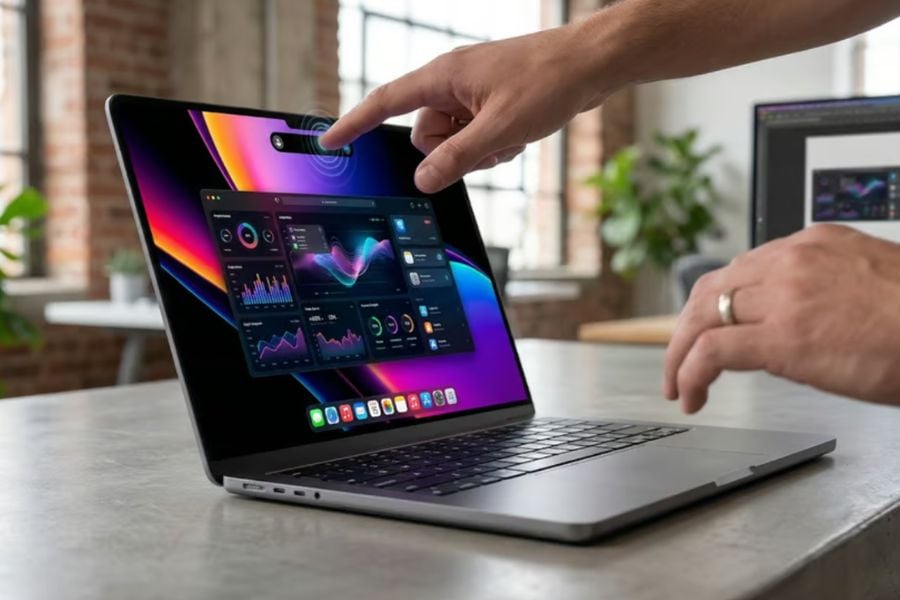
The integration of an OLED touchscreen is part of a broader physical and functional redesign for the MacBook Pro family that will break away from models presented in 2021. The upgraded laptops are anticipated to feature a thinner chassis made possible by component miniaturization seen in the Mac mini M4 and iPad Pro M4, alongside a Dynamic Island replacing the notch, an M6 chip, and software backing through macOS 27 to handle larger touch-friendly controls, zoom and scroll gestures, and a new slide-to-refresh gesture.
For buyers, the transition promises deeper contrast levels, faster response times, extended battery life, and thinner display profiles. However, industry analysts note that relying exclusively on a single vendor for a complex multi-layer tandem OLED panel exposes Apple to potential factory disruptions or yield dips. If component costs remain elevated while Apple continues pairing these displays with high-end architecture, consumers could face a steep price premium for the updated professional lineup ahead of a targeted release window in late 2026 or early 2027.