
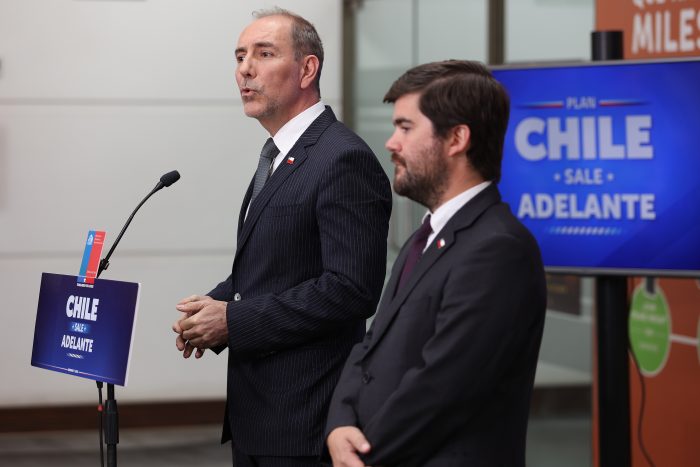
Chile has begun distributing monthly financial assistance to transport workers as part of a government initiative aimed at easing the burden of rising fuel costs. The program, launched under the broader “Chile Sale Adelante” economic recovery plan, provides eligible drivers with a $100,000 Chilean peso subsidy each month for up to six months. Payments commenced on April 20, 2026, with the first round reaching over 48,000 beneficiaries nationwide.
The initiative specifically targets owners and operators of collective taxis, standard taxis, school transport vehicles, and those operating on the Arica-Tacna route. According to official figures from the Ministry of Transport and Telecommunications, 25,491 recipients are collective taxi drivers, 15,351 are taxi operators, 7,439 work in school transportation, and three are engaged in the Arica-Tacna cross-border service. All funds are disbursed through the Bolsillo Electrónico de Combustibles, a dedicated digital wallet linked to active CuentaRUT accounts at BancoEstado.
To qualify, applicants must have registered between April 1 and April 30, 2026, and maintain an active CuentaRUT. The benefit is structured to decrease incrementally based on the month of application, encouraging early enrollment. Payments will continue monthly until either six installments have been issued or the national average price of Brent crude oil falls to $80 per barrel, whichever occurs first. This dual-condition design ties the duration of support directly to global fuel market fluctuations.
The Bolsillo Electrónico de Combustibles functions as a restricted-use digital account, accessible only for fuel purchases at authorized service stations. Beneficiaries receive notifications when funds are deposited and can utilize the balance via BancoEstado’s mobile app or at affiliated gas stations. The system was developed in coordination between the Ministry of Transport and Telecommunications and BancoEstado to ensure transparency and prevent misuse of public funds.
Regional rollout has varied, with some areas reporting faster adoption than others. In La Araucanía, local officials confirmed that over 2,000 transport workers had received the subsidy by mid-April, reflecting strong uptake in southern regions where diesel prices have significantly impacted operating costs. Similar patterns have been observed in the Biobío and Los Lagos regions, where reliance on long-haul and rural transport amplifies sensitivity to fuel volatility.
The program forms part of a wider set of measures introduced by the Chilean government to stabilize household economies amid persistent inflationary pressures. Alongside the transport subsidy, authorities have expanded public transit discounts, adjusted fare structures on Metro and EFE rail services, and promoted energy-efficient vehicle certification programs. Officials emphasize that the transport bonus is temporary and conditional, designed not as a permanent wage supplement but as a targeted response to exceptional fuel price spikes.
As of late April 2026, the Ministry of Transport and Telecommunications continues to process applications and verify eligibility. Official updates on beneficiary counts, fund distribution, and Brent oil price benchmarks are published weekly on the ministry’s website. Transport unions and consumer associations have called for greater transparency regarding the criteria used to determine when the $80 per barrel threshold is met, advocating for real-time public dashboards to track the trigger condition.
The next official review of the program’s continuation criteria is scheduled for May 15, 2026, when the Ministry will assess whether the Brent oil price average has approached the $80 benchmark. Until then, eligible transport workers who applied by April 30 remain entitled to receive monthly payments, subject to verification of their CuentaRUT status and ongoing compliance with program rules.
For the most current information on eligibility, payment schedules, and how to check the status of the Bolsillo Electrónico de Combustibles, users are directed to the official portal of the Ministry of Transport and Telecommunications. Beneficiaries are encouraged to ensure their contact details are up to date to avoid delays in notification or fund access.
What do you consider about Chile’s approach to supporting transport workers during periods of fuel volatility? Share your perspective in the comments below, and consider sharing this article with others who may find it useful.