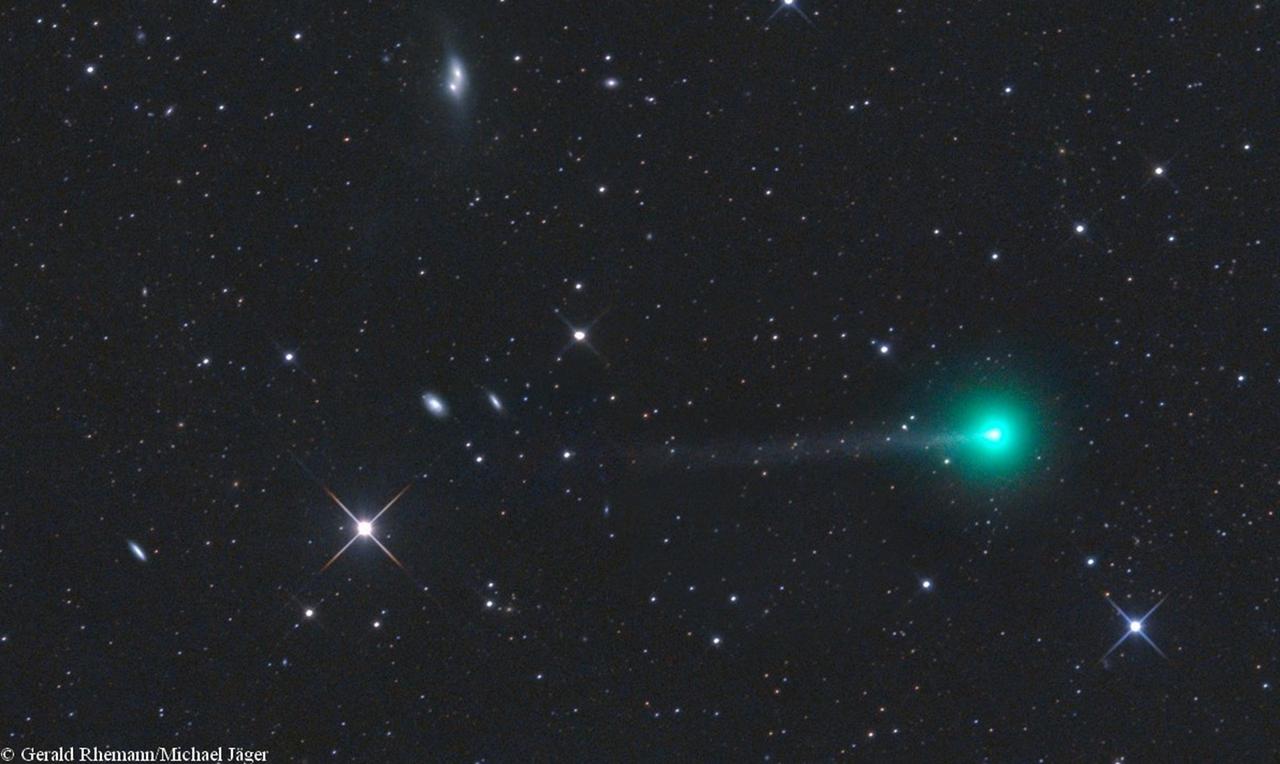
Stargazers are turning their eyes upward this month as a high-stakes celestial drama unfolds. The arrival of Comet C/2026 A1 (MAPS) has captured the attention of the astronomical community, not just for its potential brightness, but for the perilous path it is taking toward the center of our solar system.
Known as a Kreutz sungrazer, this comet is on a trajectory that brings it dangerously close to the Sun. For observers on Earth, this creates a thrilling “will-it-or-won’t-it” scenario: the comet may brighten significantly as it heats up, or it could succumb to the Sun’s intense gravitational and thermal forces and break apart entirely before it can make a grand appearance according to reports on April’s night sky.
While the fate of Comet C/2026 A1 (MAPS) remains a wildcard, it is far from the only highlight this month. April 2026 is proving to be an exceptionally dense period for astronomy, featuring a rare combination of planetary alignments, lunar events, and meteor showers that make it a prime window for both seasoned astronomers and casual observers.
From the “Pink Moon” that opened the month to the current peak visibility of Mercury, the night sky is offering a series of events that require little more than a clear horizon and a bit of patience. With up to nine rare night sky wonders expected this month—including a planet parade and the elusive Zodiacal Light—the next few weeks are stacked with opportunities to witness the mechanics of our universe in real-time as detailed in recent astronomy guides.
The High-Stakes Journey of Comet C/2026 A1 (MAPS)
The term “sungrazer” refers to a specific class of comets that pass extremely close to the Sun during their perihelion—the point in their orbit closest to the solar center. Comet C/2026 A1 (MAPS) belongs to the Kreutz family, a group of fragments from a single, massive comet that broke apart centuries ago. These objects are famous for their dramatic and often tragic ends.

As a Kreutz sungrazer, the comet experiences extreme thermal stress. As it approaches the Sun, the ice and frozen gases within the comet’s nucleus sublimate rapidly, creating a brilliant coma and a long, streaming tail. However, the same heat and tidal forces that make the comet visible can also cause it to disintegrate. If the nucleus is fragile, the comet may literally vanish or shatter into smaller pieces as it “grazes” the Sun, a process that astronomers watch closely to understand the composition of early solar system materials.
For those hoping to spot it, the timing is critical. The “wildcard factor” of such comets means that visibility can change overnight. While some sungrazers develop into naked-eye spectacles, others disappear in a flash of solar heat. The current anticipation surrounding Comet C/2026 A1 (MAPS) stems from the possibility that it may survive its closest approach and emerge as a bright object in the morning or evening sky.
April’s Celestial Calendar: Beyond the Comet
While the comet provides the drama, the rest of April’s lineup offers reliability. The month began with a visual treat on April 1, 2026, with the appearance of the “Pink Moon” as recorded by weather and astronomy trackers. Despite the evocative name, the moon does not actually turn pink; the nickname is derived from the moss pink wildflowers that bloom in North America during early spring.
For those who missed the full moon, today, April 3, 2026, marks a significant opportunity to spot Mercury. The planet has reached its greatest elongation, meaning it is at its farthest angular distance from the Sun from our perspective on Earth confirmed for April 3. Because Mercury stays so close to the Sun, it is usually lost in the solar glare; greatest elongation is the primary window when it becomes visible to the naked eye or with basic binoculars, usually appearing just after sunset or before sunrise.
Looking further into the month, stargazers can anticipate the Lyrids, one of the year’s most reliable meteor showers. These “shooting stars” are produced when Earth passes through the debris trail left by Comet C/1861 G1 Thatcher. When combined with a “planet parade”—a visual alignment of multiple planets in the sky—and the faint, cone-shaped glow of the Zodiacal Light, April becomes a comprehensive exhibition of solar system dynamics.
April 2026 Key Astronomical Events
| Event | Date | What to Look For |
|---|---|---|
| Pink Moon | April 1, 2026 | Full moon; appears large and golden on the eastern horizon. |
| Mercury Greatest Elongation | April 3, 2026 | Mercury is easiest to spot, farthest from the Sun’s glare. |
| Comet C/2026 A1 (MAPS) | Ongoing (April) | Potential bright comet; risk of disintegration as a sungrazer. |
| Lyrid Meteor Shower | April (Peak varies) | Reliable streaks of light across the night sky. |
| Planet Parade | April (Various) | Multiple planets visible in a loose alignment. |
Stargazing Tips for the Global Audience
One of the most encouraging aspects of this month’s lineup is that most of these events do not require expensive telescopes or professional equipment. To gain the most out of the April sky, observers should follow a few basic guidelines:

- Find a Dark Site: To see the Zodiacal Light or the Lyrids, move away from city lights. Light pollution is the primary enemy of the amateur astronomer.
- Time Your Viewing: For the Pink Moon and Mercury, the “golden hour” just after sunset or before sunrise is critical. Mercury, in particular, is most visible when the Sun is just below the horizon.
- Use a Sky Map: While the planets are bright, using a stargazing app can help you distinguish between a distant planet and a nearby star, especially during a planet parade.
- Patience with Comets: Because Comet C/2026 A1 (MAPS) is a sungrazer, its visibility can be volatile. Check updated astronomical charts daily to see if the comet has survived its approach or shifted in brightness.
The combination of reliable events like the Lyrids and the unpredictable nature of the “kamikaze” comet makes April 2026 a unique month for science communication. It reminds us that while the laws of physics are constant, the results—such as whether a comet survives its plunge toward the Sun—can be surprising.
The next major milestone for observers will be the peak of the Lyrid meteor shower. Stay tuned for updates on the stability and visibility of Comet C/2026 A1 (MAPS) as it continues its journey.
Do you have photos of the Pink Moon or a sighting of Mercury from your part of the world? Share your observations in the comments below or tag us on social media.
Related reading