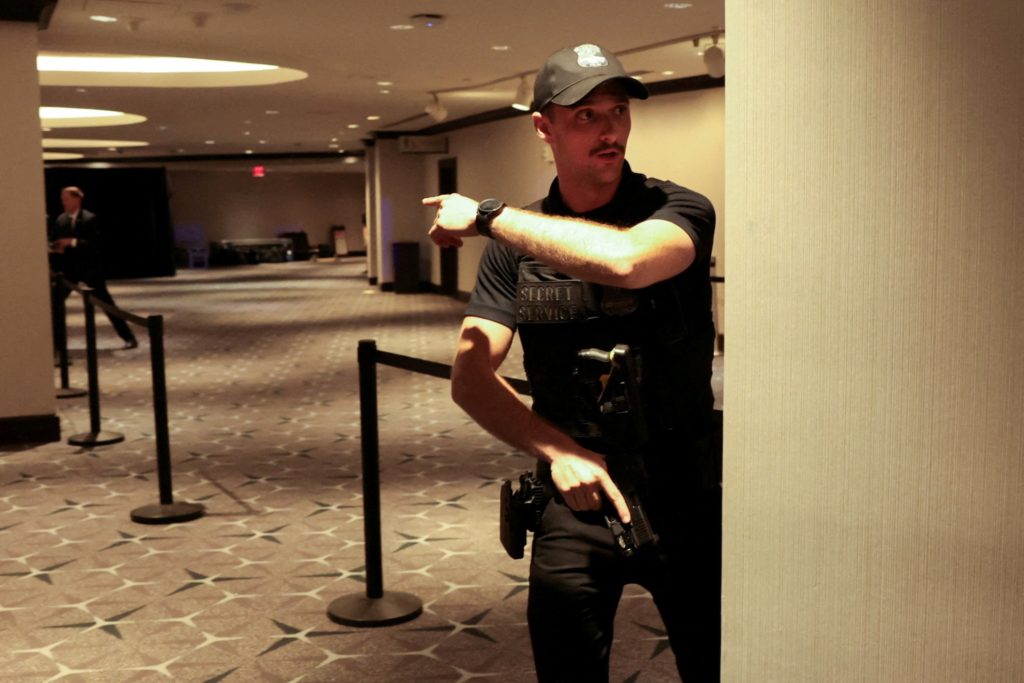
The U.S. Department of Justice has released new surveillance footage that provides a chilling look at the security breach during the White House Correspondents’ Association (WHCA) dinner. The video captures the precise moment a suspect charged past security checkpoints, fueling a national debate over the adequacy of presidential protection at high-profile public events.
The incident, which occurred on Saturday, April 26, 2026, saw an armed man breach the outermost layers of security at the Washington Hilton. The newly released footage shows the suspect, identified in reports as Cole Allen, rushing through a magnetometer and sprinting toward the ballroom where President Donald Trump and high-ranking administration officials were gathered. The breach forced an abrupt evacuation of the President and other Cabinet members as Secret Service agents engaged the attacker.
Security experts and policymakers are now scrutinizing how a suspect armed with guns and knives was able to penetrate such a high-security environment. The release of the video by the Justice Department aims to provide transparency into the timeline of the attack, but it has simultaneously highlighted critical vulnerabilities in the “ring of steel” typically deployed around the U.S. President.
The Breach: Analysis of the Justice Department Footage
The high-quality surveillance footage released by the Department of Justice depicts a chaotic sequence of events. According to the visuals, the suspect managed to bypass initial screenings, reportedly because he was a guest of the hotel, which allowed him to navigate the perimeter more easily than an outside intruder. The Washington Post reported that the suspect reached the top of a staircase leading directly into the ballroom.
The footage shows the suspect charging toward Secret Service agents. In the ensuing confrontation, an agent fired shots at the suspect before he was tackled and neutralized. The video also includes evidence of the suspect “staking out” the area prior to the attack, suggesting a premeditated attempt to identify gaps in the security perimeter.
Critical Security Failures and the “Guest” Loophole
A central question emerging from the investigation is how the suspect successfully navigated the magnetometer and security checkpoints. Initial reports indicate that the suspect’s status as a hotel guest may have provided a tactical advantage, allowing him to move within the venue’s interior spaces without triggering the same level of scrutiny as those entering from the street. This “insider” or “guest” vulnerability is a recurring challenge for security details in large-scale commercial venues like the Washington Hilton.
The proximity of the attacker to the President is a point of significant concern. Analysis of the hotel schematics and CCTV footage indicates that the suspect was only a flight of stairs away from the primary event space. This proximity underscores the danger of “last-mile” security failures, where the final barrier between an attacker and the protectee is breached.
Expert Perspective: The Cost of Security Lapses
The incident has drawn the attention of national security analysts, including Juliette Kayyem, the Robert and Renee Belfer Senior Lecturer in International Security and faculty chair of the Homeland Security Project at the Harvard Kennedy School. Kayyem, a veteran of crisis management and a senior national security analyst, has previously emphasized that the Secret Service’s primary mandate is the absolute prevention of such breaches.
The breach at the WHCA dinner is being viewed not as an isolated event, but as part of a broader pattern of security challenges facing the executive branch. The ability of an armed individual to reach the ballroom staircase suggests a failure in the coordination between hotel security and the federal detail, or a failure in the technology used to screen guests.
What Which means for Future Presidential Events
This security failure is likely to trigger a comprehensive review of how the Secret Service manages “mixed-use” venues—locations where the public or hotel guests coexist with high-security zones. Potential changes may include:
- Enhanced Guest Screening: Implementing more rigorous background checks or physical screenings for all hotel guests in the vicinity of the President.
- Hardened Perimeters: Creating more definitive physical barriers between hotel corridors and event spaces to prevent “sprinting” attacks.
- Integrated Surveillance: Better real-time integration between private hotel security feeds and Secret Service command centers.
Timeline of the WHCA Dinner Incident
| Phase | Event Detail | Outcome |
|---|---|---|
| Pre-Attack | Suspect (Cole Allen) observed staking out the venue. | Intelligence gap in early detection. |
| The Breach | Suspect sprints past magnetometer and security checkpoint. | Security perimeter compromised. |
| Escalation | Suspect reaches the ballroom staircase. | Direct threat to President and Cabinet. |
| Neutralization | Secret Service agent fires shots; suspect tackled. | Suspect taken into custody. |
| Evacuation | President Trump and officials abruptly removed from the room. | Successful emergency extraction. |
The Legal and Political Fallout
The Justice Department’s release of the video is a precursor to formal legal proceedings. Cole Allen faces severe federal charges related to the attempted assassination of the President. The evidence of premeditation—specifically the footage showing him scouting the area—will likely be central to the prosecution’s case.
Politically, the incident has reinforced calls for increased funding and reform within the Secret Service. The fact that an attacker could reach the “threshold” of the ballroom has led to public questioning of whether current protocols are sufficient for the modern threat landscape, which increasingly involves determined individuals attempting to exploit the seams between different security layers.
Key Takeaways for Public Safety and Security
- The “Insider” Threat: The incident highlights how legitimate access (such as being a hotel guest) can be weaponized to bypass security.
- Response vs. Prevention: While the Secret Service successfully neutralized the threat, the “failure” occurred at the prevention stage—allowing the suspect to reach the stairs.
- Transparency: The DOJ’s release of high-quality footage is intended to quell speculation and provide a factual basis for the security review.
- Venue Vulnerability: Large hotels present unique challenges compared to controlled government facilities, requiring a hybrid approach to security.
As the investigation continues, the focus will shift to the specific failure of the magnetometer and the communication lag that allowed the suspect to make his run. The Justice Department is expected to provide further updates as the criminal case against Cole Allen proceeds.
The next confirmed checkpoint in this matter will be the initial court appearances and formal arraignment of the suspect, where the full scope of the federal charges will be detailed. We will continue to monitor the filings from the U.S. District Court for the relevant jurisdiction.
Do you believe current presidential security protocols are sufficient for public events in commercial venues? Share your thoughts in the comments below or share this article to join the conversation.