
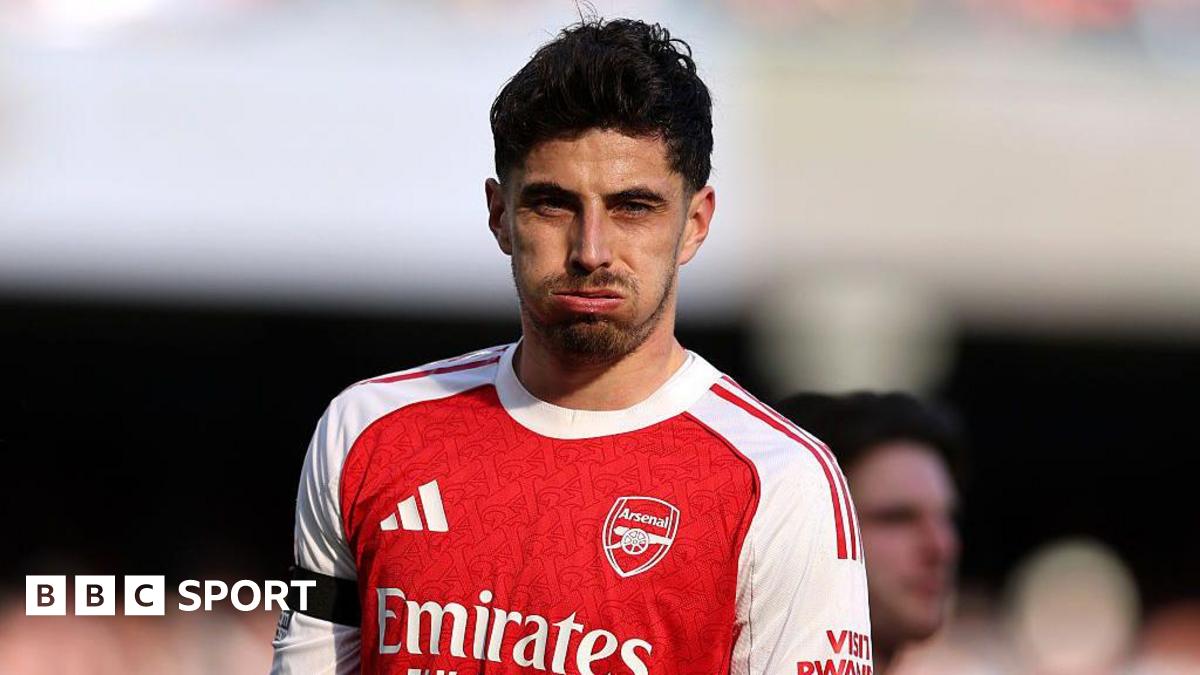
Arsenal and Manchester City are locked on points and goal difference heading into the final five games of the Premier League season, setting up one of the most tightly contested title races in recent memory. With both teams separated by nothing more than the number of goals scored, every match becomes a potential decider. The intensity of this battle has sparked widespread debate among fans and pundits alike, particularly regarding Arsenal’s recent tendency to grind out narrow 1-0 victories. As the pressure mounts, questions arise about whether the Gunners need a fundamental shift in mindset to sustain their challenge against a City side known for its relentless attacking output.
The current standings reflect a season defined by resilience and fine margins. Both clubs have amassed identical points totals and goal differences after 33 matches, a rarity in Premier League history that underscores how evenly matched they have been. This statistical parity means that goal difference — typically a secondary tiebreaker — has become irrelevant, leaving goals scored as the sole determinant should they finish level. In such a scenario, Arsenal’s recent reliance on 1-0 wins, whereas effective in securing points, may not be sufficient to overtake City if the Etihad side continues to win by larger margins.
Arsenal’s approach under Mikel Arteta has evolved into one characterized by defensive solidity and opportunistic attacking. Over the past month, the Gunners have secured several 1-0 victories, including wins against Burnley and Nottingham Forest, where late goals preserved slim leads. While this strategy has kept them in contention, it contrasts sharply with Manchester City’s recent form, which has seen them win multiple games by two or more goals. City’s ability to convert dominance into comprehensive victories gives them a significant edge in the goals-scored race, a fact that could prove decisive in the final stretch.
The psychological implications of this divergence in playing styles are significant. Arsenal’s tendency to protect narrow leads reflects a cautious, risk-averse mindset that has served them well in tight games but may limit their ability to impose themselves on matches. Sports psychologists note that teams consistently aiming for 1-0 wins often develop a reactive rather than proactive mentality, focusing on not losing rather than actively seeking to win big. In a title race decided by goal-scoring output, this could become a liability if Arsenal fails to break down lower-block defenses with greater urgency and creativity.
Conversely, Manchester City’s approach under Pep Guardiola remains rooted in sustained pressure and territorial dominance. Their recent win over Arsenal at the Etihad, secured through a late goal, exemplified their willingness to retain pushing for additional scores even after taking the lead. This mindset — prioritizing control and expansion of leads — directly enhances their goal difference and total goals scored, giving them a built-in advantage in tiebreaker scenarios. Analysts argue that this relentless pursuit of superiority, rather than mere victory, is what separates elite title contenders from those who merely survive.
The importance of goals scored as a tiebreaker cannot be overstated in this context. Premier League rules state that if two teams finish level on points and goal difference, the team with more goals scored is ranked higher. With Arsenal and City currently identical in both primary metrics, every goal becomes doubly valuable — not only for securing points but also for improving their standing in the secondary criteria. A single additional goal over the remaining five games could be the difference between lifting the trophy and watching rivals celebrate.
Recent matches have highlighted the stark contrast in how each team approaches game management. Arsenal’s 1-0 win at Selhurst Park against Crystal Palace came despite limited possession and few clear-cut chances, relying on defensive organization and a moment of individual brilliance. In contrast, City’s 3-1 victory over Fulham the same week showcased their ability to score early, absorb pressure, and then add late goals to seal the result. Such outcomes accumulate over a season, creating a growing gap in goal metrics that may be difficult to overcome in a short span.
Arteta has acknowledged the need for evolution in his team’s approach, stating in a recent press conference that “winning ugly has its place, but to win the league you need to be able to dominate games and score more than one.” His comments suggest an awareness that the current strategy, while effective in keeping Arsenal in the race, may not be sufficient to surpass City without adaptation. The challenge lies in maintaining defensive discipline while increasing attacking ambition — a balance that requires both tactical adjustment and psychological readiness.
The psychological burden of chasing a team that consistently wins by large margins should not be underestimated. Knowing that a 1-0 win may not be enough unless City drops points or fails to score heavily can affect decision-making on the pitch. Players may feel compelled to push for second goals prematurely, leading to overextension and vulnerability on the counter. Conversely, excessive caution could result in missed opportunities to kill games off. Finding the right mental equilibrium — where confidence in attack does not compromise defensive integrity — will be crucial for Arsenal’s hopes.
Historical precedents offer mixed lessons. In the 2011-12 season, Manchester City won the title on goal difference after scoring three injury-time goals against Queens Park Rangers, overcoming Arsenal’s superior head-to-head record. More recently, in 2019-20, Liverpool secured the championship with a record points total but also led the league in goals scored, demonstrating that dominance in both areas often correlates with success. These examples reinforce that while grit and resilience are vital, sustained title challenges typically require a blend of defensive reliability and offensive prolificacy.
Looking ahead, the remaining fixtures present both teams with opportunities to assert dominance. Arsenal face a mix of mid-table sides and European-chasing clubs, games where breaking down defenses will be essential to avoid dropping points in 1-0 scorelines. City, meanwhile, have a slightly more challenging run-in, including matches against teams fighting for Champions League qualification. How each side responds — particularly in terms of goal output — will likely determine the outcome.
the question is not whether Arsenal’s 1-0 wins are valid — they are fully legitimate results that reflect tactical discipline and resilience — but whether they are sufficient in a race decided by fine margins. To overtake Manchester City, the Gunners may need to evolve beyond merely protecting leads and instead seek to impose their will on games with greater conviction. A mindset shift toward aiming for 2-0 or 3-0 victories, without sacrificing the defensive foundations that have kept them competitive, could be the key to turning narrow wins into a title-winning campaign.
As the season enters its decisive phase, all eyes will be on how both teams manage the psychological and tactical demands of a finish where every goal carries double weight. For Arsenal, the path forward may lie not in abandoning what has worked, but in expanding their ambition to match the scale of the challenge ahead.
Stay updated on the Premier League title race by following official match reports and league standings. Share your thoughts on whether Arsenal needs a mindset shift to overcome Manchester City in the comments below.