On April 26, 2026, the Artemis II mission marked a historic milestone in human space exploration as the Orion spacecraft completed its circumlunar flight, carrying four astronauts farther from Earth than any humans have traveled before. This achievement not only advances NASA’s Artemis program but likewise invites reflection on the legacy of lunar exploration, particularly through the perspective of those who came before.
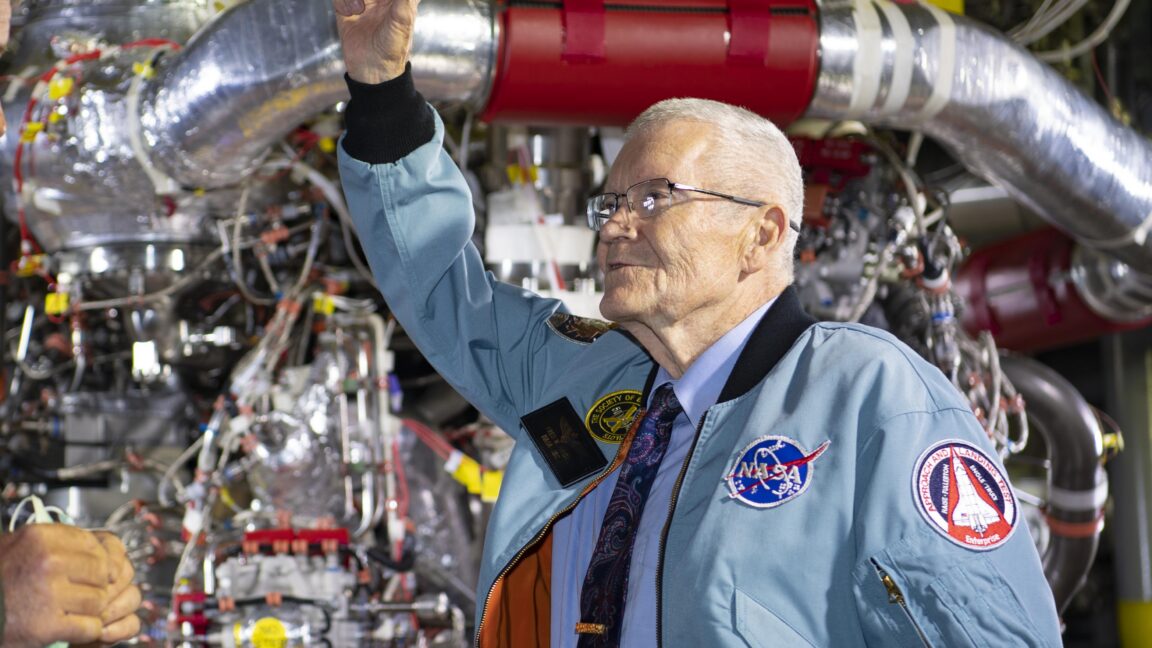
Among the most poignant moments following the mission’s success was the reaction of Fred Haise, Apollo 13 lunar module pilot and one of the few living individuals to have journeyed toward the Moon. Though his own Apollo 13 flight in 1970 did not result in a lunar landing due to an in-flight emergency, Haise and his crew still reached a distance from Earth that stood as a record for over five decades. Now, with Artemis II surpassing that distance, Haise has expressed not disappointment, but pride in seeing the torch passed to a recent generation.
The Artemis II crew—comprising NASA astronauts Reid Wiseman, Victor Glover, and Christina Koch, along with Canadian Space Agency astronaut Jeremy Hansen—traveled to a maximum distance of 252,756 miles (406,771 kilometers) from Earth during their journey around the Moon. This exceeds the previous record set by the Apollo 13 crew, who reached 248,655 miles (400,171 kilometers) from Earth in April 1970. The difference, even as seemingly modest in the vastness of space, represents a meaningful advancement in deep space capabilities and underscores the progress made since the Apollo era.
This milestone is particularly significant as NASA prepares for future Artemis missions aimed at landing astronauts on the lunar surface, including the first woman and the first person of color to walk on the Moon. The data gathered from Artemis II will inform the design and execution of subsequent flights, particularly Artemis III, which aims to achieve a lunar landing later this decade.
Fred Haise, now in his early 90s, has long been an advocate for continued space exploration. In public statements following the Artemis II flight, he emphasized that records are meant to be broken and that each advancement builds upon the courage and innovation of those who came before. His perspective reflects a broader sentiment among the surviving Apollo astronauts, many of whom have voiced support for NASA’s renewed focus on the Moon as a stepping stone to Mars and beyond.
As of April 2026, only a small number of individuals who have flown to the Moon remain alive. According to publicly available records from NASA and biographical sources, the living Apollo astronauts who flew to the Moon include Fred Haise (Apollo 13), Jim Lovell (Apollo 8 and 13), Ken Mattingly (Apollo 16), Charles Duke (Apollo 16), and Harrison Schmitt (Apollo 17). All are in their 80s or 90s, serving as living links to a transformative period in human history.
The Artemis II mission also highlights the evolving nature of space exploration, with increased international collaboration and diversity in crew composition. Christina Koch’s participation, for instance, builds on her record-setting tenure aboard the International Space Station, while Jeremy Hansen represents the first Canadian Space Agency astronaut to venture beyond low Earth orbit as part of a NASA-led mission.
Technically, the Orion spacecraft used in Artemis II demonstrated critical life support, navigation, and heat shield capabilities essential for deep space travel. Its trajectory took it thousands of miles beyond the Moon’s far side before returning to Earth—a path designed to test systems under conditions that cannot be replicated in low Earth orbit. The successful splashdown and recovery of the capsule were monitored by teams across multiple NASA centers and international partners.
Looking ahead, NASA has outlined a series of upcoming milestones for the Artemis program. The next major event is the anticipated launch of Artemis III, currently scheduled for no earlier than September 2026, which aims to land astronauts near the lunar south pole. This mission will depend on the readiness of the Space Launch System rocket, the Orion spacecraft, and the Starship human landing system being developed by SpaceX.
For those interested in following the progress of the Artemis program, NASA provides regular updates through its official website, social media channels, and live broadcasts of key events. The agency also maintains detailed mission dashboards that track spacecraft health, trajectory, and timelines in real time.
As humanity continues to extend its reach into the solar system, moments like the Artemis II flight serve as both technical achievements and cultural touchstones. They remind us that exploration is not merely about setting records, but about expanding what is possible—and ensuring that the spirit of discovery is carried forward by those who dare to go farther.
To stay informed about future launches, mission milestones, and developments in space exploration, readers are encouraged to follow official NASA announcements and engage with the global conversation surrounding humanity’s return to the Moon.