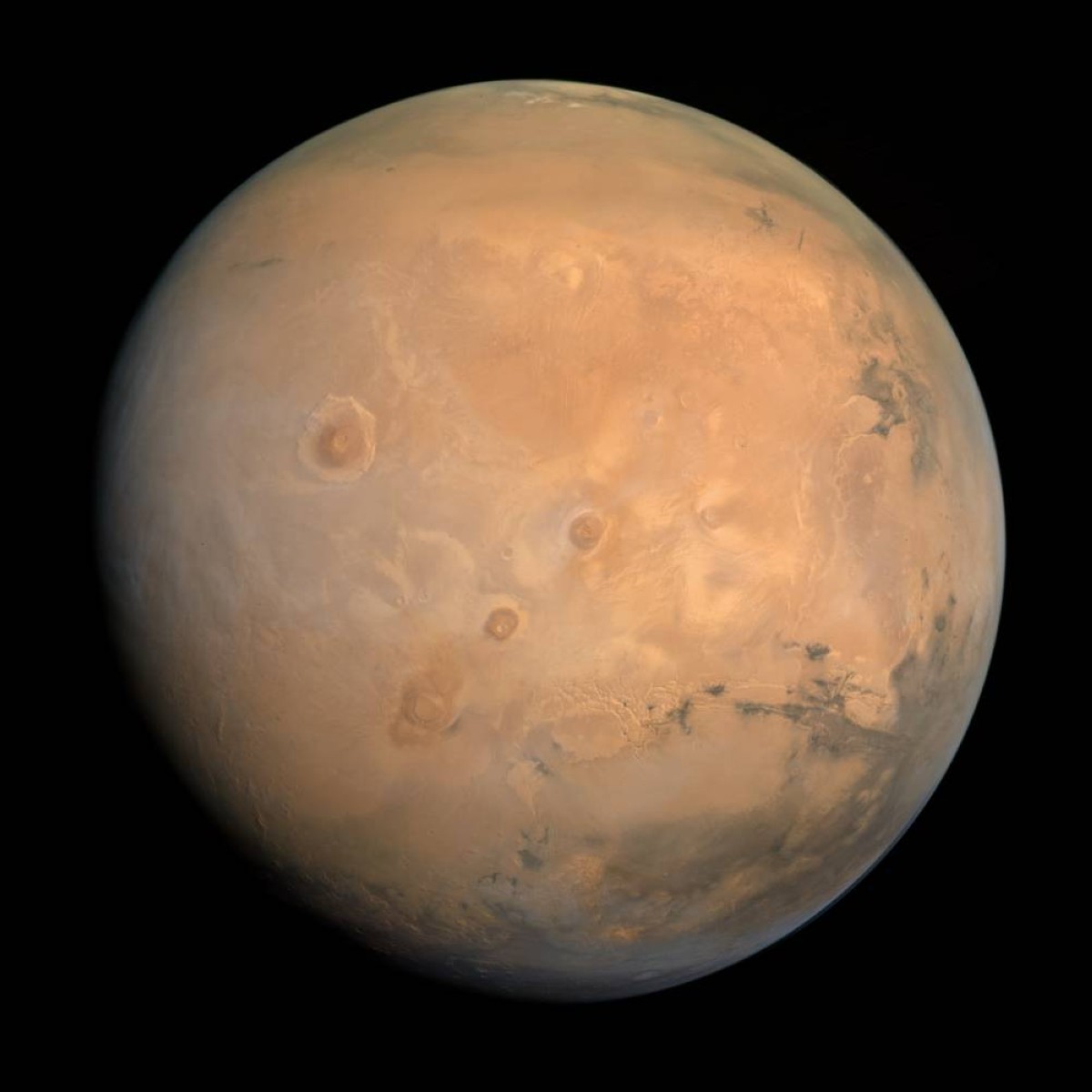
Brazilian Astronomer Proposes Faster Route to Mars Utilizing Asteroid Data
San Francisco, CA – A Brazilian astronomer has identified a potential pathway to significantly reduce travel time to Mars, a development that could reshape the future of space exploration. Currently, a journey to the Red Planet takes between seven and ten months. However, Marcelo de Oliveira Souza, utilizing data from asteroid 2001 CA21, believes a new trajectory could cut that duration by as much as half. This discovery, reported by multiple news outlets, offers a glimmer of hope for more efficient and feasible interplanetary travel.
The prospect of shortening the trip to Mars is a major step forward, addressing one of the most significant hurdles to manned missions. Prolonged space travel poses considerable risks to astronaut health, including radiation exposure, bone density loss and psychological challenges. Reducing the transit time directly mitigates these risks, making long-duration missions more viable. The research focuses on leveraging the gravitational forces of celestial bodies to create a more efficient trajectory, a concept known as a ballistic capture trajectory.
Understanding the Proposed Trajectory
Souza’s work centers around the asteroid 2001 CA21, a near-Earth object whose orbital characteristics offer a unique gravitational “assist.” By carefully calculating the timing and trajectory of a spacecraft relative to this asteroid, it may be possible to slingshot around it, gaining speed and altering course in a way that drastically shortens the distance to Mars. This isn’t a completely novel concept; gravitational assists are routinely used in space missions to reach distant planets, but utilizing a specific asteroid in this manner for a Mars mission represents a new approach.

While the specifics of the trajectory remain complex and require further refinement, the underlying principle is rooted in celestial mechanics. The asteroid’s gravity, though relatively small, can impart a significant change in velocity to a spacecraft passing nearby. This change in velocity can be strategically used to align the spacecraft with a faster and more direct path to Mars. The challenge lies in precisely calculating the optimal timing and trajectory to maximize the gravitational assist while ensuring the spacecraft remains on course.
The Significance of Asteroid 2001 CA21
Asteroid 2001 CA21 is a relatively small near-Earth asteroid, estimated to be approximately 10 meters in diameter. It was discovered in February 2001 and has been tracked by astronomers ever since. Its orbital path brings it relatively close to Earth, making it a potential candidate for future asteroid mining or deflection missions. However, Souza’s research highlights a different potential application: using its gravitational field as a stepping stone to Mars. NASA’s Jet Propulsion Laboratory maintains detailed information on near-Earth objects, including 2001 CA21, providing crucial data for trajectory calculations.
The choice of 2001 CA21 isn’t arbitrary. Its orbital parameters, including its distance from Earth and its velocity, are particularly well-suited for providing a gravitational assist towards Mars. Souza’s calculations suggest that a spacecraft launched at a specific time and following a carefully planned trajectory could utilize the asteroid’s gravity to significantly reduce the energy required to reach the Red Planet. This reduction in energy translates directly into a shorter travel time.
Challenges and Future Research
Despite the promising nature of this discovery, several challenges remain. Precise trajectory calculations are crucial, and even small errors could lead to significant deviations from the intended path. The timing of the launch window is critical, as the positions of Earth, Mars, and 2001 CA21 must align favorably. The feasibility of this trajectory as well depends on the capabilities of future spacecraft, including their propulsion systems and navigational accuracy.
Further research is needed to refine the trajectory calculations and assess the practical limitations of this approach. This includes conducting simulations to model the spacecraft’s behavior under various conditions and developing robust control systems to ensure accurate navigation. Collaboration between astronomers, aerospace engineers, and mission planners will be essential to translate this theoretical possibility into a tangible reality. The European Space Agency (ESA) is currently developing advanced trajectory optimization tools that could be instrumental in refining Souza’s proposed route. ESA’s navigation technology program focuses on improving the precision and reliability of space-based navigation systems.
Impact on Future Mars Missions
If successfully implemented, this new trajectory could have a profound impact on future Mars missions. A shorter travel time would not only reduce the health risks to astronauts but also lower the overall cost of missions by reducing the amount of consumables required. It could also open up new possibilities for scientific exploration, allowing for more frequent and ambitious missions to the Red Planet. The reduced travel time could also make it more feasible to establish a permanent human presence on Mars, a long-term goal of many space agencies.

The implications extend beyond just manned missions. Shorter travel times would also benefit robotic missions, allowing for faster delivery of scientific instruments and quicker return of samples to Earth. This could accelerate the pace of scientific discovery and provide valuable insights into the history and potential habitability of Mars. The development of more efficient trajectories is a critical step towards making Mars exploration more accessible, and sustainable.
Key Takeaways
- A Brazilian astronomer has proposed a new trajectory to Mars utilizing the gravitational pull of asteroid 2001 CA21.
- The proposed trajectory could potentially reduce travel time to Mars by up to 50%, from 7-10 months to less than half that duration.
- Further research and development are needed to refine the trajectory calculations and assess the practical limitations of this approach.
- Successful implementation of this trajectory could significantly reduce the risks and costs associated with Mars missions, paving the way for more frequent and ambitious exploration.
The next steps involve detailed simulations and analysis by space agencies and research institutions to validate Souza’s findings and assess the feasibility of implementing this new trajectory. Continued monitoring of asteroid 2001 CA21 will also be crucial to refine the trajectory calculations and ensure the safety of future missions. The prospect of a faster route to Mars represents a significant advancement in space exploration, bringing the dream of human settlement on the Red Planet one step closer to reality.
What are your thoughts on this potential breakthrough? Share your comments below, and let’s discuss the future of Mars exploration!
Worth a look