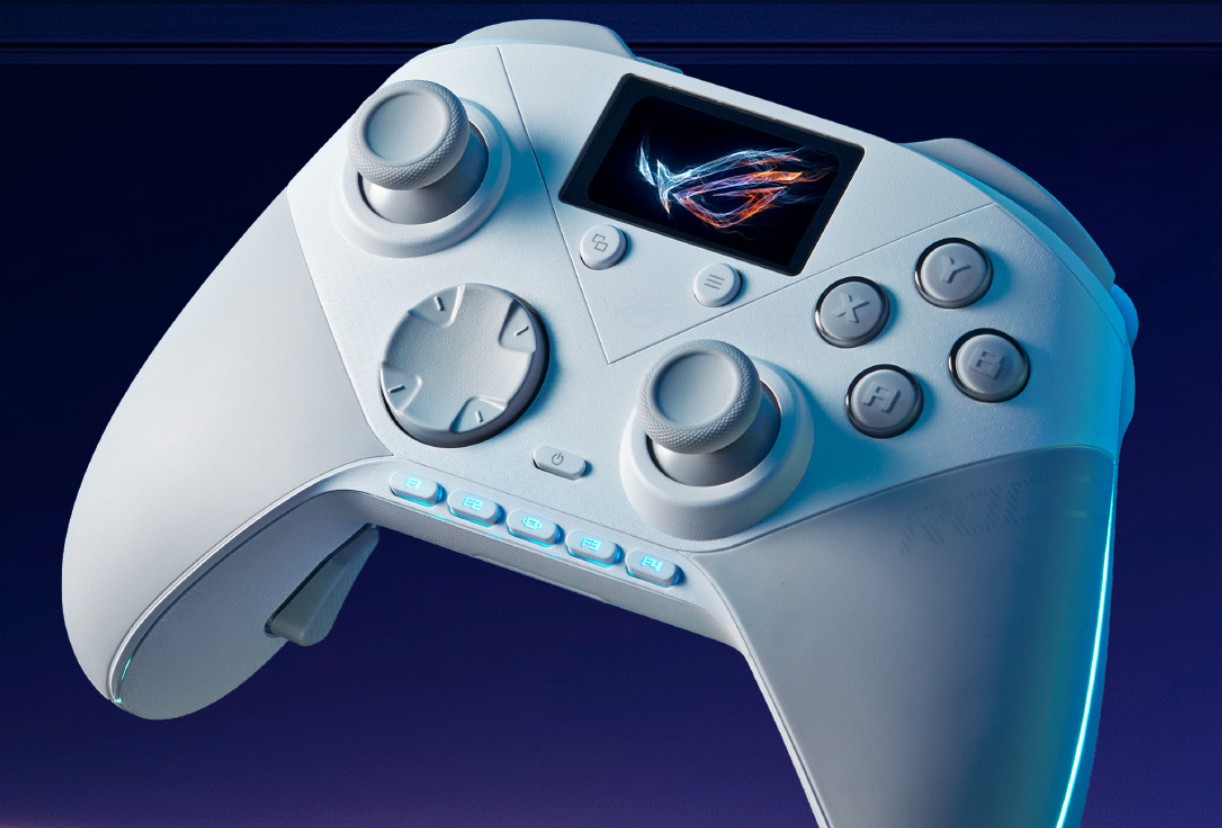
Asus has officially expanded its Republic of Gamers (ROG) peripheral lineup with the ROG Raikiri 2 Pro, a high-performance gaming controller designed to bridge the gap between console-style ergonomics and PC-grade responsiveness. The device stands out in the current market by offering an 8,000 Hz polling rate, a specification typically reserved for top-tier gaming mice, aimed at minimizing input latency for competitive players.
According to official product specifications, the ROG Raikiri 2 Pro supports tri-mode connectivity, allowing users to switch between 2.4 GHz wireless, Bluetooth, and wired USB-C connections. The manufacturer reports a battery life of up to 75 hours, though real-world performance may vary based on usage of the integrated OLED display and haptic feedback settings. The controller is currently positioned as a flagship offering for PC gamers seeking modularity and high-speed data transmission.
Engineering for Competitive Latency
The headline feature of the ROG Raikiri 2 Pro is its 8,000 Hz polling rate. In the context of gaming controllers, this refers to the frequency at which the device reports its state to the PC—8,000 times per second. By comparison, standard controllers typically operate at 250 Hz to 500 Hz. This technical leap is intended to provide a more consistent connection and reduce the “click-to-action” delay, a metric critical in fast-paced competitive titles.
To support this, Asus has integrated advanced internal processing capable of handling the increased data throughput required by such a high polling frequency. The controller also features modular components, including swappable stick modules, which allow players to customize the physical resistance and height of the analog sticks. This level of hardware customization is increasingly becoming a standard expectation for premium peripherals, as noted in recent industry hardware transitions toward user-serviceable components.
Display and Connectivity Features
A distinctive element of the Raikiri 2 Pro is the built-in OLED screen located on the controller’s face. This display serves as a dashboard for the user, allowing for real-time adjustments to settings, profile switching, and monitoring of battery status or connection mode without needing to minimize the game or open the Armoury Crate software on the PC. This hardware-level integration simplifies the user experience during intense gaming sessions.
Connectivity remains a primary focus for the device’s versatility. The 2.4 GHz wireless mode is the primary method for achieving the lowest latency, while Bluetooth provides compatibility with mobile devices and laptops. The inclusion of a wired USB-C connection ensures that players can continue their session while charging, a necessity given the power demands of the integrated OLED panel and high-speed polling circuitry.
Market Context and Future Availability
The release of the Raikiri 2 Pro arrives as Asus continues to diversify its ROG peripheral ecosystem. The company has simultaneously been focusing on high-refresh-rate display technology, recently unveiling monitors capable of reaching 488 Hz, which aligns with the broader industry trend of pushing refresh rates and polling frequencies higher to satisfy the demands of esports professionals and enthusiasts.

For users interested in the latest updates regarding regional pricing and specific retail availability, monitoring the official Asus ROG portal remains the most accurate method for obtaining verified information. As of now, the device is marketed as a premium PC peripheral, with its compatibility and software support tied closely to the ROG ecosystem. While the controller introduces notable technical specifications, users should verify their specific PC configuration’s ability to handle high-polling-rate devices to ensure optimal performance.
We invite our readers to share their experiences with high-polling-rate peripherals in the comments below. Have you noticed a meaningful difference in responsiveness, or does the hardware preference come down to ergonomics? Join the conversation as we track further developments in the gaming hardware space.