
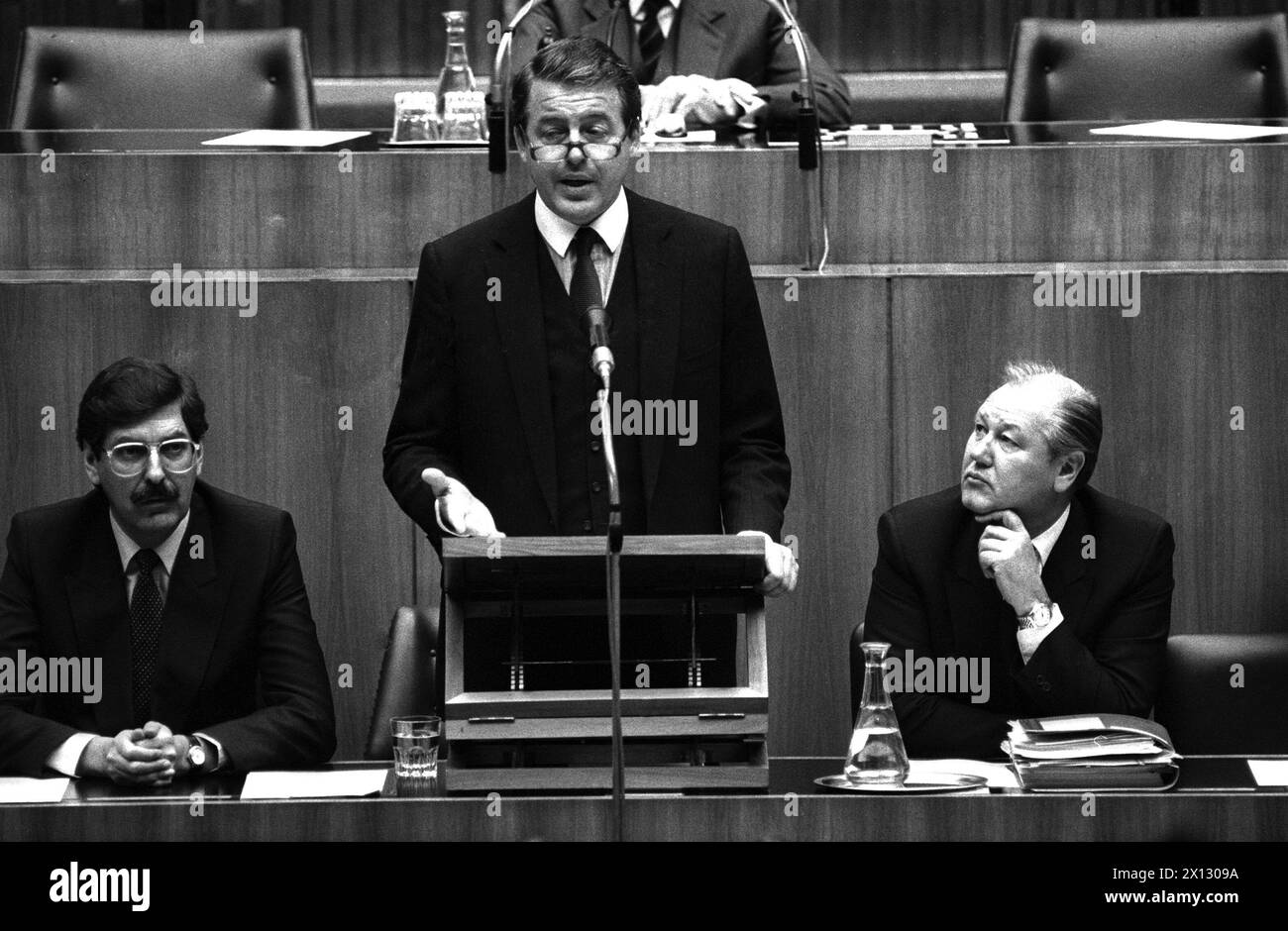
Austrian Finance Minister Magnus Brunner presented the federal budget proposal to the National Council this week, initiating a legislative process marked by significant friction between the central government and the federal states. The proposed fiscal framework, which aims to address a widening structural deficit, faces immediate resistance from provincial governors who contend that the planned expenditure cuts threaten the delivery of essential public services at the local level.
The budget address, delivered in Vienna, serves as the primary instrument for the government to stabilize public finances amid cooling economic growth. According to the Austrian Federal Ministry of Finance, the government is prioritizing a reduction in the debt-to-GDP ratio while attempting to maintain funding for social security and infrastructure projects. However, the proposal has prompted a sharp divide, with regional leaders arguing that the burden of austerity is being disproportionately shifted to the states, which are responsible for the majority of healthcare and education spending.
Fiscal Pressures and Federal-State Tensions
The core of the current political friction lies in the distribution of fiscal responsibility. While the federal government maintains that strict adherence to the national budget plan is necessary to comply with European Union fiscal rules, state governors have raised concerns regarding their own budgetary autonomy. As reported by the Der Standard, the disagreement centers on whether the federal government should provide additional transfers to compensate for inflation-driven cost increases in regional sectors.

The conflict has escalated into what some political observers describe as a potential government crisis. Because the ruling coalition requires a stable parliamentary majority to pass the budget, the dissent from regional party representatives—who hold significant sway within the national parliamentary groups—complicates the path to adoption. The Austrian Parliament, which oversees the legislative procedure, is expected to see weeks of intense committee hearings as lawmakers attempt to reconcile the government’s fiscal targets with the demands of the federal states.
Economic Context of the 2026 Budget
Austria’s economic outlook for 2026 remains constrained by persistent inflation and a sluggish manufacturing sector. Data from Statistics Austria indicates that while employment levels remain relatively high, the cost of servicing public debt has increased following interest rate adjustments by the European Central Bank. The current budget strategy focuses on consolidating spending in areas that saw significant expansion during the previous fiscal cycles.
The debate in the National Council has highlighted a fundamental disagreement over the role of the state in the current economic climate. Proponents of the government’s plan argue that failure to rein in spending will lead to a long-term decline in Austria’s credit rating and investment attractiveness. Conversely, critics suggest that the proposed cuts are “pro-cyclical,” meaning they risk deepening the economic slowdown by reducing public investment exactly when private consumption is struggling to recover.
Legislative Timeline and Next Steps
The budget bill is currently undergoing its first reading in the National Council, after which it will be referred to the Budget Committee for detailed examination. This committee stage, which typically involves testimony from independent economic experts and representatives of the social partners, will determine whether the government makes concessions to the federal states.
The legislative calendar is tight. According to the Parliamentary schedule, a final vote on the budget is expected before the end of the current legislative session. If the government fails to secure the necessary support, it faces the prospect of a provisional budget, which would severely restrict the government’s ability to initiate new policy programs or adjust to unforeseen economic shocks.
For citizens and stakeholders, the outcome of these negotiations will directly impact funding for regional health initiatives and local infrastructure maintenance. The Ministry of Finance has committed to publishing updated projections on the economic impact of the budget following the committee hearings, which can be tracked through the official government portal.
As the debate continues, the focus remains on whether the government can find a middle ground that satisfies the fiscal requirements of Brussels while mitigating the political fallout at home. The next official update is scheduled for the upcoming session of the Budget Committee, where specific amendments to the spending plan may be introduced. Readers are encouraged to share their views on the proposed measures in the comments section below, as we continue to track this developing story.
Keep reading