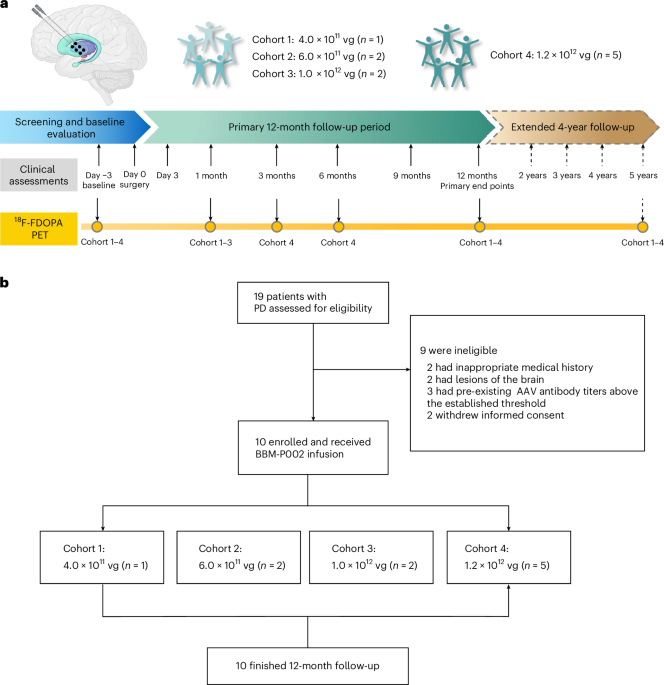
A novel dual-target gene therapy, currently designated as BBM-P002, has demonstrated a favorable safety profile and early signs of motor improvement in patients with Parkinson’s disease, according to results from a multicenter Phase 1 clinical trial. The experimental treatment works by co-delivering two specific genes—tyrosine hydroxylase (TH) and GTP cyclohydrolase I (GCH1), often referred to alongside DDC—to restore the brain’s ability to produce dopamine, the neurotransmitter whose depletion causes the hallmark motor symptoms of the condition. Researchers reported that participants showed sustained motor function benefits over a 12-month follow-up period, marking a potential shift in how clinicians approach restorative neurosurgical interventions.
Parkinson’s disease remains a progressive neurodegenerative disorder affecting millions globally, characterized by the loss of dopaminergic neurons in the substantia nigra. Traditional pharmacological treatments, such as levodopa, often lose efficacy over time or lead to debilitating side effects like dyskinesia. By utilizing gene therapy to target the underlying biological mechanisms, investigators hope to provide a more stable, long-term solution. This Phase 1 study focused primarily on the safety and tolerability of the viral vector delivery system in a small cohort, establishing a foundation for larger, efficacy-focused trials.
Understanding the Mechanism of BBM-P002
The therapeutic strategy behind BBM-P002 involves a sophisticated approach to gene delivery. By introducing the genes for TH and DDC (aromatic L-amino acid decarboxylase) directly into the striatum, the therapy aims to transform local cells into “bio-factories” capable of synthesizing dopamine on-demand. This dual-target approach is intended to bypass the need for external medication, potentially smoothing out the “on-off” fluctuations that plague many patients on standard dopamine replacement therapy.
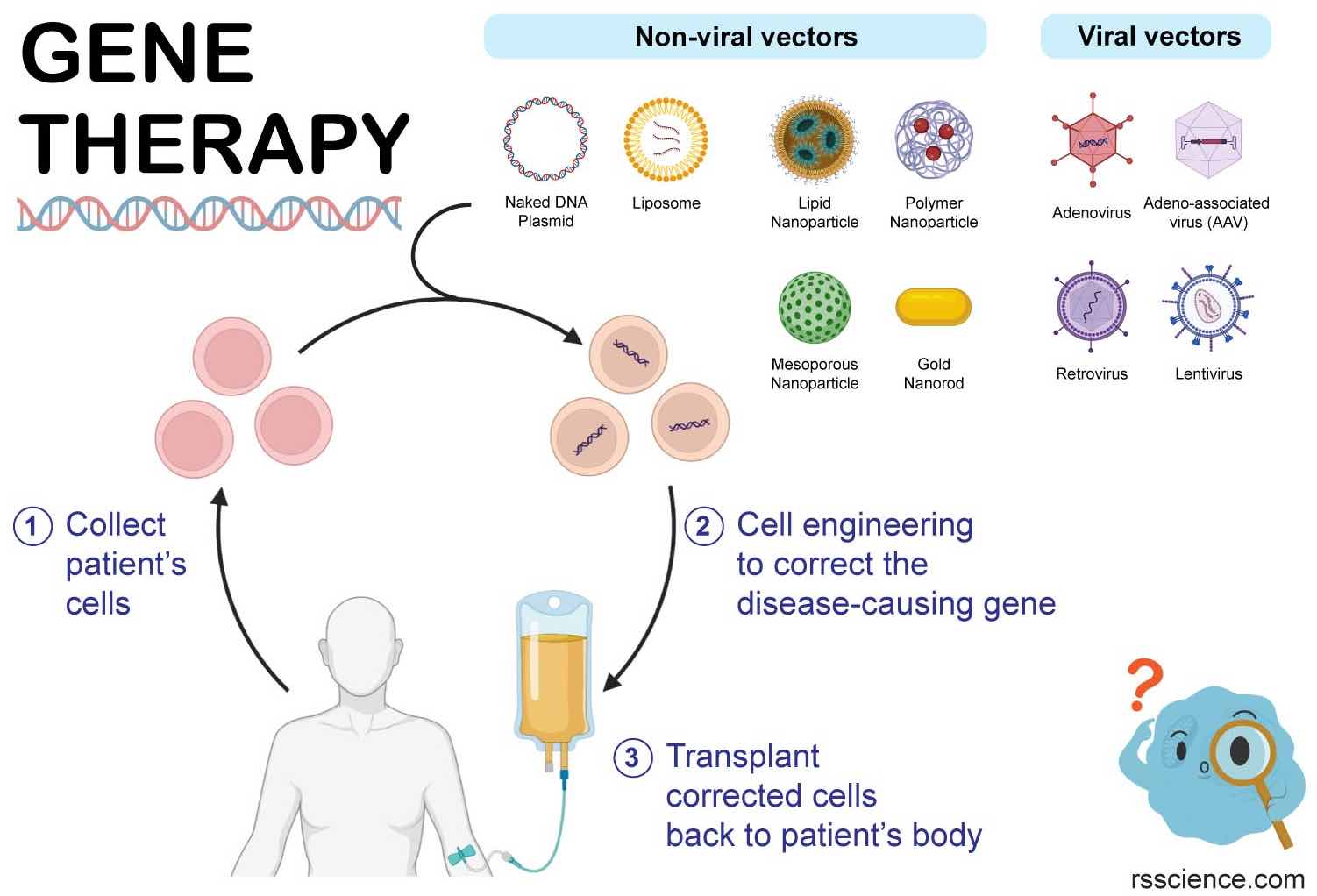
According to data published by the Michael J. Fox Foundation, gene therapy for Parkinson’s has evolved significantly over the last decade, moving from single-gene targets to more complex, multi-gene approaches. The use of viral vectors—typically adeno-associated viruses (AAV)—to ferry these genes into the brain is a well-established technique in neuro-oncology and rare disease research, though its application in complex movement disorders requires precise stereotactic surgical placement. In this trial, the primary endpoint was the incidence of adverse events, with secondary outcomes measuring changes in motor scores via the Unified Parkinson’s Disease Rating Scale (UPDRS).
Safety Profile and Clinical Observations
The 12-month data indicate that the surgical procedure and the viral vector infusion were well-tolerated by the trial participants. Most reported adverse events were classified as mild or moderate, typically related to the intracranial surgical intervention rather than the gene therapy itself. No systemic toxicity was observed, which has historically been a significant concern in early-phase gene therapy trials involving high-dose viral vectors.

While the study was not powered to confirm efficacy, the observed motor improvements were notable. Participants exhibited reduced “off” time—periods when medication is ineffective—and improved mobility during assessments. The National Institute of Neurological Disorders and Stroke (NINDS) notes that such early-stage signals are essential for justifying the move to larger Phase 2 trials, which will be necessary to distinguish between a placebo effect and the genuine biological impact of the gene therapy.
The Road Ahead: Phase 2 and Beyond
The transition from Phase 1 to Phase 2 trials represents a significant hurdle in medical innovation. Future studies will need to enroll a larger, more diverse group of patients to determine the durability of the treatment and to compare its efficacy directly against current gold-standard treatments like Deep Brain Stimulation (DBS). Investigators are expected to refine the vector dosage and the precision of the delivery mapping to ensure consistent results across different patient phenotypes.

According to regulatory guidelines from the European Medicines Agency (EMA), advanced therapy medicinal products (ATMPs) like BBM-P002 are subject to rigorous long-term monitoring to ensure that the genetic modifications remain stable and do not induce unintended immune responses. Patients who participated in this Phase 1 trial will continue to be monitored for several years to assess the long-term safety profile and the longevity of the dopamine expression.
Frequently Asked Questions
What is the primary goal of the BBM-P002 trial?
The primary goal of this Phase 1 study was to evaluate the safety and tolerability of the gene therapy in humans, specifically monitoring for adverse reactions to the viral delivery system and the surgical procedure.
How does this therapy differ from standard Parkinson’s medications?
Standard medications like levodopa must be taken daily and provide fluctuating levels of dopamine. BBM-P002 aims to provide continuous, endogenous dopamine production by modifying cells in the brain to produce the neurotransmitter naturally.
When will the results of the next phase be available?
Clinical trial timelines are subject to regulatory approval and recruitment speeds. Interested patients and caregivers can monitor official registries such as ClinicalTrials.gov for updates on recruitment for subsequent phases of the BBM-P002 research program.
As the scientific community digests these early findings, the emphasis remains on cautious optimism. While the initial safety data are encouraging, definitive proof of clinical benefit will require larger, randomized, double-blind trials. Further updates from the research team are expected in the coming months as they prepare the documentation for regulatory review and the design of the next study phase. We encourage our readers to share their thoughts on the future of gene therapy in the comments section below.
Worth a look