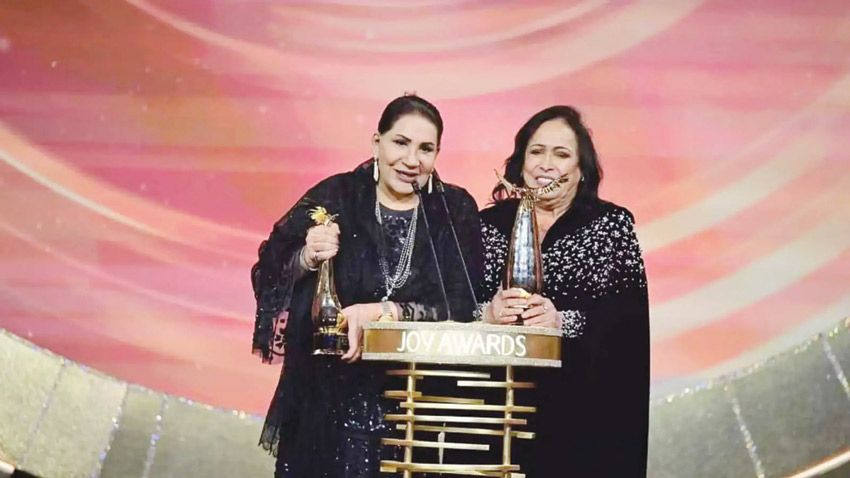
Kuwaiti television icon Hayat Al-Fahad has passed away at the age of 78, leaving behind a legacy that shaped Gulf drama for over five decades. Her death on April 21, 2026, was confirmed by multiple regional outlets, marking the end of an era for Arabic television. Known affectionately as the “Lady of the Gulf Screen,” Al-Fahad’s career spanned generations, with performances that became cultural touchstones across the Arab world.
Her longtime friend and fellow acting legend, Suad Abdullah, broke down in tears during a televised interview on Kuwait TV, describing the profound loneliness she now feels following Al-Fahad’s passing. “I don’t realize what to say, it’s very difficult… I am alone now, and I have no one, neither support nor backing,” Abdullah said, her voice trembling. “All my companions who were my strength have departed.” The emotional exchange underscored the deep personal and professional bond between two of Kuwait’s most celebrated actresses.
The news of Al-Fahad’s death resonated far beyond Kuwait, prompting an outpouring of tributes from fans, colleagues, and cultural institutions throughout the Middle East. Social media platforms were flooded with clips from her most iconic roles, including performances in “Suleiman Al-Tayeb,” “Special Lesson,” and “Wolf’s Children,” which continue to be rerun across regional networks. Her work was not merely entertainment. it was seen as a reflection of Gulf society’s evolving values, struggles, and resilience.
Born in East Al-Murqab, Kuwait, Al-Fahad began her artistic journey amid personal hardship, which she often cited as the foundation of her emotional depth on screen. She rose to prominence in the 1970s and became a household name through her ability to portray complex female characters with dignity and authenticity. Over her career, she starred in more than 150 television dramas, numerous stage plays, and several films, earning lifetime achievement awards from Kuwait’s Ministry of Information and the Arab Actors Union.
Al-Fahad was also a pioneer behind the scenes, establishing her own production company to support emerging talent and preserve Gulf storytelling traditions. Her advocacy for artists’ rights and her mentorship of young performers were frequently highlighted in interviews, where she emphasized the importance of cultural identity in Arab media. Colleagues described her as disciplined, generous, and unwavering in her commitment to artistic integrity.
Funeral prayers were held the following day in Kuwait, attended by dignitaries, fellow artists, and thousands of mourners who gathered to pay their respects. Her daughter, Susan Al-Fahad, spoke briefly at the service, thanking the public for their kindness and asking for privacy during this difficult time. The burial took place at Al-Sulaibikhat Cemetery, where she was laid to rest alongside other prominent Kuwaiti cultural figures.
In the days following her passing, Kuwaiti state television dedicated a full day of programming to her most memorable performances, while cultural centers in Doha, Riyadh, and Abu Dhabi announced plans for retrospective exhibitions. Artists across the region cited her influence, noting that she paved the way for women to take on leading roles not just as actresses, but as producers, writers, and directors.
Suad Abdullah’s heartfelt reaction captured the sentiment felt by many: the loss of a peer who was not only a collaborator but a sister in art. Their on-screen chemistry in dramas spanning decades had become symbolic of enduring friendship and mutual respect. As Abdullah stated through tears, the void left by Al-Fahad’s departure is not easily filled — it marks the end of a shared journey that defined an entire generation of Gulf storytelling.
While no official cause of death has been publicly disclosed, reports indicate that Al-Fahad had been unwell for some time, choosing to preserve her health struggles private in accordance with her lifelong preference for dignity and strength in public life. Her final years were marked by occasional appearances at cultural events, where she continued to inspire despite her frailty.
The passing of Hayat Al-Fahad represents more than the loss of a celebrated actress; it signifies the closing of a chapter in the cultural history of the Gulf. Her contributions helped elevate regional television to an art form capable of addressing social themes with nuance and courage. As tributes continue to pour in, her legacy endures not only in the archives of television but in the hearts of those who grew up watching her bring truth, empathy, and resilience to the screen.
For updates on memorial events or tributes in honor of Hayat Al-Fahad, audiences are encouraged to follow official announcements from Kuwait’s National Council for Culture, Arts, and Letters and the Gulf Radio and Television Corporation.
If you found this tribute informative, please consider sharing it to help preserve the memory of a cultural icon whose work touched millions across the Arab world.
Related reading