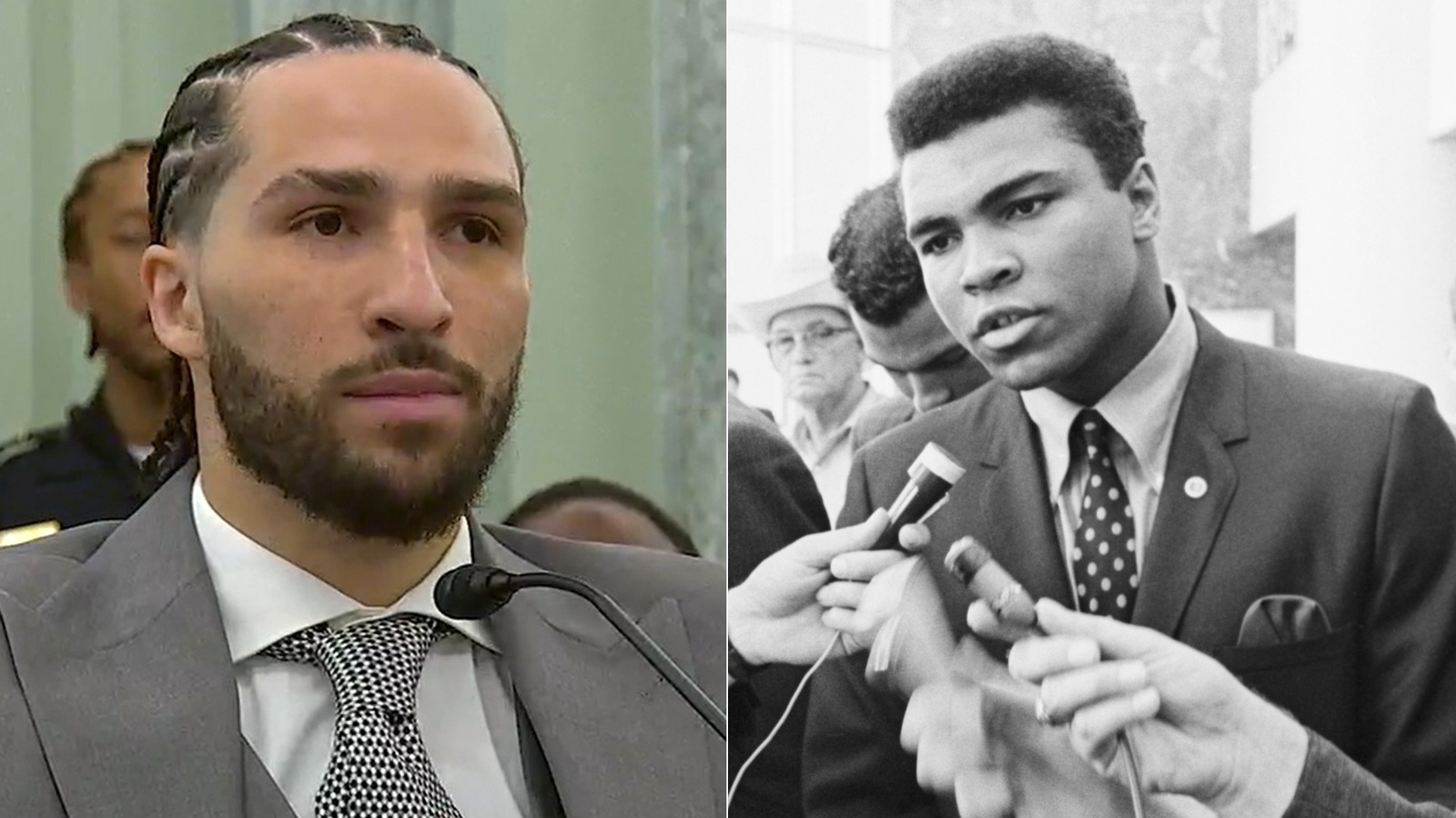
Nico Ali Walsh, the grandson of boxing legend Muhammad Ali, appeared before the Senate Commerce Committee on April 22, 2026, to voice his opposition to the Muhammad Ali American Boxing Revival Act of 2026 (H.R. 4624). The professional boxer testified during a hearing chaired by Senator Ted Cruz (R-Texas), who announced plans to introduce a Senate version of the bipartisan House-passed legislation. Walsh’s testimony highlighted concerns that the proposed bill, although aiming to reform boxing governance, could undermine the sport’s integrity and safety standards if not carefully crafted.
The hearing, held in room SR-253 of the Russell Senate Office Building in Washington, D.C., marked the first Senate examination of federal boxing law since the committee last reported out boxing legislation in 2009. Chairman Cruz opened the proceedings with a ring bell instead of a gavel, introducing witnesses in the style of a ring announcer. The committee examined H.R. 4624, which passed the House on March 24, 2026, by voice vote and was referred to the Senate Commerce Committee the following day. The bill amends the Professional Boxing Safety Act of 1996 to establish a new category of professional boxing entity called a Unified Boxing Organization (UBO) and strengthens medical, safety, and compensation requirements for professional boxers.
Walsh joined Oscar De La Hoya, Chairman and CEO of Golden Boy Promotions, in opposing the bill in its current form. Both argued that while the legislation aims to address fragmentation in boxing governance, it risks creating unintended consequences for fighters’ health and competitive fairness. De La Hoya emphasized that the current system, despite its flaws, has provided critical protections for boxers against exploitation and inadequate medical oversight. Walsh echoed these concerns, noting that any reform must prioritize fighter safety above administrative convenience or commercial interests.
In contrast, Nick Khan, President of World Wrestling Entertainment and senior executive at Zuffa Boxing, supported the bill, arguing that establishing UBOs could streamline matchmaking and unify rankings across weight divisions. Khan contended that the current landscape of multiple sanctioning bodies creates persistent barriers to organizing major fights, resulting in a convoluted industry for fighters and fans. Timothy Shipman, President of the Association of Boxing Commissions and Combative Sports and Executive Director of the Florida Athletic Commission, focused on implementation challenges and the need for uniform standards without taking a strong position for or against the legislation.
The Muhammad Ali American Boxing Revival Act of 2026 authorizes the establishment of private-sector Unified Boxing Organizations (UBOs) and expands the regulatory framework for professional boxing. Under the bill, UBOs would be permitted to oversee rankings, sanction bouts, and enforce medical and safety standards. Proponents argue this would reduce the confusion caused by competing titles and fragmented governance, while critics warn it could consolidate too much power in private entities without sufficient public oversight.
During his testimony, Walsh spoke about his grandfather’s legacy and the values Muhammad Ali brought to boxing beyond championships—courage, conviction, and a commitment to social justice. He stressed that any legislative effort bearing the Ali name must honor those principles by ensuring boxers receive adequate healthcare, fair compensation, and meaningful input in governance decisions. Walsh noted that while he supports efforts to modernize boxing’s structure, the bill requires significant revisions to adequately protect fighters’ long-term well-being.
The Senate Commerce Committee hearing featured four witnesses, with opinions splitting into three distinct positions. De La Hoya and Ali Walsh opposed the bill. Khan supported it; and Shipman provided technical insights on implementation without endorsing or rejecting the proposal. Chairman Cruz, in his closing remarks, announced his intention to introduce a Senate version of the Muhammad Ali American Boxing Revival Act and explicitly invited all witnesses and stakeholders to continue engaging in the reform process.
As of April 23, 2026, the bill remains under consideration in the Senate Commerce Committee. No markup date has been scheduled, and the committee has not indicated when it might vote on the legislation. Stakeholders on all sides of the debate continue to advocate for their positions, with fighter safety organizations calling for stronger medical provisions and promoters advocating for clearer pathways to unification bouts.
For updates on the Muhammad Ali American Boxing Revival Act of 2026, including hearing schedules, bill text, and committee actions, readers can consult the official Congress.gov page for H.R. 4624. The Senate Commerce Committee also provides public access to hearing transcripts and witness statements through its website.
What are your thoughts on the proposed reforms to boxing governance and how they might affect fighter safety and the sport’s future? Share your perspective in the comments below and help spread awareness by sharing this article with fellow boxing enthusiasts.
Keep reading