
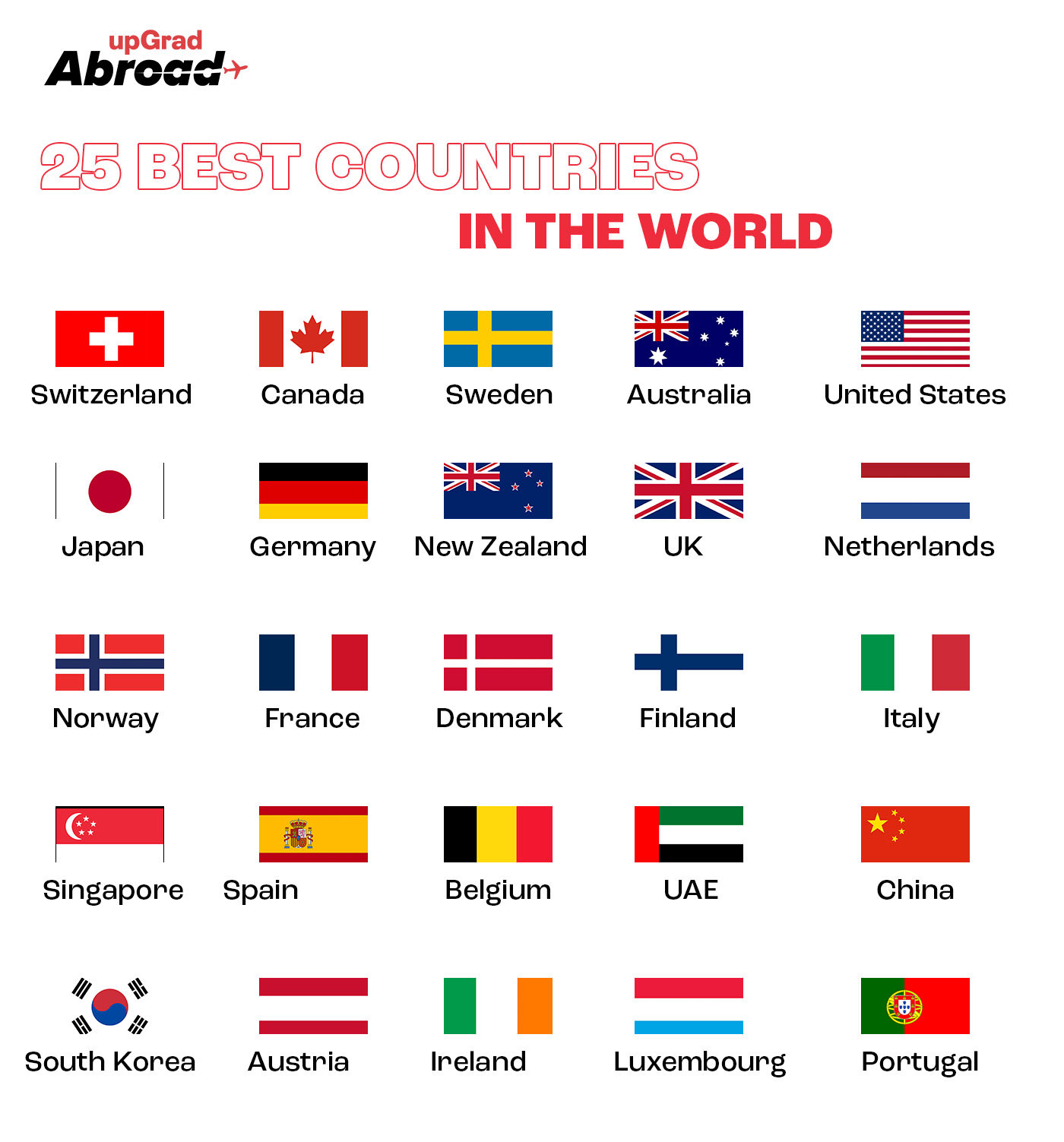
Switzerland has secured the top position in the latest U.S. News & World Report “Best Countries” rankings, according to the annual report that assesses global standing through international perception. The rankings, which evaluate nations based on a variety of socio-economic and geopolitical factors, place Canada and Japan in the second and third positions, respectively, with the United States following in fourth.
The annual study, which utilizes survey data from more than 17,000 people across the globe, measures how different nations are perceived in terms of their influence, stability, and quality of life. While the rankings provide a snapshot of global reputation, they are based primarily on the subjective perceptions of international observers rather than purely objective statistical data.
Germany remains a significant fixture in the top tier of the global hierarchy, reflecting its continued role as a central economic and political power in Europe. The report highlights how nations leverage “soft power”—the ability to influence others through culture, political values, and foreign policies—to maintain high rankings in an increasingly multipolar world.
How does U.S. News & World Report rank the world’s best countries?
The U.S. News & World Report methodology relies on five distinct pillars to determine a country’s global standing. These pillars are designed to capture a holistic view of how a nation functions and how it is perceived by the international community.
- Adaptability: This measures a country’s ability to pivot during crises, such as economic shifts or public health emergencies, and its capacity to embrace new technologies and social changes.
- Entrepreneurialism: This assesses the environment for innovation, business development, and the ease with which individuals can start and scale enterprises.
- Economic Stability: This pillar evaluates the strength of a nation’s currency, its employment rates, and its overall resilience to global market fluctuations.
- Global Influence: This measures a country’s impact on international relations, its diplomatic reach, and its ability to shape global policy and culture.
- Happiness: This metric tracks the perceived quality of life, social cohesion, and the general well-being of a nation’s citizens.
Because these rankings are perception-based, they often reflect the current geopolitical climate. For instance, during periods of global instability, nations perceived as “safe havens” with high levels of economic stability and social cohesion tend to see their rankings rise.
The role of soft power in global rankings
The distinction between “hard power”—military and economic coercion—and “soft power” is central to understanding these results. Soft power, a term popularized by political scientist Joseph Nye, refers to a nation’s ability to achieve its objectives through attraction rather than force. According to the U.S. News & World Report framework, countries that score high in “Global Influence” and “Happiness” are effectively utilizing soft power to bolster their international prestige.

For European nations like Germany and Switzerland, soft power is often tied to diplomatic neutrality, high-quality manufacturing, and robust legal frameworks. This reputation facilitates smoother international trade agreements and attracts foreign direct investment (FDI), as businesses seek stability and predictable regulatory environments.
The ability to attract skilled labor and tourists is also a direct consequence of high soft power scores. When a country is perceived as stable and culturally influential, it becomes a more attractive destination for the “global talent war,” where nations compete to host the world’s most innovative researchers and entrepreneurs.
Comparing global indices: Perception vs. Data
It is essential to distinguish between perception-based rankings like those from U.S. News & World Report and data-driven indices. While the former measures how the world sees a country, the latter measures how a country actually performs based on empirical metrics.
For example, the United Nations Human Development Index (HDI) focuses on life expectancy, education, and per capita income. A country might rank highly in HDI due to strong social safety nets, even if its “Global Influence” or “Entrepreneurialism” scores in a perception-based survey are lower.
| Index | Primary Methodology | Core Focus |
|---|---|---|
| U.S. News & World Report | Global Perception Surveys | International Reputation & Influence |
| Human Development Index (HDI) | Statistical Data (UN) | Health, Education, and Standard of Living |
| Global Peace Index | Conflict & Security Data | Societal Safety and Political Stability |
| World Happiness Report | Self-Reported Well-being |
Understanding these differences prevents a misinterpretation of what a “top-ranked” country signifies. A high ranking in U.S. News & World Report suggests a country is a “player” on the world stage, whereas a high HDI score suggests a country provides a high quality of life for its residents.
Why do these rankings matter for the economy?
Global rankings are not merely academic exercises; they have tangible economic implications. The perception of a nation influences several key areas of the global economy:
- Foreign Direct Investment (FDI): Institutional investors and multinational corporations use reputation as a proxy for risk. A country perceived as having high “Economic Stability” and “Adaptability” is more likely to receive long-term capital commitments.
- Tourism and Migration: High scores in “Happiness” and “Global Influence” act as a magnet for international travelers and highly skilled migrants, both of whom contribute to the local economy and tax base.
- Trade Relations: A nation’s reputation for reliability and adherence to international norms can facilitate easier entry into trade blocs and more favorable terms in bilateral negotiations.
When a major economy like Germany maintains a high position in these rankings, it reinforces the confidence of global markets in the Eurozone’s stability. Conversely, a significant drop in ranking can serve as an early warning sign for policymakers regarding declining international confidence or systemic domestic issues.
What happens next for global leaders?
As geopolitical tensions shift and new economic powers emerge, these rankings are expected to undergo significant changes in future iterations. The rise of digital economies and the shift toward green energy are becoming new metrics for “Adaptability” and “Entrepreneurialism.”
Policymakers in top-ranked nations are increasingly focused on maintaining their “soft power” through cultural diplomacy and leadership in international climate and security agreements. For countries looking to climb the rankings, the focus often shifts toward enhancing ease-of-doing-business regulations and investing in human capital to boost innovation scores.
The next major update to these global assessments will depend on how nations navigate the ongoing transitions in global trade and the integration of artificial intelligence into their economic infrastructures.
We invite you to share your thoughts on these global rankings in the comments below. Do you feel these rankings accurately reflect your country’s standing? Share this article with your network to join the conversation.