
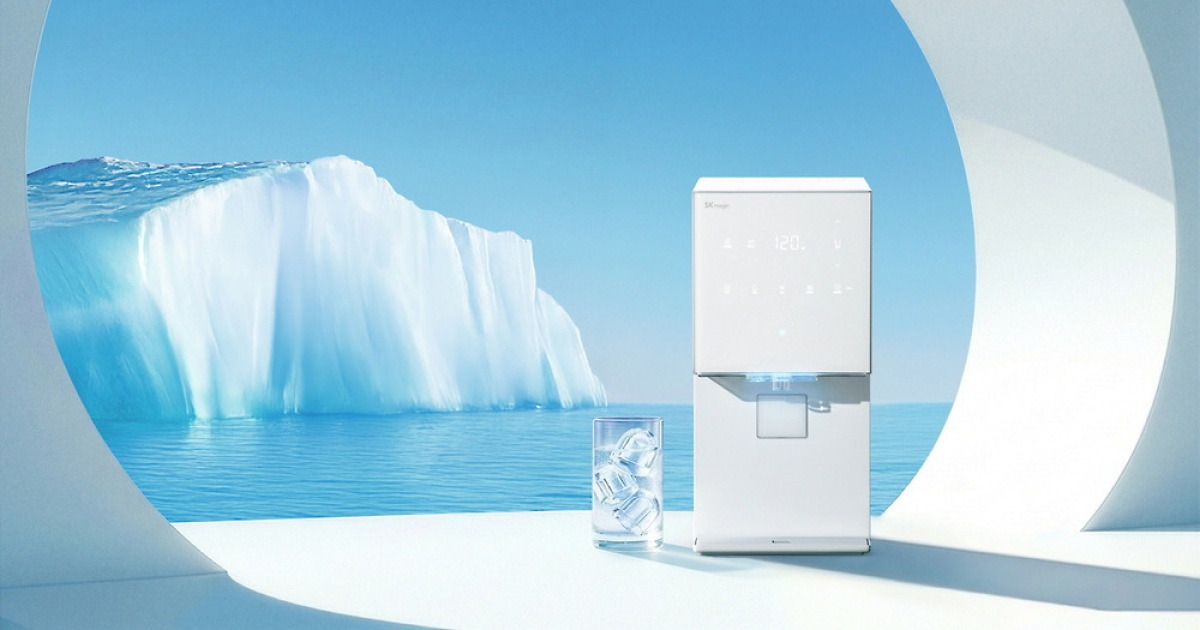
For millions of households in South Korea, the arrival of the humid summer months triggers a predictable but intense consumer race: the search for the perfect ice water purifier. What was once a simple quest for cold water has evolved into a sophisticated technological arms race. In the current landscape, the “Ice War” is no longer fought over basic filtration, but rather on three critical fronts: size, hygiene, and speed.
As the market matures, the competition between industry titans—specifically SK Magic, Coway, and Chungho Nais—has shifted toward nuanced performance metrics. Consumers are no longer satisfied with a machine that simply produces ice; they demand devices that occupy minimal counter space, guarantee medical-grade hygiene, and deliver ice with unmatched efficiency. This evolution reflects a broader global trend in home health technology where the intersection of convenience and wellness is paramount.
From my perspective as a physician and health journalist, the most significant development in this sector is not the speed of the ice maker, but the industry’s pivot toward rigorous hygiene standards. The structural nature of ice purifiers—where water and air constantly interact within a storage chamber—creates a unique set of microbiological challenges that manufacturers are now racing to solve.
The Three Pillars of Competition: Performance, Management, and Stability
The South Korean market is currently segmented by the specific “value propositions” offered by the three leading brands. Each company has carved out a niche based on how the consumer perceives the utility of their ice.
SK Magic has positioned itself around “perceived performance.” In the context of ice purifiers, this refers to the tangible experience of the user—how quickly the ice is dispensed and the quality of the ice crystals. By focusing on the speed of the freezing cycle and the sensory experience of the product, SK Magic aims to capture the segment of the market that prioritizes immediate gratification and high-volume output during peak summer heat.
Coway, conversely, has built its dominance on the “convenience of management.” The company’s strategy leverages a robust service ecosystem, focusing on how the machine is maintained over its lifespan. Whether through professional “Care” services or advanced self-management features, Coway targets the consumer who views the water purifier not just as an appliance, but as a subscription to health and cleanliness. Their focus is on reducing the “maintenance burden” on the homeowner.
Chungho Nais focuses on the “stability of ice production.” While speed is a flashpoint for some, stability refers to the machine’s ability to maintain a consistent volume of ice without failure or significant fluctuations in quality, regardless of external temperature or usage frequency. Chungho Nais appeals to the pragmatic consumer who values reliability and engineering consistency over high-speed gimmicks.
The Hygiene Pivot: Addressing the ‘Final Variable’
While speed and size attract buyers, hygiene is the “final variable” that determines long-term trust and health outcomes. This is where the medical implications of water purifier design become critical. Ice purifiers are inherently more complex than standard water dispensers because they require an ice storage bin that is exposed to air every time the dispenser is opened or activated.

From a public health standpoint, this exposure is a potential vulnerability. When water and air meet in a moist, enclosed environment, there is a risk of biofilm formation—a colony of microorganisms that can adhere to the surfaces of the ice bin or the dispensing chute. If not managed, these biofilms can harbor bacteria, potentially compromising the purity of the ice.
To combat this, the industry is integrating several high-tech interventions:
- UV-C Sterilization: Many modern units now employ Ultraviolet-C LEDs to sterilize the water path and the ice-making components, neutralizing bacteria and viruses without the need for harsh chemicals.
- Stainless Steel Piping: Moving away from plastic tubing to stainless steel reduces the likelihood of microbial adhesion and prevents the degradation of materials over time.
- Automated Cleaning Cycles: New systems can perform internal flushes and sterilization cycles automatically, removing the reliance on manual cleaning which is often neglected by users.
The shift toward “hygiene-first” engineering is a response to a more informed consumer base. Today’s users are increasingly aware of waterborne contaminants and are demanding transparency regarding how their machines prevent secondary contamination within the device itself.
The Engineering of Space: The ‘Compact’ Revolution
Beyond hygiene, the physical footprint of these machines has become a primary competitive metric. In dense urban environments like Seoul, kitchen counter space is a premium commodity. This has led to a trend of “miniaturization” without the sacrifice of capacity.
Manufacturers are achieving this through more efficient compressor technology and redesigned ice-storage geometries. The goal is to create a “slim-fit” profile that blends into modern interior design while maintaining the ability to produce a significant volume of ice. This trend indicates a move toward “invisible technology”—appliances that provide maximum utility with minimum visual and spatial intrusion.
Comparison of Market Strategies
| Brand | Primary Competitive Edge | Target Consumer Value |
|---|---|---|
| SK Magic | Perceived Performance | Speed and ice quality experience |
| Coway | Management Convenience | Ease of maintenance and service |
| Chungho Nais | Production Stability | Reliability and consistent output |
What This Means for Global Health Tech
The trends emerging from the South Korean market serve as a bellwether for the global home appliance industry. As we see a convergence of medical-grade sterilization (UV-C) and AI-driven maintenance, the line between “home appliance” and “health device” continues to blur.

For the global consumer, this means that the next generation of water purifiers will likely move beyond simple filtration. We can expect a rise in “intelligent” systems that monitor water quality in real-time and automatically adjust sterilization cycles based on usage patterns and environmental humidity.
The focus on hygiene, specifically the mitigation of biofilm in ice-making systems, is a necessary evolution. As a physician, I encourage consumers to look beyond the “speed” of ice production and prioritize the specific sterilization technologies used in the storage and dispensing areas of their devices.
The next major milestone for the industry will likely be the integration of more sustainable, eco-friendly refrigerants and energy-efficient cooling systems that reduce the carbon footprint of these high-demand summer appliances. Official updates on new energy efficiency ratings and environmental certifications are expected in the coming product cycles for the 2026-2027 season.
Do you prioritize speed or hygiene when choosing your home appliances? Share your thoughts in the comments below or share this article with someone upgrading their kitchen this year.