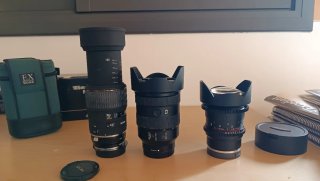
Selecting the right glass for a Sony E-mount camera system requires balancing optical performance, focal length versatility, and budget constraints. Photographers looking for high-quality, interchangeable lenses for their Sony mirrorless bodies—such as the Sony Alpha series—often consider a mix of native Sony glass and third-party options from manufacturers like Sigma and Samyang to optimize their specific shooting requirements.
When building a kit for Sony E-mount cameras, the lens selection process is driven by the intended application, whether it be macro photography, versatile zoom range, or wide-angle landscapes. Understanding the technical specifications of these lenses is essential for ensuring compatibility and achieving desired image quality across various shooting scenarios.
Evaluating Sony E-mount Lens Options
The Sony E-mount ecosystem offers a diverse range of optics that cater to different photographic needs. For those seeking a versatile zoom lens, the Sony FE 24-105mm f/4 G OSS is frequently cited as a standard workhorse. According to official product specifications from Sony, this lens features built-in Optical SteadyShot (OSS) image stabilization, which is particularly beneficial for handheld shooting at slower shutter speeds or in challenging lighting conditions.
For macro photography enthusiasts, the Sigma 105mm f/2.8 EX DG OS HSM Macro is a specialized choice. This lens is designed to provide a 1:1 magnification ratio, allowing for detailed close-up work. Users should note that while this lens is compatible with the E-mount via adapters or specific versions, it utilizes Sigma’s Hyper Sonic Motor (HSM) technology to manage autofocus performance. Detailed information regarding the compatibility and firmware requirements for third-party lenses on Sony bodies can be found on the Sigma global support portal.
Landscape and astrophotography often demand ultra-wide perspectives. The Samyang 14mm lens—often branded as Rokinon in certain markets—is a popular manual-focus option for capturing expansive scenes. Because these lenses often lack the electronic communication found in native Sony lenses, photographers typically rely on manual focus peaking, a feature integrated into the menu systems of most modern Sony Alpha mirrorless cameras.
Technical Considerations for Lens Compatibility
When selecting between native and third-party optics, photographers must consider how the lens communicates with the camera body. Native Sony lenses are designed for seamless integration, supporting advanced autofocus features like Real-time Eye AF and high-speed burst shooting. According to documentation from Sony’s digital imaging support database, users can check the specific compatibility of lens-body combinations to ensure that all autofocus and stabilization features function as intended.
Third-party manufacturers, including Sigma and Samyang, have increasingly optimized their E-mount offerings to mimic these native behaviors. However, users should verify whether a specific lens requires a firmware update to maintain compatibility with the latest Sony camera bodies. These updates are typically performed by connecting the lens to a computer via a dedicated USB dock or through the camera body itself, depending on the manufacturer’s design.
Strategic Purchasing and Market Availability
The secondary market, including platforms like Wallapop, has become a common venue for photographers to acquire high-quality glass at reduced prices. When purchasing pre-owned lenses, it is critical to inspect the optical elements for scratches, fungus, or dust, and to test the mechanical operation of the zoom and focus rings. Buyers should also verify that the lens mount shows no signs of wear that could lead to a loose connection with the camera body, which could disrupt electronic communication.

For those looking to trade or upgrade their gear, keeping original packaging and documentation can assist in maintaining the resale value of the equipment. As manufacturers continue to release new firmware and lens iterations, staying informed through official manufacturer channels remains the best way to ensure the long-term utility of your camera kit.
For the latest information on new product announcements and official firmware updates, photographers should monitor the Sony Press Center. Have you recently added a new lens to your E-mount collection, or are you currently deciding between a prime and a zoom? Share your experiences and questions in the comments below.