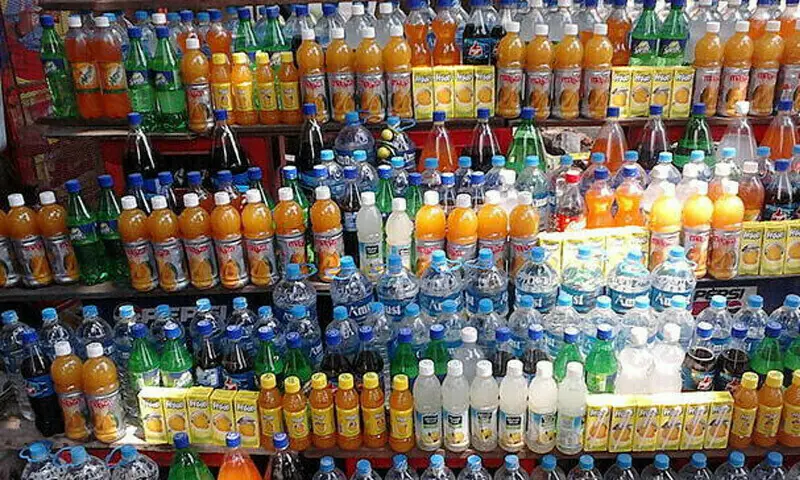
As the Pakistani government prepares to unveil its fiscal roadmap for the upcoming year, the beverage industry has launched a significant lobbying effort to overhaul current taxation structures. In a strategic move aimed at formalizing the market and boosting state coffers, industry leaders are proposing a reduction in the Federal Excise Duty (FED) on aerated waters, seeking to lower the rate from 20 per cent to 15 per cent ahead of the FY2026-27 budget preparations.
The proposal, spearheaded by the Beverages Advisory Foundation (BAF), suggests that a more moderate tax environment could paradoxically lead to higher total tax yields for the state. By lowering the barrier to entry and narrowing the price disparity between legal and illegal producers, the industry argues it can effectively combat the growing shadow economy that has seen the undocumented sector expand its footprint in recent years.
The timing of this intervention is critical. The National Economic Council (NEC) is scheduled to meet on June 3 to approve the consolidated national development programme and the overarching macroeconomic framework for the next fiscal year. With the government targeting an economic growth rate of 4.1 per cent and aiming to manage inflation at 8.5 per cent for FY2026–27, the beverage industry’s plea represents a significant intersection of private sector interests and national fiscal policy.
The Case for a Lower Federal Excise Duty (FED)
In a formal communication addressed to the Federal Board of Revenue (FBR) and the Ministry of Finance, the Beverages Advisory Foundation (BAF) outlined a data-driven argument for the 5-percentage-point reduction. The foundation asserts that the current 20 per cent duty has reached a point of diminishing returns, where higher tax rates are actively driving manufacturers away from the regulated, documented economy.
According to the industry’s projections, reducing the FED to 15 per cent would catalyze a significant expansion of the tax base. The BAF anticipates that this adjustment would generate an additional Rs8 billion in gross tax revenues within the very first year of implementation. Looking further ahead, the industry projects that cumulative gross tax collections could reach approximately Rs63 billion more than the status quo over a three-year period.
To mitigate any potential risk to the treasury, the BAF has proposed a performance-based contingency. The foundation suggested that if the projected revenue gains and market formalization targets are not met by June 2027, the government maintains the authority to revert the FED to its previous 20 per cent level. This “test-and-verify” approach is designed to provide the government with fiscal security while allowing the industry to demonstrate the efficacy of the lower rate.
Historical Performance and the Undocumented Sector
The industry’s argument is rooted in historical performance data from the period before the recent tax hikes. Industry records indicate that when the Federal Excise Duty stood at 13 per cent prior to the 2023-24 fiscal year, the sector experienced robust health. During that period, the industry recorded a compound annual growth in volumes of approximately 14 per cent, alongside a 23 per cent annual increase in tax revenues.
Crucially, during that era of lower taxation, the documented sector—comprising companies that fully comply with regulatory and tax mandates—accounted for roughly 90 per cent of the market and contributed 95 per cent of the total FED collections. This suggests a high level of correlation between moderate tax rates and the ability of the state to capture revenue from formal businesses.

However, the landscape shifted following the increase of the duty to 20 per cent in 2023. The industry maintains that this hike had the opposite of the intended effect. Volume growth slowed significantly, and the growth rate of tax collections plummeted to low single digits. Perhaps most concerning for regulators was the shift in market composition: the share of undocumented manufacturers climbed to approximately 20 per cent of the market, yet these entities contributed a mere 5 per cent of the total FED revenue.
The BAF argues that the current high tax rate creates a “price gap” that makes tax evasion highly profitable for undocumented producers. By reducing the duty to 15 per cent, the price difference between legitimate, taxed products and untaxed, smuggled, or undocumented alternatives would narrow, thereby reducing the economic incentive for evasion and encouraging businesses to move into the formal economy.
Projected Revenue Gains and Market Recovery
The financial modeling provided by the beverage industry suggests that the fiscal benefits of a rate reduction would be substantial and long-lasting. Under the proposed 15 per cent FED scenario, the industry forecasts that tax collections for the FY2026-27 period would reach approximately Rs185 billion. This represents an Rs18 billion increase over the current baseline of Rs167 billion expected under the 20 per cent rate.
Beyond the immediate fiscal year, the long-term outlook remains optimistic. The industry expects that aerated water volumes will rise by more than 16 per cent in the first year of the reduced rate, allowing the documented sector’s market share to recover to approximately 88 per cent. By the FY2028-29 period, the industry forecasts that total tax revenues—combining both Sales Tax and FED—could reach Rs238 billion, compared to just Rs204 billion if the 20 per cent rate remains in place.
The following table summarizes the projected fiscal impact of the industry’s proposal:
| Fiscal Metric | Status Quo (20% FED) | Proposed Scenario (15% FED) | Projected Difference |
|---|---|---|---|
| FY2026-27 Tax Collections | Rs167 billion | Rs185 billion | +Rs18 billion |
| FY2028-29 Total Revenue (Sales Tax + FED) | Rs204 billion | Rs238 billion | +Rs34 billion |
| 3-Year Cumulative Collections (FY26-27 to FY28-29) | Rs570 billion | Rs633 billion | +Rs63 billion |
The BAF further emphasized that the benefits of this reduction would extend beyond mere tax revenue. The foundation argued that a more favorable tax environment would encourage significant investment in distribution networks, trade activation, and broader market expansion. Instead of manufacturer margins being squeezed by high duties, the capital would be redirected toward infrastructure that supports the entire supply chain.
Broader Economic Context: The FY2026-27 Budget Landscape
The beverage industry’s proposal arrives at a pivotal moment for Pakistan’s macroeconomics. The government is currently finalizing a massive national development programme valued at over Rs3.5 trillion. As the federal budget is set to be announced in the coming days, policymakers are balancing the need for immediate revenue generation with the necessity of fostering industrial growth and curbing inflation.
The macroeconomic framework for FY2026–27, which is awaiting final approval, envisions an economic growth target of 4.1 per cent. For this growth to be sustainable, experts suggest that industrial sectors must be given the breathing room to expand. The beverage industry argues that its proposal aligns perfectly with these national goals by promoting formalization, increasing tax compliance, and driving volume-led growth.
As the National Economic Council prepares its upcoming session, all eyes will be on how the finance ministry responds to these industry pleas. Whether the government chooses to prioritize immediate high-rate revenue or the long-term gains of a broader, more formal tax base will likely define the industrial landscape for the remainder of the decade.
Next Milestone: The National Economic Council (NEC) is expected to meet on June 3 to discuss the national development programme and the macroeconomic framework for the upcoming fiscal year.
What are your thoughts on the industry’s proposal to trade higher tax rates for a larger tax base? Should the government prioritize immediate revenue or long-term market formalization? Let us know in the comments below and share this report with your network.
Worth a look