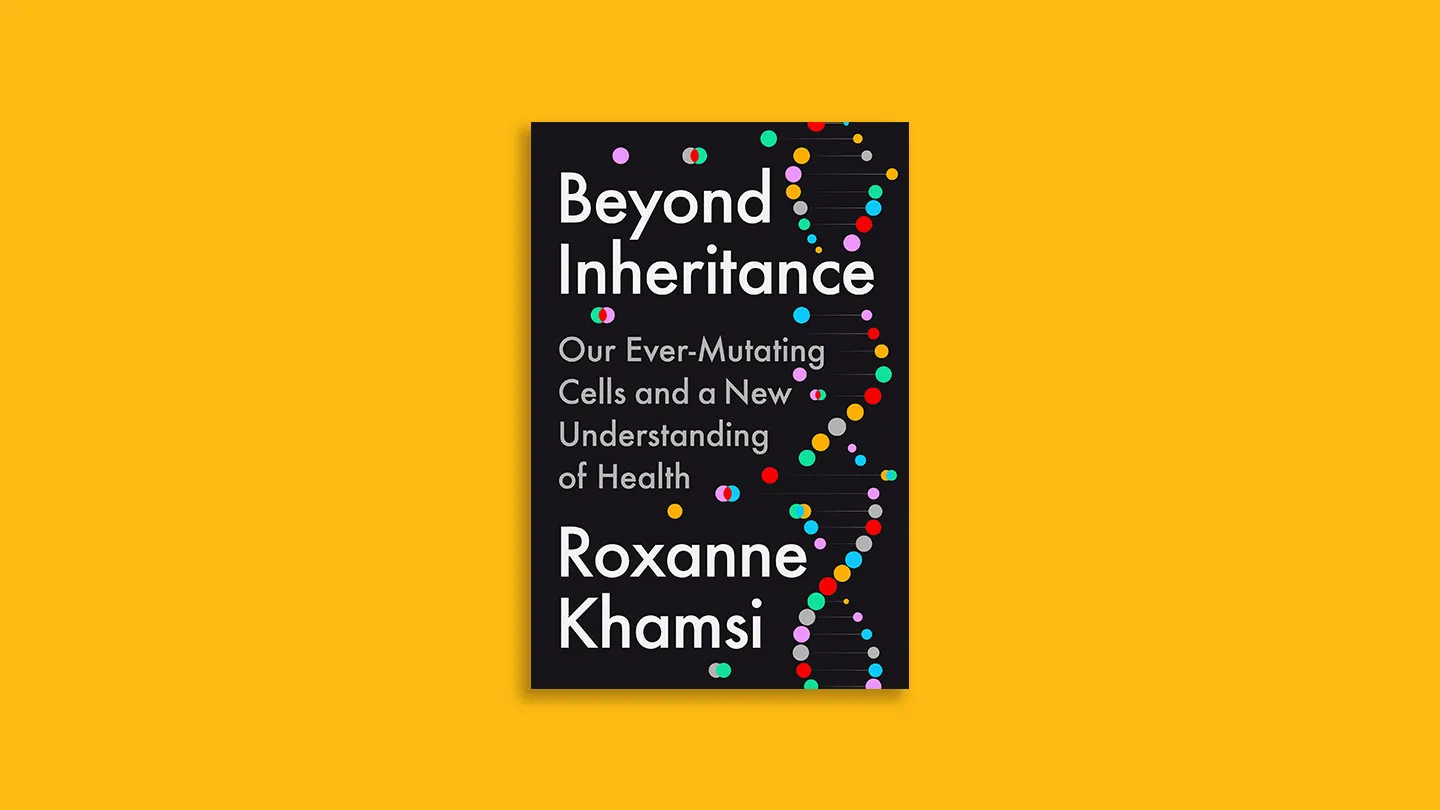
In her debut book, science writer Roxanne Khamsi offers a new view of mutations that’s not limited to birth and death. This perspective challenges long-held assumptions about genetic stability and introduces readers to the concept of somatic mutations—changes in DNA that accumulate throughout life and influence health in profound ways. Drawing from recent advances in genomics, Khamsi frames the human body not as a static entity but as a dynamic landscape where evolutionary processes unfold within our own tissues.
The book, titled Beyond Inheritance: Our Ever-Mutating Cells and a New Understanding of Health, was published by Riverhead Books and has garnered attention for its accessible synthesis of complex scientific research. According to verified sources, Khamsi explains how mutations occur continuously from conception to death, reshaping our understanding of diseases like cancer, heart conditions and even aging. These insights are transforming medical thinking about prevention, treatment, and the potential for therapies that harness the body’s own genetic diversity.
One of the central ideas in Beyond Inheritance is that not all mutations are harmful. While some contribute to illness—such as mutant blood cells that outcompete healthy ones and increase cardiovascular risk—others may enhance resilience. For example, liver cells with certain genetic adaptations appear better equipped to process excess calories, and immune cells with altered DNA can produce more effective antibodies against pathogens. This duality underscores a nuanced view of mutation as both a threat and a tool for adaptation.
Khamsi’s work builds on growing evidence that humans are genetic mosaics, meaning no two cells in the body carry identical DNA. As noted in a review published by The New Yorker, “You are a slightly different genetic version of yourself today from yesterday, and will be different yet again tomorrow.” This ongoing genetic change, known as somatic mutation, occurs in everyone and has become a focal point in modern medical science. Unlike inherited mutations passed down through generations, somatic mutations arise spontaneously in individual cells over time and are not transmitted to offspring.
The implications of this research extend beyond theory into practical healthcare applications. By recognizing that genetic variation exists within each person, scientists are exploring new strategies for early disease detection, personalized medicine, and cancer treatments that evolve alongside tumors. Khamsi highlights how this internal evolution could lead to better vaccines and smarter therapies designed to outmaneuver malignant cells before they spread.
Verified sources confirm that Roxanne Khamsi is a science journalist whose work has appeared in prominent outlets such as Science News and The New Yorker. Her book has been praised for making cutting-edge genomics accessible to a broad audience. Kirkus Reviews described it as “fascinating,” quoting Charles Darwin to emphasize the grandeur of viewing life through this evolving genetic lens.
Understanding Somatic Mutations and Their Role in Health
Somatic mutations are alterations in DNA that occur after conception and are not present in the germ cells (sperm or egg), meaning they cannot be passed to children. These changes can result from errors during DNA replication, exposure to environmental factors like ultraviolet radiation or tobacco smoke, or spontaneous chemical reactions within cells. Over time, the accumulation of such mutations contributes to the genetic diversity observed among an individual’s cells—a phenomenon central to Khamsi’s argument in Beyond Inheritance.

While many somatic mutations have no noticeable effect, others can disrupt normal cell function and contribute to disease. Cancer is perhaps the most well-known example, where mutations in genes regulating cell growth lead to uncontrolled proliferation. However, Khamsi points out that not all somatic mutations are detrimental. Some may confer advantages, such as enhanced metabolic efficiency in liver cells or improved pathogen recognition in immune cells. This balance between harm and benefit reflects the ongoing action of natural selection within the body, a concept she describes as “Darwinian evolution operating within our own tissues.”
The significance of this internal evolutionary process has only recently gained recognition due to advances in DNA sequencing technology. Modern techniques now allow scientists to detect rare mutations in single cells, revealing patterns of genetic change that were previously invisible. These tools have been instrumental in validating the claims made in Beyond Inheritance and are helping researchers map how mutations accumulate across different tissues and over the course of a lifespan.
Medical Implications: From Cancer to Heart Disease
One of the most compelling applications of Khamsi’s framework lies in oncology. Traditional views of cancer often treat it as a sudden invasion by foreign agents, but the somatic mutation model presents it as an internal evolutionary process—where mutated cells gradually gain advantages over their neighbors, much like species competing in an ecosystem. This perspective supports emerging approaches such as adaptive therapy, which aims not to eradicate all cancer cells but to manage populations by preserving treatment-sensitive cells that can inhibit resistant ones.
Beyond oncology, somatic mutations are increasingly linked to cardiovascular disease. Research cited in verified sources shows that certain mutations in blood stem cells can lead to clonal hematopoiesis—a condition where a single mutant lineage expands and produces abnormal blood cells. These cells have been associated with increased inflammation and a higher risk of heart attacks and strokes, even in individuals without traditional risk factors. Khamsi uses this example to illustrate how mutations unrelated to inherited disorders can still significantly impact long-term health.
In immunology, the benefits of somatic mutation are more direct. Antibody production relies on a process called somatic hypermutation, in which B cells intentionally mutate their antibody genes to generate variants capable of binding more tightly to pathogens. This natural mechanism, which Khamsi highlights as a protective form of genetic change, is essential for developing effective immunity after infection or vaccination. Understanding how to support or enhance this process could inform future vaccine design.
Roxanne Khamsi: Bridging Science and Public Understanding
Roxanne Khamsi brings a unique background to her exploration of mutations. As a science journalist with training in molecular biology, she has reported on genetics, infectious diseases, and biomedical research for over a decade. Her work has appeared in Scientific American, Nature, and Wired, among other publications. Beyond Inheritance marks her first book, drawing on years of covering breakthroughs in genomics and conversations with leading researchers in the field.
Verified sources indicate that Khamsi conducted extensive interviews with scientists studying somatic mutations in areas ranging from aging to neurodegeneration. She synthesizes findings from studies published in high-impact journals such as Cell, Science, and The New England Journal of Medicine, ensuring that her claims are grounded in peer-reviewed evidence. The book similarly includes historical context, tracing how the idea of genetic constancy gave way to modern understandings of mosaicism and dynamic genomes.
Her writing style avoids jargon while maintaining scientific accuracy, aiming to equip readers with the conceptual tools to interpret health news critically. By framing mutations as a lifelong process rather than a rare anomaly, Khamsi encourages a shift in how we think about aging, disease prevention, and personal health agency. This message resonates particularly strongly in an era of direct-to-consumer genetic testing and growing public interest in preventive medicine.
Why This Perspective Matters Now
The timing of Beyond Inheritance coincides with a surge in clinical and commercial interest in genomic medicine. Liquid biopsies, which detect tumor-derived DNA in blood, rely on identifying somatic mutations as biomarkers of cancer. Similarly, efforts to diagnose and monitor clonal hematopoiesis are expanding as its links to heart disease and leukemia become clearer. Khamsi’s book helps contextualize these technologies within a broader biological narrative—one in which mutation is not an aberration but a constant feature of life.
Public health experts note that understanding somatic mutations could improve screening strategies. For instance, individuals found to have high-burden clonal hematopoiesis might benefit from earlier cardiovascular monitoring or lifestyle interventions. Likewise, insights into how immune cells evolve could guide booster vaccine schedules or immunomodulatory therapies. While such applications remain under investigation, Khamsi’s work provides a foundation for thinking proactively about genetic health across the lifespan.
She also addresses ethical considerations, noting that as we gain the ability to detect and potentially influence somatic mutations, questions arise about privacy, equity, and the definition of “normal” genetic makeup. These concerns mirror broader debates in genomics but take on new dimensions when the focus shifts from inherited traits to acquired changes that vary even between identical twins.
What Readers Can Take Away
Beyond Inheritance offers more than a summary of scientific findings—it invites readers to reconsider what it means to be a biological individual. Rather than viewing the body as a uniform system governed by a single genetic blueprint, Khamsi presents it as a community of cells, each with its own evolutionary story. This perspective fosters humility about our control over biology while highlighting opportunities to support health through informed choices.
For those interested in exploring the topic further, the book includes references to key studies and suggests reputable sources for ongoing learning. Even though it does not prescribe specific medical advice, it equips readers with a framework to evaluate emerging health technologies and research claims. As genomic medicine continues to evolve, the ideas introduced in Beyond Inheritance are likely to remain relevant to both clinicians and the general public.
As of now, there are no announced sequels or follow-up publications from Roxanne Khamsi related to this work. Readers seeking updates on her reporting can refer to her contributions to established science publications, where she continues to cover developments in biomedicine and public health.
Worth a look