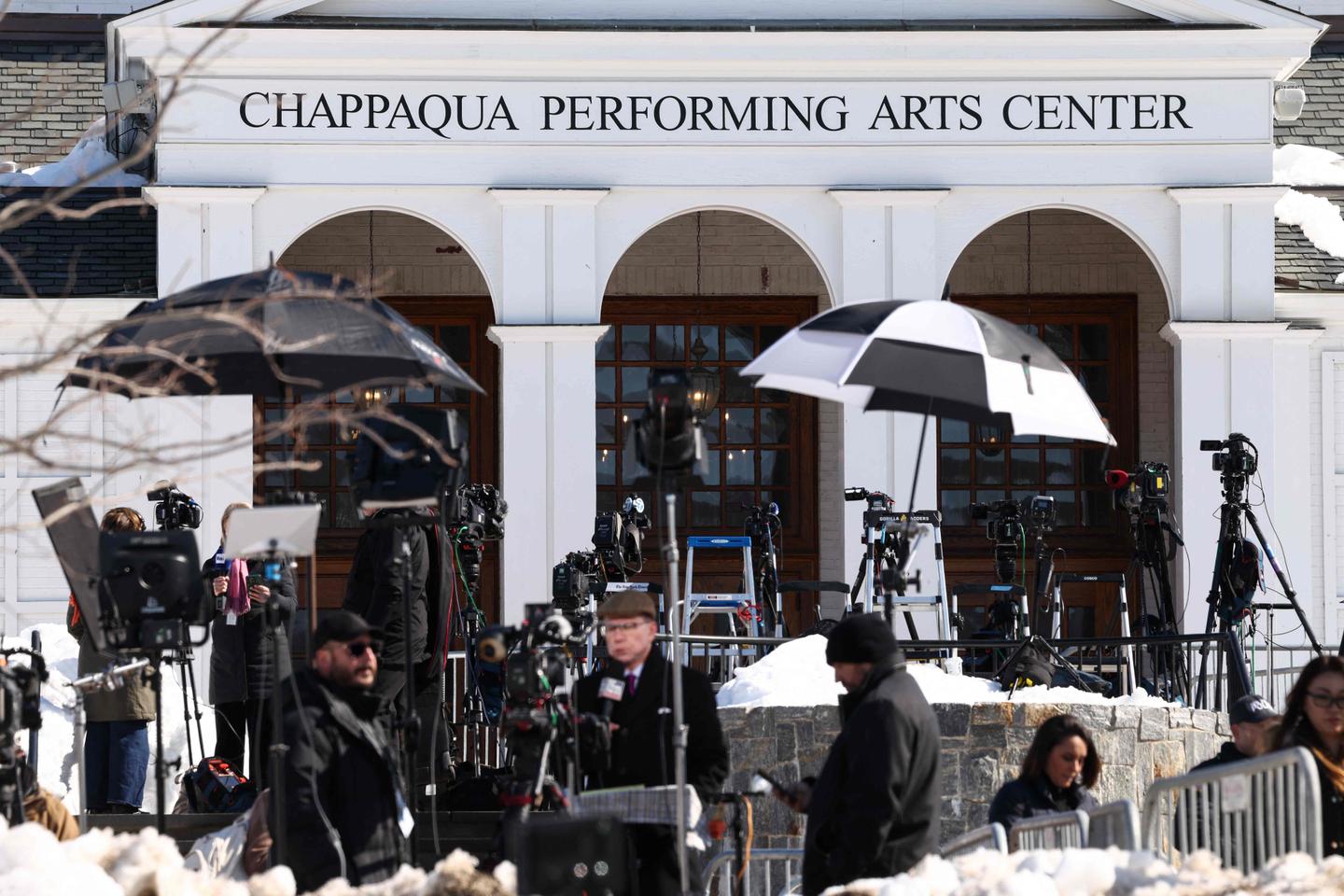
Chappaqua, New York – Former President Bill Clinton testified before a House committee on February 27, 2026, addressing questions regarding his past relationship with convicted sex offender Jeffrey Epstein. The deposition, held at the center for performing arts in Chappaqua, marks a significant moment in the ongoing scrutiny surrounding Epstein’s network and the individuals connected to him. The proceedings come after the release of tranches of documents related to Epstein’s crimes, prompting renewed interest in the former president’s ties to the financier.
The inquiry, led by the House Oversight Committee, centers on the extent of Clinton’s knowledge of Epstein’s criminal activities and the nature of their association. While Clinton has consistently maintained he was unaware of Epstein’s abuse, the committee presented evidence including flight logs and photographs that detail numerous interactions between the two men. This latest development adds another layer to a complex and sensitive case that has captivated public attention for years, raising questions about power, influence, and accountability.
The deposition follows a similar hearing involving former Secretary of State Hillary Clinton, who testified the day prior. Unlike her husband, Hillary Clinton stated she had never met Jeffrey Epstein. But, Bill Clinton’s testimony focused heavily on his documented travels aboard Epstein’s private jet, dubbed the “Lolita Express,” and photographs depicting him with young women, some of whose identities remain obscured. The committee highlighted that Epstein flew on Clinton’s presidential aircraft at least seventeen times while Clinton was in office, and Clinton himself traveled on Epstein’s plane at least twenty-seven times, according to Republican committee chair James Comer.
The Scope of the Relationship: Flight Logs and Photographic Evidence
Central to the committee’s questioning were detailed flight logs showing Clinton’s frequent utilize of Epstein’s aircraft. These records, first reported by various news outlets in recent years, demonstrate a pattern of travel that extended well beyond occasional business dealings. The committee presented evidence suggesting Clinton used the plane for personal trips, raising questions about the nature of his relationship with Epstein and whether he was aware of the potential for illicit activity. The flight logs are available for public review through court documents related to Epstein’s case, as reported by The Washington Post.
Adding to the scrutiny were photographs presented to Clinton during the deposition. These images depicted him with young women, some of whose faces were blurred to protect their identities. The committee pressed Clinton on whether he knew the identities of these women and whether he had any reason to suspect they were victims of abuse. Clinton maintained he did not know the women and had no knowledge of any wrongdoing. However, the images sparked considerable debate and fueled speculation about the extent of his involvement in Epstein’s network. One photograph specifically showed Clinton with Ghislaine Maxwell, Epstein’s longtime associate and accomplice, further intensifying the focus on his connections to the case.
Clinton’s Testimony: Denials and Limited Recollection
Throughout the deposition, Clinton consistently asserted he had no knowledge of Epstein’s criminal activities. He stated he had encountered Epstein through charitable circles and that their relationship was primarily based on shared philanthropic interests. He acknowledged traveling on Epstein’s plane but claimed he was unaware of any inappropriate behavior. According to reporting from The New York Times, Clinton testified he “saw nothing” that indicated Epstein was engaged in criminal behavior.
However, Clinton’s limited recollection of specific details raised questions among committee members. He struggled to recall certain interactions with Epstein and offered vague explanations for his frequent travel on the financier’s plane. Republicans on the committee expressed skepticism about Clinton’s claims, suggesting he was deliberately downplaying the extent of his relationship with Epstein. Democrats, while acknowledging the seriousness of the allegations, defended Clinton, arguing that there was no evidence to suggest he was directly involved in Epstein’s crimes. The deposition, as reported by PBS, was described as tense and at times combative.
The Broader Context: Epstein’s Network and Ongoing Investigations
The Clinton deposition is part of a broader investigation into Epstein’s network of associates and the extent to which powerful individuals may have been complicit in his crimes. Epstein, a wealthy financier, was arrested in July 2019 on sex trafficking charges and died by suicide while in jail the following month. His death sparked outrage and fueled conspiracy theories, leading to renewed calls for a thorough investigation into his activities and the individuals who enabled him. The case has brought to light a disturbing pattern of abuse and exploitation, with allegations that Epstein trafficked dozens of underage girls over a period of several years.
The House Oversight Committee’s investigation has focused on identifying individuals who may have had knowledge of Epstein’s crimes or who may have benefited from their association with him. In addition to Bill and Hillary Clinton, the committee has as well questioned other prominent figures, including Prince Andrew and former President Donald Trump. The committee’s goal is to uncover the truth about Epstein’s network and to hold those responsible accountable for their actions. The investigation is ongoing, and further hearings and depositions are expected in the coming months. The Department of Justice continues to pursue leads and investigate potential co-conspirators in the Epstein case.
Impact and Implications
The revelations surrounding Bill Clinton’s relationship with Jeffrey Epstein have undoubtedly tarnished his legacy and raised serious ethical questions. While he has not been accused of any criminal wrongdoing, the evidence presented before the House committee has fueled public skepticism and prompted calls for greater transparency. The case also highlights the challenges of holding powerful individuals accountable for their actions, particularly when those actions occurred in the past. The ongoing investigation is likely to have far-reaching implications, potentially leading to further scrutiny of Epstein’s network and the individuals connected to him.
The case also serves as a stark reminder of the devastating impact of sexual abuse and exploitation. The victims of Epstein’s crimes have suffered unimaginable trauma, and their stories deserve to be heard. The ongoing investigation is a step towards justice for these victims, but much operate remains to be done to prevent similar abuses from happening in the future. Resources for victims of sexual assault are available through the RAINN (Rape, Abuse & Incest National Network) hotline at 1-800-656-HOPE and online at https://www.rainn.org.
The House Oversight Committee is expected to release a full report of its findings in the coming weeks. This report will likely include recommendations for legislative reforms aimed at preventing similar abuses in the future. The committee’s work underscores the importance of continued vigilance and accountability in addressing the issue of sexual exploitation and protecting vulnerable individuals.
As the investigation continues, the public will be closely watching for further developments. The case remains a significant political and social issue, and its outcome could have lasting consequences. The next scheduled hearing related to the Epstein case is set for March 15, 2026, where testimony will be heard from additional individuals connected to the investigation.
What are your thoughts on this developing story? Share your comments below and let us know what you suppose. Don’t forget to share this article with your network to maintain the conversation going.
- Arizona Cuts Healthcare Spending to Reduce Costs
- Iganga Deputy RDC Lyavala Slams Parish Chiefs Over PDM Petition and Insubordination
- Mario Hart and Korina Rivadeneira Confirm Split and Reveal Breakup Details (newsdirectory3.com)
- Trevor Wayne Perry Obituary, Memorial and Funeral Service Details (news-usa.today)