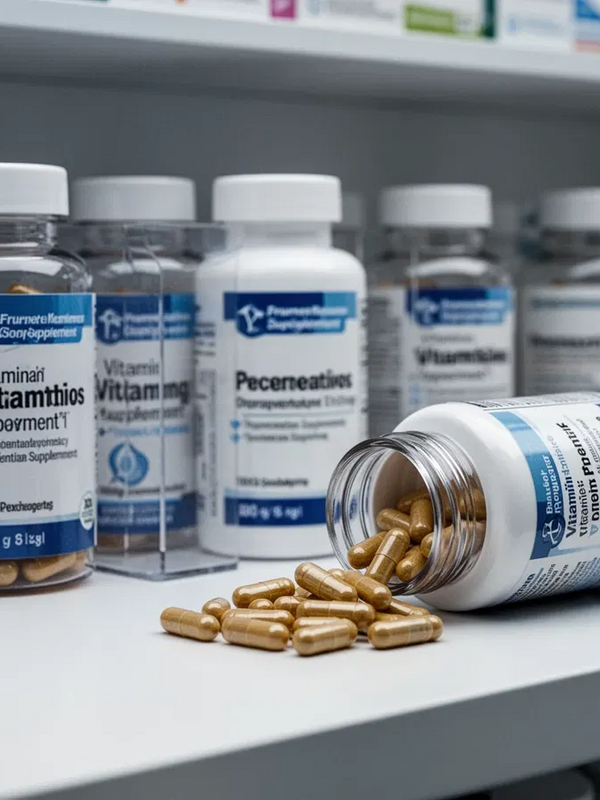
The booming market for dietary supplements, currently valued at €4.28 billion, is facing increased scrutiny as medical professionals raise concerns about their limited proven benefits and potential health risks. As consumers increasingly turn to vitamins, minerals, and herbal products to bolster their health, experts are urging caution and emphasizing the importance of a balanced diet. New, EU-wide regulations setting maximum limits for certain nutrients are slated to grab effect in 2026, aiming to enhance consumer safety and address growing concerns about overconsumption and contamination.
The appeal of dietary supplements lies in the promise of effortless health boosts, but a growing body of evidence suggests that for many, these benefits are overstated. Presented at the recent German Cancer Congress in Berlin, data highlighted a lack of robust scientific backing for the widespread use of supplements, particularly in cancer aftercare. Simultaneously, the German Federal Institute for Risk Assessment (BfR) issued stark warnings about potential health hazards associated with certain supplement practices. This confluence of concerns is prompting a reevaluation of the industry and its regulatory landscape.
A Multi-Billion Euro Market with Questionable Returns
The German market for dietary supplements has experienced significant growth, with sales in pharmacies, drugstores, and supermarkets increasing by nearly ten percent between early 2024 and early 2025, reaching approximately €4.28 billion. The German Cancer Congress serves as a key forum for discussing these trends and the associated medical implications. According to consumer organizations, 77 percent of the population regularly use such preparations. However, a significant misconception persists: half of consumers mistakenly believe these products undergo safety checks before being sold, and nearly a quarter view them as a form of natural medicine. Legally, however, dietary supplements are classified as food, not pharmaceuticals, and are subject to significantly less stringent regulation.
At the German Cancer Congress, oncologists were unequivocal in their assessment. Professor Jutta Hübner, an oncologist, stressed that a balanced diet rich in fruits and vegetables cannot be adequately replaced by pills and powders. She emphasized the extremely limited scientific basis for the use of many supplements, particularly in the context of cancer aftercare. This sentiment reflects a broader concern within the medical community about the reliance on supplements as a substitute for healthy lifestyle choices.
BfR Warns of Dangerous Overdoses and Contamination
Beyond the lack of demonstrable benefits, direct health risks are coming into sharper focus. In late February 2026, the BfR issued a specific warning against high-dose vitamin D therapies administered at short intervals, citing significant potential dangers. The BfR’s warning highlighted the risks associated with such practices, emphasizing that the effects of combination preparations containing vitamin K2 remain largely unexplored.
Consumer protection agencies have also documented numerous product recalls during the same period. Various supplements were removed from the market due to the presence of unauthorized or toxic substances, including carcinogenic hydrocarbons and harmful pyrrolizidine alkaloids. These incidents underscore a fundamental flaw in the current system: dietary supplements do not undergo a state-level approval process before being sold to consumers. This lack of oversight leaves consumers vulnerable to potentially harmful products.
The Future of Supplementation: Towards Individualized Approaches
The blanket recommendation of vitamins is increasingly viewed as outdated in research. Dr. Eunike Velleuer, presenting at the German Cancer Congress, shared new insights indicating that individuals respond particularly differently to micronutrient intake. Research now distinguishes between strong, medium, and weak responders. Strong responders exhibit positive genetic effects even with small dose changes, while weak responders show minimal impact even with high doses. These individual differences explain why large-scale studies often fail to demonstrate significant preventative effects – the varying responses cancel each other out on average.
Medical professionals are advocating for a shift away from generalized recommendations towards individualized approaches. These approaches would be based on epigenetic data and gut microbiome analysis, potentially enabling precise predictions for individual patients. This personalized approach represents a significant departure from the current “one-size-fits-all” model of supplementation.
EU Introduces Binding Maximum Limits
The increasing number of warnings is driving a change in thinking at the European level. A crucial legal change will come into effect in 2026: EU-wide binding maximum limits for critical nutrients. The European Commission’s website provides details on the new regulations. This regulation specifically targets vitamin A, vitamin D, iron, manganese, and selenium, as overdoses of these substances can quickly lead to irreversible health damage. Previously, in Germany, only non-binding recommendations from the BfR were in place, and many manufacturers did not adhere to them.
This decision is a response to years of demands from consumer organizations and a rise in reports of health-threatening overdoses within the European Rapid Alert System for Food and Feed (RASFF). For consumers, this means a higher level of product safety and increased confidence in the supplements they choose to use.
The Krebsforum der Industrie and the German Cancer Congress
Alongside the scientific discussions at the German Cancer Congress, the Krebsforum der Industrie (Industry Cancer Forum) provides a platform for companies in the healthcare sector, including pharmaceutical and medical technology firms, to present their activities. The Krebsforum der Industrie runs concurrently with the German Cancer Congress, from February 18 to 21, 2026, at the CityCube Berlin. This separation of scientific and industry areas, established in 2016, aims to ensure transparency and independence in the exchange of information.
Key Takeaways
- Limited Evidence: The scientific basis for the benefits of many dietary supplements, particularly in cancer care, remains weak.
- Potential Risks: High doses of certain vitamins and minerals can be harmful, and contaminated products pose a significant threat.
- Individualized Approach: Future supplementation strategies should be tailored to individual needs based on genetic and microbiome analysis.
- New Regulations: EU-wide maximum limits for critical nutrients will come into effect in 2026, enhancing consumer safety.
As the regulatory landscape evolves and research continues to unravel the complexities of micronutrient metabolism, consumers are encouraged to approach dietary supplements with caution and prioritize a balanced diet. The next key development will be the full implementation of the new EU regulations in 2026, and ongoing monitoring of product safety and efficacy. We invite you to share your thoughts and experiences with dietary supplements in the comments below.