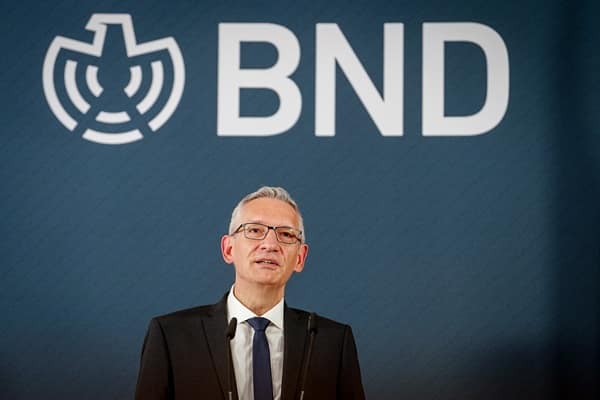
As the geopolitical landscape in Eastern Europe continues to evolve, German intelligence authorities have issued a stark warning regarding the heightened security risks facing the nation’s corporate sector. The Bundesnachrichtendienst (BND), Germany’s foreign intelligence service, has increasingly highlighted the threat posed by state-sponsored actors, particularly in the context of the ongoing war in Ukraine. For German and broader European business leaders, these warnings signal a shift from traditional market risk assessments to a more complex environment defined by industrial espionage, cyber sabotage, and the weaponization of economic dependencies.
During recent parliamentary briefings and public security assessments, officials have underscored that the Russian government views the European private sector not merely as a commercial partner, but as a potential vector for influence and intelligence gathering. Bruno Kahl, the president of the BND, has frequently emphasized that the intelligence situation remains exceptionally tense, noting that the Russian security apparatus is increasingly aggressive in its efforts to undermine Western stability through non-kinetic means. According to the Federal Office for the Protection of the Constitution (BfV), which works in tandem with the BND, the threat of espionage against German companies has reached a critical level that necessitates immediate operational changes for executives.
The Evolution of Corporate Security Risks
For many years, international business strategy was primarily concerned with supply chain resilience and regulatory compliance. However, the current environment has forced a pivot toward “economic security” as a primary boardroom concern. The BND’s warnings focus specifically on the vulnerability of critical infrastructure and high-tech manufacturing sectors, which remain primary targets for foreign intelligence operations. These operations often manifest as sophisticated phishing campaigns, the recruitment of “insider” threats, or the systematic mapping of proprietary research and development data.
The German National Security Strategy, unveiled to address these systemic vulnerabilities, explicitly identifies the need for closer cooperation between the private sector and federal intelligence agencies. By integrating corporate intelligence into the broader national defense framework, the German government aims to mitigate the risk of hostile actors influencing strategic decision-making. For executives, this means that “business as usual” is no longer a viable security posture in an era where trade secrets can be repurposed for military or political leverage.
Cyber Espionage and the Insider Threat
Cybersecurity experts have observed a marked increase in the sophistication of attacks directed at German engineering and automotive firms. These incidents are rarely isolated; they are often part of a coordinated effort to secure strategic advantages in key industrial sectors. The BND has pointed to the use of advanced persistent threats (APTs) that remain dormant within corporate networks for extended periods, exfiltrating sensitive blueprints and client data without triggering traditional security alarms.
the human element remains a primary concern for counter-intelligence services. “Social engineering” has become a preferred tactic, with foreign agents reaching out to employees via professional networking platforms to solicit information under the guise of academic research or consultancy opportunities. Organizations like the Bitkom industry association frequently collaborate with security agencies to provide training modules designed to help employees recognize these subtle but dangerous overtures.
Strategic Resilience: What Executives Must Do Now
The call to action for business leaders is clear: security must be treated as a core business function, equivalent in importance to finance or legal operations. The BND’s guidance encourages companies to conduct thorough “vulnerability audits” that go beyond IT security to include supply chain integrity and the vetting of third-party vendors. In an increasingly polarized global market, understanding the ultimate beneficial ownership of partners and suppliers is no longer just a regulatory requirement—We see a survival necessity.
Key areas for immediate focus include:
- Enhanced Due Diligence: Moving beyond surface-level checks to understand the geopolitical exposure of all strategic partners.
- Internal Awareness Campaigns: Educating staff, particularly those in R&D and executive management, about the risks of digital and physical social engineering.
- Secure Communication Protocols: Transitioning to end-to-end encrypted infrastructure for all sensitive corporate communications, as recommended by the Federal Office for Information Security (BSI).
- Incident Response Planning: Developing clear, actionable protocols for suspected security breaches that involve immediate coordination with relevant law enforcement agencies.
Navigating the Path Forward
The tension between the necessity for global commerce and the requirement for national security will likely define the coming decade. As Germany continues to reorient its economic policy, the BND and other intelligence agencies are expected to maintain a heightened level of engagement with the private sector. While the threat landscape is undeniably daunting, proactive measures—grounded in transparency and rigorous security standards—can significantly mitigate the risks.
The next major update regarding national security directives is expected during the upcoming annual report presentation from the BfV, which typically outlines the evolving tactics of foreign intelligence services operating within German borders. We will continue to monitor these official government disclosures as they become available. If you found this analysis helpful, please feel free to share this report with your professional network or join the discussion in the comments section below regarding the evolving role of corporate intelligence in your sector.
Related reading
- 美墨边境城市大学生自杀风险的心理社会相关因素:一项混合方法研究 – 生物通
- New Chancellor John Healey signals he will find billions more for UK’s defence
- Best Business and Personal Credit Cards: Travel, Cash Back & No Annual Fee Options (world-today-news.com)
- Organizer Detained After Russian Strike on Weaponry Exhibition Near Kyiv (archyde.com)