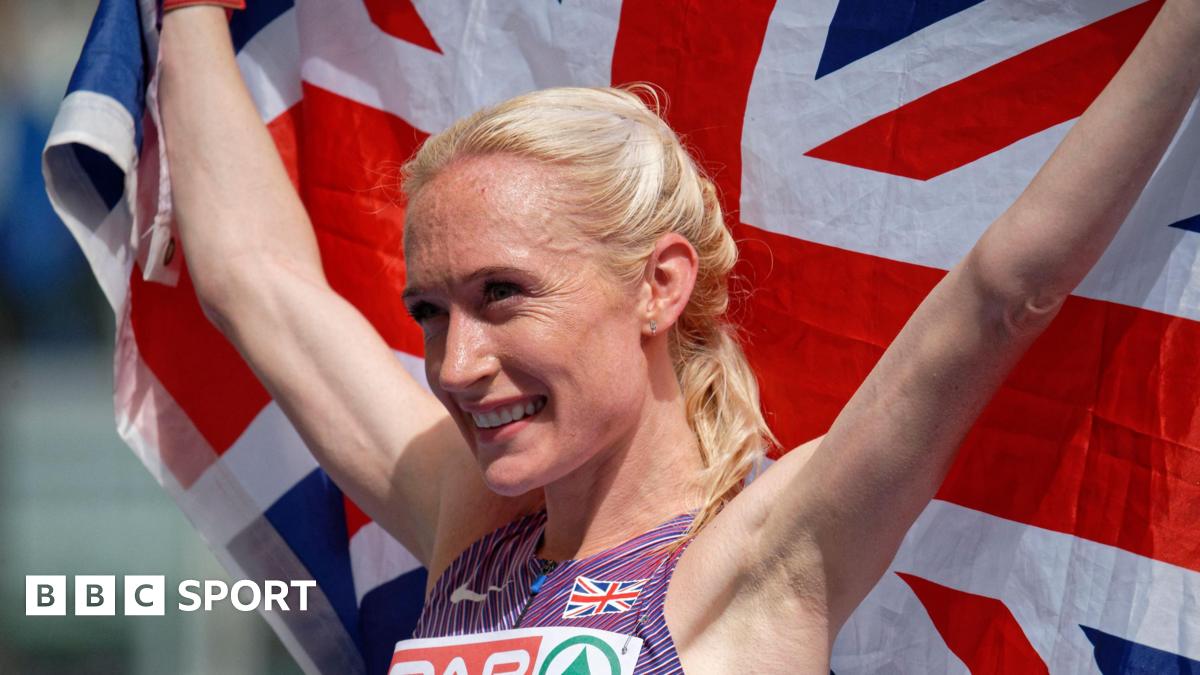
Calli Hauger-Thackery’s participation in the 2026 Boston Marathon while 22 weeks pregnant has drawn attention to the physical challenges and medical considerations of endurance running during pregnancy. The British athlete completed the 26.2-mile course in 2 hours, 43 minutes, and 58 seconds, a time significantly slower than her personal best but meaningful given her condition.
Hauger-Thackery, a 33-year-old from Sheffield who has represented Great Britain at the Olympic Games, described the race as the “toughest achievement” in her career. She noted that while her 2025 Boston Marathon finish of 2:22:38 placed her sixth, the 2026 effort—despite being over 20 minutes slower—felt more significant due to the circumstances of her pregnancy.
Throughout the race, Hauger-Thackery encountered recurring issues with her right glute, which locked up at approximately mile five and again at mile 11. Each time, she stopped at medical tents along the course where staff worked to release a trapped nerve. She described the sensation as making it difficult to lift her leg properly, requiring her to drag it temporarily until treatment restored function.
In addition to the glute issues, Hauger-Thackery took multiple bathroom breaks during the race, which she attributed to her pregnancy. She noted these stops occurred before the halfway point, which is mile 13 in a marathon. After mile 13, she reported feeling stronger and more in tune with her body, describing the second half of the race as “flawless.”
Her split times reflected this shift: the first half was completed in 1 hour, 23 minutes, and 10 seconds, while the second half was run in 1 hour, 20 minutes, and 48 seconds—a negative split indicating she ran the latter portion faster than the first.
Hauger-Thackery emphasized that her decision to run was supported by her medical team. During a recent prenatal checkup, her doctors responded positively when she informed them of her plans to run Boston, offering encouragement without concern. She noted they did not express hesitation about her participating in the race at that stage of pregnancy.
The athlete, who has been running competitively since age 12, had recently won both the Honolulu Marathon in December 2025 and the Houston Marathon in January 2026. She completed the Houston race in 2 hours, 24 minutes, and 17 seconds while aware she was in her first trimester, though she had not yet publicly disclosed her pregnancy at that time.
Looking ahead, Hauger-Thackery indicated that the Boston Marathon might be her “last proper race” for a while, anticipating that her body will require extended recovery postpartum. She is due to give birth to her first child, a boy, at the end of August 2026.
Her performance at Boston placed her 65th overall in the women’s field. While not among the elite finishers, her completion of the marathon under these conditions has been highlighted as a notable example of continuing athletic activity during pregnancy with medical supervision.
The Boston Marathon, held annually on Patriots’ Day in April, is one of the world’s oldest annual marathons and qualifies for the Abbott World Marathon Majors series. Participation requires meeting strict qualifying standards based on age and gender, or securing entry through invitational, charitable, or legacy programs.
Medical guidance on exercise during pregnancy continues to evolve. Current recommendations from organizations such as the American College of Obstetricians and Gynecologists support aerobic activity for those with uncomplicated pregnancies, though they advise consultation with healthcare providers to tailor intensity and monitor for warning signs such as dizziness, chest pain, or vaginal bleeding.
Hauger-Thackery’s experience underscores the variability of individual responses to running while pregnant. Factors such as pre-pregnancy fitness level, access to medical support, and specific physical complaints—like the nerve entrapment she described—can significantly influence comfort and safety during endurance events.
As she approaches the final weeks of her pregnancy, Hauger-Thackery has not announced specific plans for returning to competitive running. Her focus, she said, will be on recovery and adapting to the demands of motherhood before considering future athletic goals.
For updates on maternal health and athletic participation during pregnancy, readers are encouraged to consult official guidance from health authorities and discuss personal circumstances with qualified medical professionals.
We welcome your thoughts on this story. Share your experiences or perspectives in the comments below, and help spread awareness by sharing this article with others interested in sports, health, and pregnancy.
Related reading