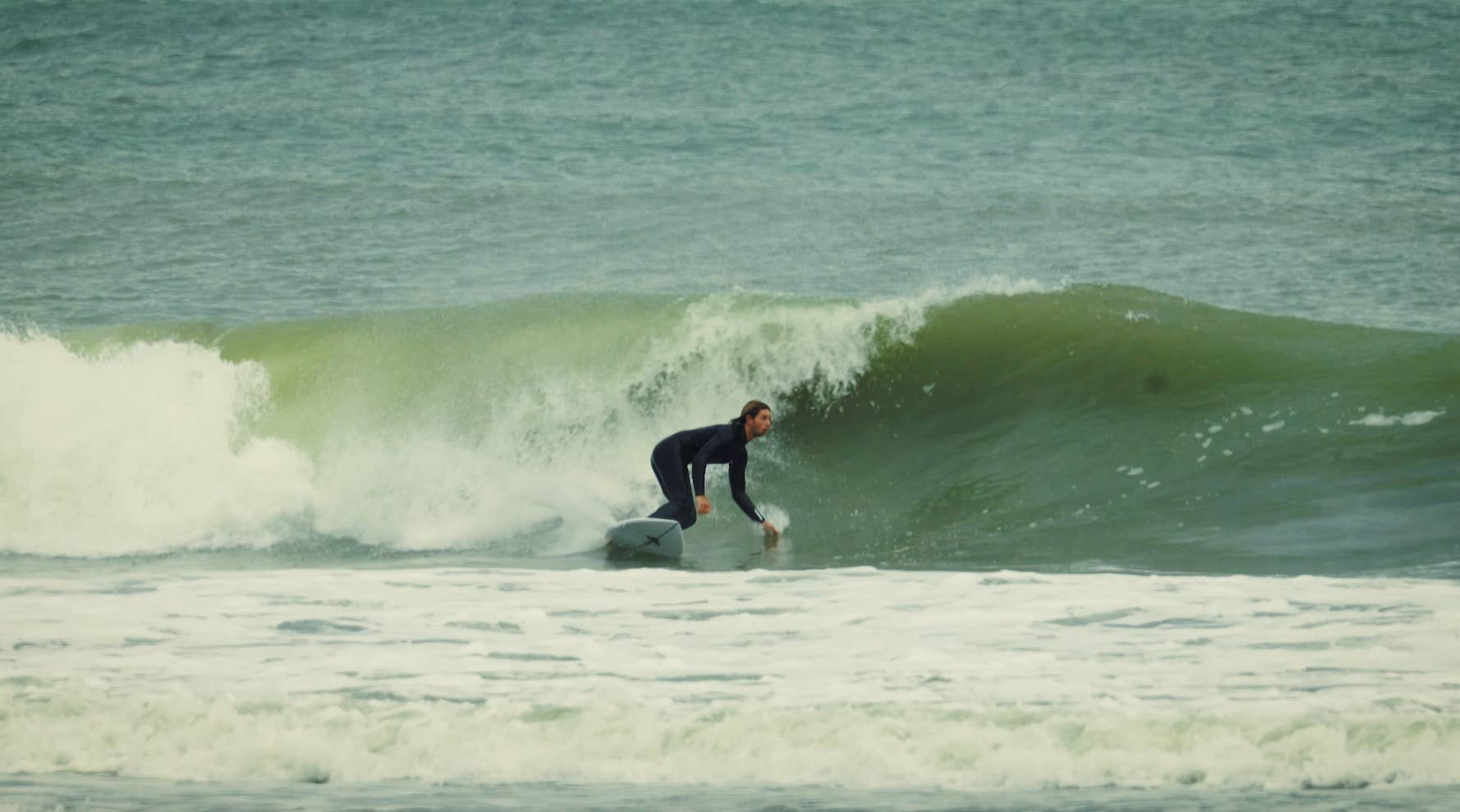
Log Rap’s latest film captures California surfers Tosh and Judah Tudor, Greyson Messier, and Saxon Wilson in Japan, where classic longboarding culture found unexpected appreciation among local surfers and enthusiasts. The week-long project, shot across Chiba and Tokyo, highlighted how Japan’s surf community values traditional surfing style over modern progression, creating a rare cultural exchange documented in the film’s premiere at the Ron Herman shop.
While much of the global surfing world obsesses over performance metrics and radical maneuvers, Japan has long preserved the art of riding waves with patience and style—a philosophy that resonated deeply with the Moonsuits crew. According to Greyson Messier, the Japanese audience’s enthusiasm for longboarding was “so surprising” and reflected a shared appreciation for surfing’s roots. “They were stoked we were out there surfing and hanging out,” he said.
The trip, organized by Kazu—a key figure in Japan’s surf scene—was designed to bridge two surfing cultures. As Kazu explained, the film’s edit aimed to “show more of the personality on both sides,” allowing Japanese surfers to experience California’s surf lifestyle while giving the American crew a glimpse into Japan’s meticulous attention to detail, from urban etiquette to wave selection.
Why it matters: This cultural exchange underscores Japan’s role as a global hub for surfing tradition, where brands like Skip Frye, Pavel, and Burch have found a dedicated following. Unlike many surf destinations chasing innovation, Japan’s surf community remains rooted in the fundamentals—something the Moonsuits crew discovered firsthand during their week-long immersion.
California Meets Japan: A Surf Trip Unlike Any Other
The Moonsuits crew—comprising Tosh and Judah Tudor, Greyson Messier, and Saxon Wilson—traveled to Japan with a full itinerary: surf sessions in Chiba, premieres in Tokyo, and cultural experiences that went beyond the lineup. For Judah Tudor, the trip was “one of the best I’ve ever been on,” offering a chance to bond with his brother while exploring a country known for its precision and mindfulness.
Greyson Messier, who meditates regularly and has traveled extensively, described Japan’s collective consciousness as striking. “There’s no trash anywhere,” he noted. “Everyone waits for the walk sign. They’re just very conscious people, very aware of what they’re doing and how they’re helping their country.” This observation aligns with Japan’s reputation for environmental stewardship and social harmony—qualities that extended to its surf culture.

In Chiba, the crew encountered waves ranging from chest to head high, with “quality little peelers” that offered a refreshing change from the high-performance surfing dominant in other regions. While surfing wasn’t the primary focus of the trip—premieres and dinners took precedence—the sessions provided a glimpse into how Japan’s surfers prioritize fun and connection over competition.
Saxon Wilson echoed Messier’s sentiment, praising the Japanese surf community’s warmth. “Everyone just loves to share,” he said. “They’re having so much fun and want to share that stoke. They really know how to treat people.” The crew’s interactions with local surfers revealed a mutual admiration for California’s surf heritage, with many Japanese enthusiasts expressing surprise at how deeply rooted the state’s surf culture is.
Beyond the Lineup: Food, Culture, and a Film Premiere
The trip wasn’t just about surfing—it was a deep dive into Japan’s culinary scene, nightlife, and surf hospitality. The crew enjoyed traditional Japanese cuisine, explored Tokyo’s vibrant neighborhoods, and attended a well-attended film premiere at the Ron Herman shop, where the local surf community turned out in force.
According to Judah Tudor, the experience was a reminder of how travel can bring people together. “It’s so cool to travel with my brother and experience these places with him,” he said. “He’s on his own path, but sometimes I get to come along—and I couldn’t think of a better person to travel with.” Tosh Tudor, currently in Indonesia for his summer residency, has built a reputation as one of the world’s most barreled surfers, and his presence in Japan added an extra layer of excitement for the crew.
The film’s success at its premiere—drawing a crowd eager to see longboarding celebrated—highlighted Japan’s enduring love for surfing’s classic elements. As Greyson Messier put it, “You kind of don’t realize what California has until you go somewhere like that and see everyone talking about it.” The trip reinforced the idea that surf culture, at its core, is about shared passion and respect for the ocean.
Japan’s Surf Culture: Why Tradition Still Wins
Japan’s surf scene has long been a bastion of traditional values, where longboarding and classic surf shapes remain popular despite the global shift toward high-performance gear. Brands like Skip Frye, Pavel, and Burch have thrived in Japan precisely because they embody this nostalgia for surfing’s golden era.
Unlike regions where surfing is treated as a sport with strict performance metrics, Japan’s approach is more philosophical. As Kazu, the trip’s organizer, explained, the goal was to “let people see more of the personality on both sides.” This mutual exchange—California surfers experiencing Japan’s precision and mindfulness, and Japanese surfers embracing the laid-back spirit of California longboarding—created a film that transcends typical surf content.
The crew’s observations about Japan’s collective mindfulness—from its clean streets to its respectful urban etiquette—offered a broader perspective on how surf culture reflects societal values. In a world where surfing is often reduced to competition and innovation, Japan’s approach serves as a reminder of what makes the sport truly special: the connection between rider and wave, and the shared joy of riding them well.
What Happens Next for the Moonsuits Crew?
With Tosh Tudor already deep into his Indonesia summer residency—a season known for its world-class barrels—the Moonsuits crew may well return to Southeast Asia for more surfing adventures. Judah Tudor’s enthusiasm for the trip suggests future collaborations between the brothers and their team, potentially bringing more cultural exchanges like the one in Japan.
For now, the Log Rap film serves as a testament to how surf culture can bridge continents and generations. It’s a celebration of tradition, hospitality, and the universal language of waves—a message that resonates far beyond the lineup.
Key Takeaways
- Cultural Exchange: The film documents a rare meeting of California’s surf heritage and Japan’s deep appreciation for traditional surfing styles.
- Longboarding Revival: Japan’s surf community showed unexpected enthusiasm for longboarding, highlighting its enduring appeal.
- Hospitality and Mindfulness: The crew praised Japan’s collective consciousness, from urban etiquette to wave selection, as a key part of its surf culture.
- Brotherly Bond: Judah Tudor called the trip with his brother Tosh one of the best experiences of his surfing career.
- Film Success: The premiere at Ron Herman shop drew a large crowd, underscoring Japan’s passion for surf cinema.
For readers eager to explore Japan’s surf scene further, the Japan Surf Guide offers detailed information on breaks, travel tips, and local surf culture. Meanwhile, Tosh Tudor’s ongoing Indonesia residency can be followed on Instagram, where he shares updates on his latest adventures.
What do you think about the blend of California and Japanese surf culture? Share your thoughts in the comments below or tag us on social media with your favorite surf travel stories.
Worth a look
- Emil Uhlin Hits Season Best in High Jump During Day One of Decathlon
- Teremoana Teremoana: Unbeaten Heavyweight Prospect Hailed as Future World Champion After 12th Straight KO
- Boeing Classic Guide: Field, Schedule, and How to Watch (newsdirectory3.com)
- Lionel Messi Questions Football Future Following Father’s Death (archynewsy.com)