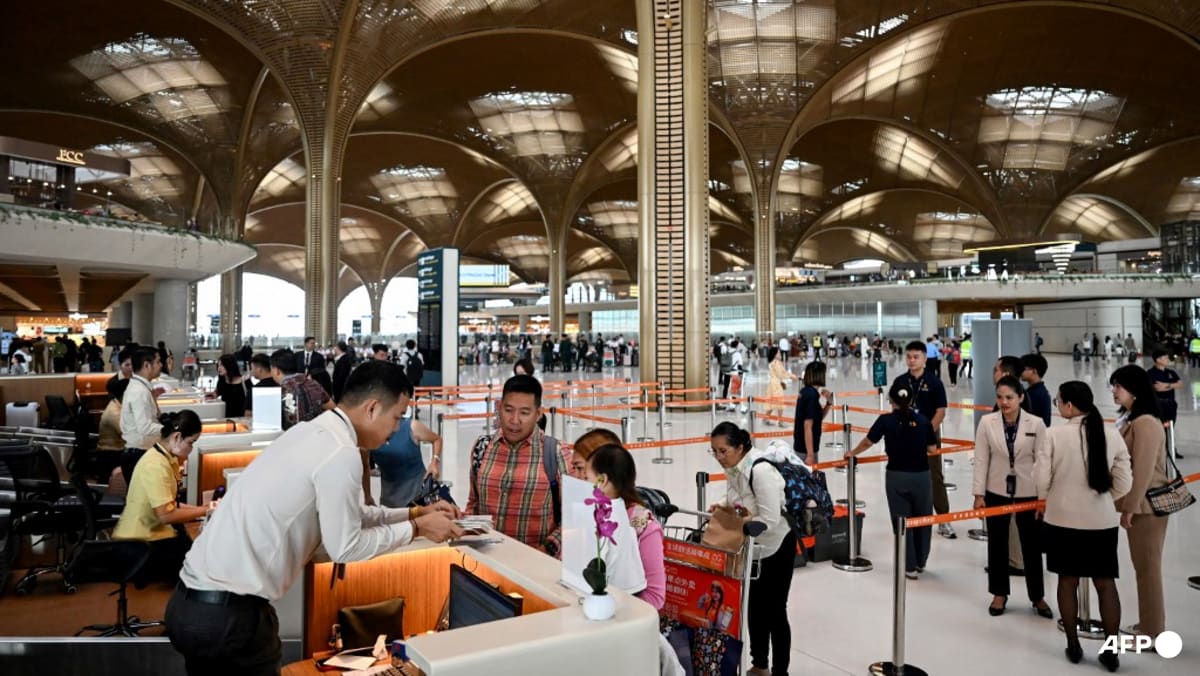
## Techo International Airport: Cambodia’s new Gateway to the World
Cambodia has officially opened the doors to Techo International Airport (TIA), a $2 billion infrastructure project poised to revolutionize air travel and boost the nation’s tourism sector. The inaugural flight, a Singapore Airlines service, landed on september 9th, 2024, marking the end of operations at the aging Phnom Penh International Airport. But this enterprising project isn’t without its complexities. This article provides a comprehensive overview of Techo Airport, exploring its potential, the challenges faced during construction, and its long-term impact on Cambodia’s economy and communities. we’ll delve into the details, offering insights beyond the headlines and addressing concerns surrounding displacement and sustainability.
### A New Era for Cambodian Aviation
Did You Know? Techo International Airport is named after Hun Sen,the former Prime Minister of Cambodia,recognizing his long-standing leadership.
The opening of TIA represents a significant investment in cambodia’s future. Located 20 kilometers south of Phnom Penh, the airport is designed to handle an initial capacity of 13 million passengers annually, wiht ambitious plans to scale up to 50 million by 2050. this expansion is crucial as Cambodia seeks to revitalize its tourism industry, which experienced a sharp decline during the COVID-19 pandemic. In 2023, Cambodia welcomed 6.7 million international visitors, generating approximately $3.6 billion in revenue – a positive trend, but still below pre-pandemic levels. TIA aims to facilitate increased connectivity and attract a wider range of travelers, contributing significantly to economic growth.
The need for a new airport was driven by limitations at the existing Phnom penh International Airport, which struggled to accommodate larger aircraft and increasing passenger volumes. The new facility boasts state-of-the-art infrastructure, including a 3,500-meter runway and modern terminal buildings, designed to meet international standards.
### construction & Advancement: A Phased Approach
The development of Techo International Airport is being implemented in three phases. The frist phase, completed at a cost of $2 billion, encompasses the core infrastructure – the runway, terminal, and essential support facilities. Future phases will focus on expanding capacity, adding new terminals, and developing ancillary services.
This project follows the recent inauguration of another major airport near Angkor Wat in November 2023, funded by Chinese investment ($1.1 billion). These two large-scale projects demonstrate Cambodia’s commitment to upgrading its aviation infrastructure and positioning itself as a regional travel hub. The investment is expected to create numerous job opportunities, both directly at the airports and indirectly thru related industries.
Pro Tip: When planning travel to Cambodia, check which airport is moast convenient for your destination. Phnom Penh International Airport is now closed,so all international flights will be directed to Techo International Airport.
### Addressing Concerns: Displacement and Community Impact
While the economic benefits of Techo Airport are undeniable, the project has faced criticism regarding its social impact. Non-governmental organizations, such as Sahmakum Teang Tnaut (STT), estimate that around 2,000 households have been affected by displacement due to the airport’s construction.
Hear’s a rapid comparison of the two new Cambodian airports:
| Airport | Location | Cost | Initial Capacity (Passengers/Year) | Funding Source |
|---|---|---|---|---|
| Techo International Airport | 20km South of Phnom Penh | $2 billion | 13 Million | Cambodian Government |
| Angkor International Airport | Near Angkor Wat | $1.1 Billion | 7 Million | Chinese Investment |
STT’s report highlights the devastating impact on communities who have lost their land, livelihoods, and social networks.While civil aviation officials claim that disputes are “almost resolved,” the issue of resettlement and compensation remains a sensitive topic. Ensuring fair and equitable treatment for affected communities is crucial for the long-term success and sustainability of the project. This includes providing adequate housing, livelihood opportunities, and access to essential services.
What measures can be taken to ensure future infrastructure projects in Cambodia prioritize community well-being alongside