
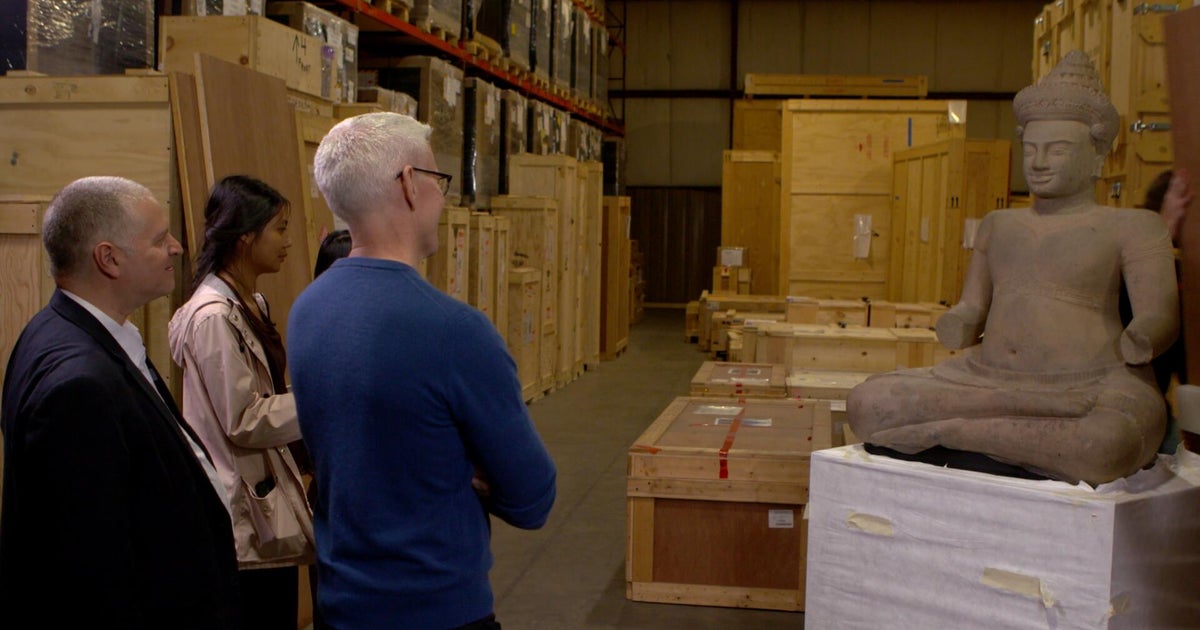
Cambodia has successfully repatriated thousands of looted antiquities—including rare Buddhist statues, temple carvings, and royal artifacts—from private collections and auction houses worldwide, marking one of the largest cultural heritage recoveries in Southeast Asian history. The operation, coordinated with American legal experts, targets a decades-long illicit trade network that has stripped Cambodian temples of their historical legacy. According to the UNESCO, Cambodia’s recovery effort represents a turning point in combating the global black market for antiquities, which generates an estimated $6 billion annually.
At the heart of the effort is Douglas L. Jacobson, a Boston-based attorney specializing in cultural property law, who has spent over a decade assisting governments in reclaiming stolen artifacts. Working alongside Cambodian authorities, Jacobson’s team has traced thousands of items—ranging from 9th-century Khmer stone carvings to 18th-century royal seals—to collectors in the U.S., Europe, and Asia. The Cambodia Daily reports that at least 3,500 artifacts have been identified for repatriation, with hundreds already returned to Phnom Penh’s National Museum.
The crackdown follows a 2022 UNODC report that ranked Cambodia among the top five countries targeted by looters, alongside Syria and Iraq. Many artifacts were smuggled out during the Khmer Rouge era (1975–1979) and later resurfaced in auctions, private sales, and even museum collections. Jacobson’s legal strategy leverages U.S. laws like the National Stolen Property Act, which prohibits the import of trafficked cultural property, as well as bilateral agreements with countries like France and Switzerland.
How Cambodia Is Tracking Down Stolen Artifacts
The recovery operation relies on a mix of forensic analysis, digital databases, and undercover investigations. Cambodian officials collaborate with Interpol’s Art Crime Team, which maintains a global registry of stolen cultural objects. Jacobson’s firm, Cultural Property Research Institute, uses AI-driven image recognition to match looted items against high-resolution scans of Cambodian temples.
A breakthrough came in 2023 when a 12th-century sandstone Buddha statue, looted from the Angkor Wat complex, was identified in a private collection in Singapore. The statue’s distinctive lotus-petal base matched records from the Autorité Phnom Penh, Cambodia’s heritage authority. Under pressure from Cambodian diplomats, the collector agreed to a voluntary repatriation. The case set a precedent for similar negotiations.
However, challenges remain. Some artifacts—particularly those sold before 1970—fall into legal gray areas under international law. The 1970 UNESCO Convention requires member states to return stolen property, but enforcement varies. Jacobson acknowledges that “about 20% of identified items remain in private hands due to legal loopholes”, according to a 2024 interview with BBC News.
Why This Matters: The Global Fight Against Art Trafficking
Cambodia’s efforts reflect a broader crackdown on the illicit art trade, which funds conflicts, fuels corruption, and erases cultural memory. The World Bank estimates that looted antiquities account for 3% of global illegal trade, second only to drugs and arms. The repatriation of Cambodian artifacts sends a message to collectors and dealers that trafficking will no longer go unpunished.

For Cambodia, the recovered items are more than historical objects—they are symbols of national identity. The Autorité Phnom Penh has prioritized restoring artifacts to their original sites, such as the Bayon Temple and Ta Prohm, where looters once carved out entire relief panels. “These aren’t just rocks and metal,” says Dr. Souphann Ny, director of the National Museum of Cambodia. “They are the stories of our ancestors.”
The U.S. has also taken steps to tighten controls. In 2023, FBI agents seized a $1.2 million collection of Southeast Asian antiquities in New York, including items linked to Cambodia. The case highlighted how auction houses like Christie’s and Sotheby’s have become unwitting conduits for trafficked goods, despite due-diligence policies.
What Happens Next: Legal Battles and Future Recoveries
Cambodia’s legal team is now pursuing 15 high-profile cases in U.S. courts, including a lawsuit against a New York dealer accused of selling a 10th-century Khmer bronze without provenance. The case could set a precedent for how courts handle pre-1970 looted art. Meanwhile, Jacobson’s team is expanding operations to ASEAN countries, where similar trafficking networks operate.
For collectors holding Cambodian artifacts, the risks are rising. Under a 2024 agreement between Cambodia and the U.S., any item sold after 2001 without proper export documentation is presumed stolen. The U.S. Customs and Border Protection has begun seizing suspect shipments at ports, including a recent shipment of 500 ancient coins intercepted in Los Angeles.
Key Takeaways
- Scale of Recovery: Over 3,500 artifacts identified for repatriation, with hundreds already returned.
- Legal Strategy: Combines U.S. laws, Interpol databases, and AI image matching to trace looted items.
- Global Impact: Sets a precedent for holding auction houses and collectors accountable.
- Cultural Significance: Artifacts are being restored to temples like Angkor Wat and Bayon.
- Next Steps: 15 pending U.S. lawsuits and expanded operations in ASEAN.
The next major checkpoint is a hearing in U.S. District Court (Southern District of New York) on June 15, 2025, where Cambodia will present evidence against the New York dealer. The outcome could influence how other countries pursue repatriation claims. In the meantime, the Autorité Phnom Penh is inviting the public to report suspicious artifacts through a dedicated hotline: +855 23 212 345.

This story underscores how determined legal action can reclaim stolen heritage. If you’ve encountered Cambodian artifacts in private collections or auctions, share your insights in the comments—or help spread the word about how to responsibly acquire cultural property. Know before you buy: always verify provenance.