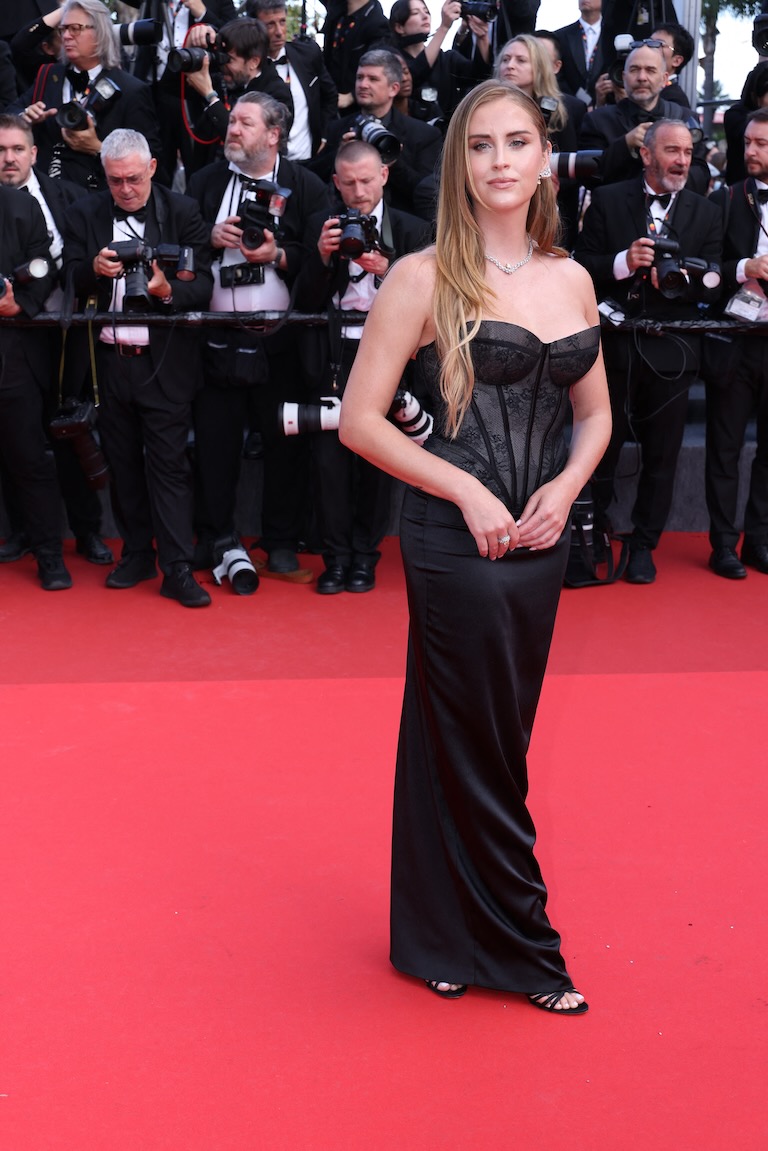
The Ferragni Effect: Valentina Ferragni’s Minimalist Masterclass on the Cannes Red Carpet
The Croisette has long been the ultimate proving ground for high fashion, a place where the intersection of cinematic history and sartorial ambition creates something electric. While the Cannes Film Festival is celebrated for its groundbreaking cinema, the red carpet remains a secondary stage where the world’s cultural heavyweights perform a different kind of drama. This year, the spotlight shifted from the silver screen to the burgeoning influence of the Ferragni dynasty, as Valentina Ferragni made a definitive statement in a look that favored discipline over excess.
In a sea of avant-garde silhouettes and hyper-maximalist textures, Valentina Ferragni’s decision to embrace a “total black” aesthetic served as a sophisticated counter-narrative. It was a move that signaled not just a personal style choice, but a broader shift in the luxury landscape—a pivot toward the “quiet luxury” and “refined minimalism” that have come to dominate the mid-2020s. Following the high-profile appearances of her sister, Chiara Ferragni, Valentina’s presence at the festival underscored the family’s unique ability to command global attention through curated, strategic elegance.
For industry observers, the significance of this appearance extends beyond the immediate visual impact. It represents the evolution of the “influencer” into a bona fide fixture of the international fashion establishment. As the Ferragni sisters navigate the complexities of global celebrity, their red carpet choices act as a barometer for contemporary taste, blending the digital-first sensibilities of the social media era with the timeless requirements of traditional high-fashion institutions like the Cannes Film Festival.
The Power of Monochromaticism: Analyzing the “Total Black” Aesthetic
Valentina Ferragni’s choice of an all-black ensemble was a tactical masterstroke. In the context of the Cannes red carpet, where color is often used to compete for visibility, black functions as a tool of authority. It’s a color that demands attention through silhouette and texture rather than through hue. By stripping away the distraction of color, the focus was thrust entirely upon the architecture of the garment and the poise of the wearer.
This “total black” approach aligns with a growing trend in luxury fashion where the emphasis has moved from logos and loud patterns to the quality of the fabric and the precision of the cut. For Valentina, this was not merely about wearing a dark dress. it was about utilizing the void of color to highlight her physical presence and the sophistication of her styling. This brand of minimalism is often seen in the collections of houses like Saint Laurent or Givenchy, where the “little black dress” is elevated to a piece of structural art.
Fashion analysts have noted that the resurgence of black as a dominant red-carpet color marks a departure from the “dopamine dressing” era of recent years. While bright, saturated colors served a purpose in the post-pandemic recovery, the current zeitgeist suggests a return to more grounded, serious and enduring aesthetics. Valentina Ferragni’s look was a quintessential example of this maturation, proving that elegance does not need to shout to be heard.
Beauty and Nostalgia: The “Rachel’s Cut” and the Glowy Visage
Complementing the structural simplicity of her attire was a beauty look that bridged the gap between 1990s nostalgia and modern technical precision. Valentina opted for a hairstyle reminiscent of the iconic “Rachel’s cut”—a layered, voluminous silhouette that has seen a massive resurgence in global beauty trends. This cut, characterized by its face-framing layers and effortless movement, provides a soft counterbalance to the sharpness of a monochromatic outfit.

The “Rachel’s cut” is more than just a nostalgic callback; it represents a move toward “lived-in” hair that feels both high-maintenance and naturally achieved. In the hands of professional stylists, this look adds a sense of movement and texture that prevents a minimalist outfit from appearing static or overly severe. It provides a sense of “humanity” to the high-gloss environment of the festival.
the emphasis on a “glowy visage” reflected the industry’s obsession with skin health and “glass skin” aesthetics. Moving away from the heavy, matte foundations of previous decades, the modern Cannes beauty standard prioritizes hydration, light-reflecting textures, and a dewy finish. This “glow” is essential for the high-definition scrutiny of the red carpet, ensuring that the skin looks vibrant under the intense flash of international photographers. The combination of the voluminous hair and the luminous skin created a look that was simultaneously classic and cutting-edge.
The Ferragni Sisterhood: A Dual-Track Strategy in Global Branding
The presence of both Chiara and Valentina Ferragni at Cannes highlights a sophisticated approach to brand management. While Chiara has long been the face of the family’s massive commercial empire, Valentina has carved out her own distinct identity within the fashion and modeling spheres. Their simultaneous presence at one of the world’s most prestigious events creates a “multiplier effect,” amplifying the family’s reach across different demographics.
Chiara’s approach has often leaned into the high-drama, high-glamour expectations of a global superstar, while Valentina has increasingly embraced a more editorial, model-centric aesthetic. This distinction is crucial. By diversifying their “style personas,” the Ferragni sisters avoid the pitfalls of brand fatigue. They are not merely repeating a single formula; they are expanding the boundaries of what the “Ferragni brand” can encompass.
This strategic differentiation is a case study in modern celebrity management. In an era where personal branding is as critical as professional output, the ability to maintain individual autonomy while benefiting from a collective family identity is a rare and valuable skill. At Cannes, this was visible in the way each sister commanded the carpet—one through the lens of the quintessential icon, and the other through the lens of the modern fashion muse.
The Evolution of the Cannes Red Carpet: From Cinema to Spectacle
To understand why the Ferragni appearance matters, one must understand the history of the Cannes red carpet. Historically, the festival was a strictly cinematic affair, where the focus remained on the films and the actors who brought them to life. However, over the last two decades, the red carpet has transformed into a global fashion runway that rivals the Met Gala in its cultural impact.

This evolution has been driven by the rise of digital media and the democratization of celebrity. The “red carpet score” or “look rating” has become a staple of fashion journalism, with outlets analyzing every detail of an attendee’s appearance. The festival has become a site of tension between the traditionalist view of cinema as high art and the modern reality of celebrity as a multi-platform commercial engine.
The inclusion of high-profile fashion influencers and models like Valentina Ferragni is an acknowledgment of this shift. The festival organizers and the brands that sponsor the event recognize that the “spectacle” of the red carpet is what drives global engagement. The intersection of film, fashion, and digital influence is no longer an outlier; it is the core of the modern Cannes experience.
Key Takeaways: Red Carpet Trends of the Mid-2020s
- The Return of Minimalism: A shift away from maximalism toward “total black” and monochromatic, structured silhouettes.
- Nostalgic Hair Trends: The resurgence of layered, voluminous styles like the “Rachel’s cut” to add texture to sleek looks.
- Skin-First Beauty: A move from matte to “glowy,” dewy, and highly hydrated skin finishes.
- Diversified Influencer Branding: Celebrities using distinct, individual style identities to expand their collective brand reach.
- The Intersection of Platforms: The blurring lines between traditional film prestige and digital-first fashion influence.
As the festival continues, the conversation will undoubtedly shift toward the films themselves, but the cultural impact of the red carpet remains a vital component of the Cannes legacy. The Ferragni sisters have once again proven that in the world of high fashion, sometimes the most powerful statement is the one that says the least.
Next Scheduled Update: Official winners and ceremonial highlights from the upcoming film screenings will be reported as they are confirmed by the festival committee.
What do you think of the shift toward minimalist fashion on the red carpet? Does “total black” hold more weight than vibrant color? Let us know in the comments below and share this article with your fashion-forward network.