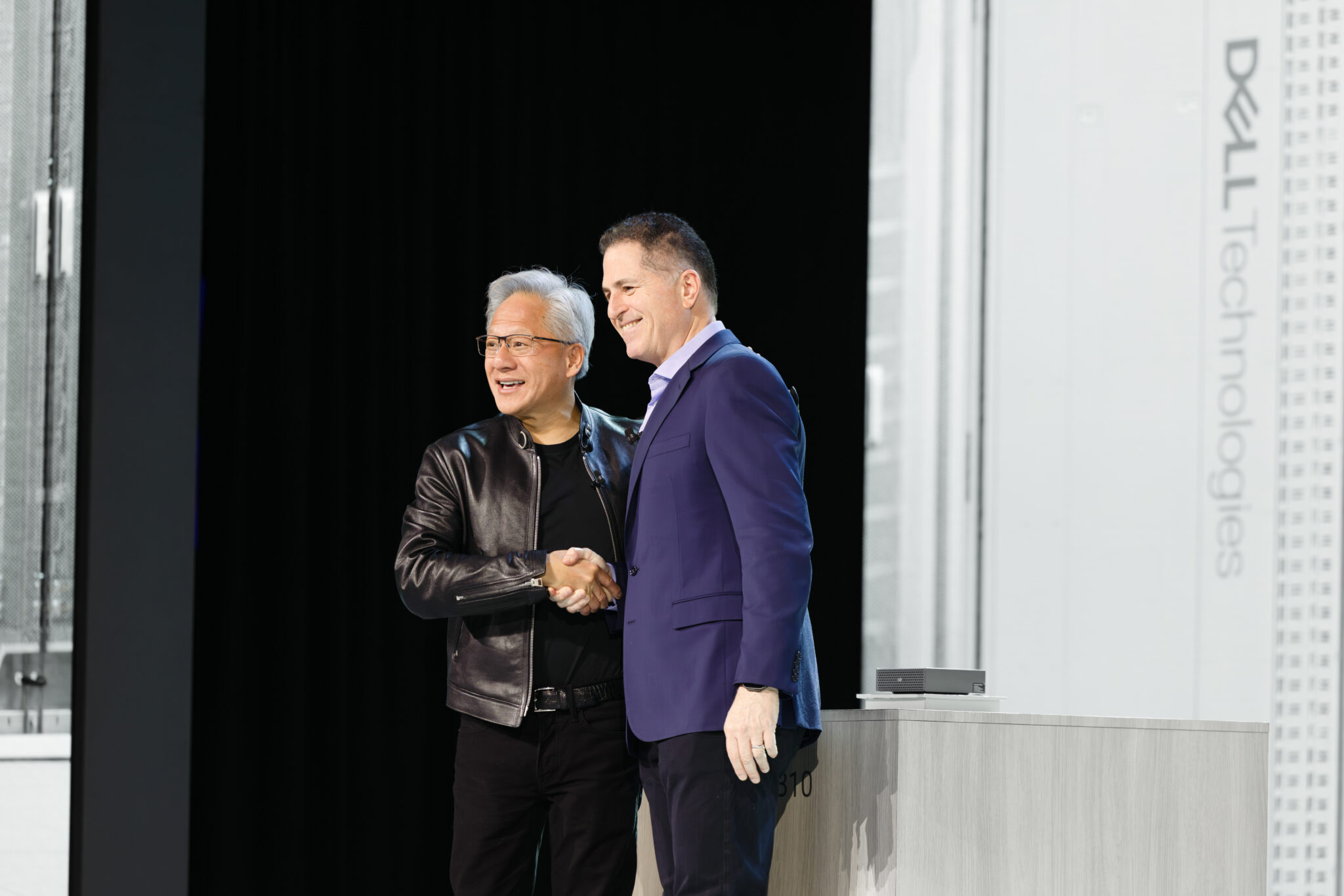
At the Dell Technologies World event held this week, the narrative surrounding artificial intelligence shifted firmly from experimental pilots to large-scale, enterprise-grade deployment. Michael Dell, chairman and CEO of Dell Technologies, opened the conference by highlighting a significant transition in the global tech landscape, noting that worldwide AI infrastructure spending is projected to reach between $3 trillion and $4 trillion by 2030. According to the company, this surge is driven by a massive increase in token consumption, which is expected to grow by 3,400% over the same period.
“There is a massive AI investment boom that’s already underway, and a productivity boom is beginning, and in some companies, including ours,” Michael Dell stated during the Monday morning keynote. He emphasized that the pace of technological change has become “parabolic,” a sentiment echoed by NVIDIA founder and CEO Jensen Huang, who joined him on stage to discuss the shift toward what he described as the “era of useful AI.”
For enterprise leaders, the core challenge remains how to integrate complex AI models into existing business workflows securely and efficiently. The hardware and software solutions unveiled at the conference aim to address this by moving AI infrastructure closer to the data source, an approach Dell refers to as the “Dell AI Factory.”
Scaling Agentic AI and Inference
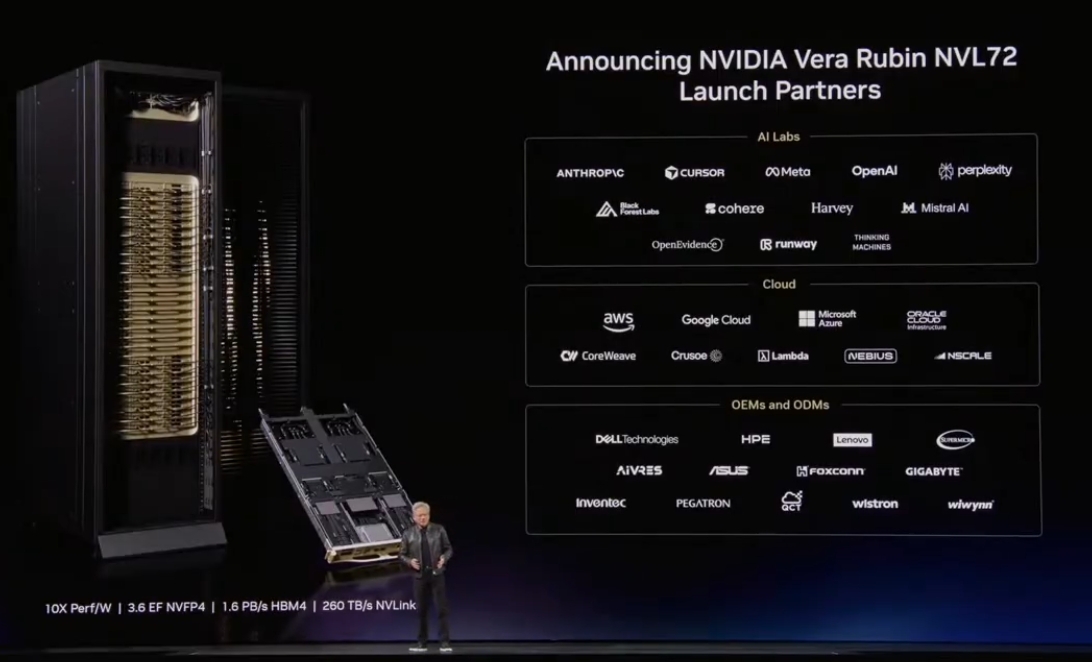
The centerpiece of the hardware announcements is the focus on “agentic AI”—autonomous systems capable of performing multi-step tasks—which require significant computational power and low-latency access to data. To support this, Dell introduced new servers, including the PowerEdge XE9812, which utilizes NVIDIA Vera Rubin NVL72 technology. The company claims this system can deliver up to 10 times lower cost-per-token compared to previous generations, a critical metric for enterprises looking to scale their AI operations without exponential cost increases.

Huang highlighted the role of the new Vera CPU in these deployments, noting its high single-threaded performance and memory bandwidth. “Vera CPU has the highest single-threaded performance of any CPU in the world,” Huang said. “It has three times the memory bandwidth—Starburst, DuckDB, all these databases run incredibly swift, because the agents are pounding on the databases, so the CPU had better be super fast.”
These hardware advancements are supported by a new integrated system, the Dell PowerRack, which combines compute, networking, and storage into a single, thermally optimized unit. This design is intended to reduce the integration overhead that often complicates the deployment of high-performance computing clusters in enterprise environments.
On-Premises AI and Security
A recurring theme during the keynote was the importance of data sovereignty and security. Dell’s internal data, shared during the event, indicates that 67% of AI workloads are currently running outside of the public cloud—situated instead on-premises, at the edge, or in colocation facilities. 88% of surveyed organizations reported that they are already running at least one AI workload on-premises.
To secure these deployments, the company is leaning heavily into NVIDIA Confidential Computing. This technology, supported by partners such as Fortanix, Google, and Red Hat, allows enterprises to run frontier models while keeping their proprietary data and model weights encrypted, even while in use. This capability is foundational for the new Google Distributed Cloud (GDC) with Gemini 3.0, which is now available in preview on Dell PowerEdge XE9780 servers.
Industry Adoption and Future Outlook
Several major enterprises shared their experiences with the Dell AI Factory during the keynote, illustrating how different sectors are applying these technologies. Diogo Rau, executive vice president and chief information and digital officer at Eli Lilly, discussed the role of AI in accelerating life sciences research. “I think we’re on the verge of maybe being able to end disease as we know it,” Rau said, noting that such advancements were tough to envision only two decades ago.
Other companies, including Samsung and Honeywell, showcased how they are using these integrated AI stacks for industrial automation, digital twins, and chip design. Honeywell’s chief technology officer, Suresh Venkatarayalu, emphasized that the partnership provides a “full AI stack” that is scalable and trusted, moving the company away from a reliance on public cloud services for sensitive industrial AI applications.
Looking ahead, the next phase of the industry’s evolution will be on display at GTC Taipei at COMPUTEX, scheduled to run from June 1 to June 4. The announcements made this week serve as a precursor to those broader developments, focusing on a future where AI agents can operate securely from the deskside workstation to the massive data center.
As the industry moves toward these more complex, autonomous workflows, the focus on security, token efficiency, and on-premises infrastructure will likely remain the primary drivers of enterprise adoption. Whether these systems can deliver on the promised productivity gains at the scale projected by the industry remains a key point of interest for analysts and IT decision-makers alike.
- Deadly Zoonotic Pathogen Killed Horses and Trainer Vic Rail in Hendra
- The Rise of Agentic AI: How Replit, Kilo Code, and Symbotic are Automating Software Engineering
- Derrick Williams Joins Seoul Samsung Thunders (world-today-news.com)
- Derrick Williams Signs With Seoul Samsung Thunders (newsdirectory3.com)