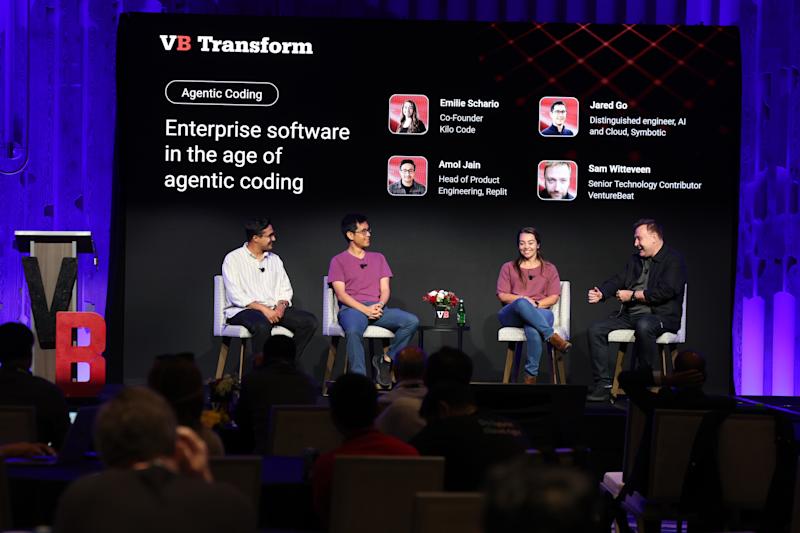
As autonomous software generation accelerates across the tech sector, companies deploying agentic artificial intelligence face an unexpected operational hurdle: skyrocketing token bills and rapidly depleting IT budgets. According to industry executives speaking at recent technology forums, development teams are finding that software engineers read or write raw code only about 1% of the time, delegating the remaining 99% of implementation and testing tasks to autonomous software agents.
This massive shift in daily developer workflows has triggered urgent internal debates among engineering leads at firms such as Replit, Kilo Code, and warehouse automation provider Symbotic. While automated coding agents excel at building brand-new codebases from scratch—commonly known as greenfield development—they frequently struggle with complex maintenance, updates, and legacy architectures, known in the industry as brownfield projects. The resulting surge in automated tasks has left management scrambling to implement cost tiers, multi-model routing, and usage caps to prevent runaway cloud bills.
Managing the High Cost of Autonomous Coding Agents
Runaway API and token costs have quickly moved past simple IT accounting issues, impacting business units far outside traditional engineering departments. At Replit, head of product engineering Amol Jain noted that a support team member recently depleted a massive allocation of resources by running an automated workflow on GPT 5.5 Pro Max. Although engineering productivity reportedly tripled during the same timeframe, the incident prompted leadership to institute stricter visibility controls and sensible model defaults to ensure employees do not automatically default to the most expensive AI tiers.
Similarly, Kilo Code co-founder Emilie Schario highlighted that client concerns often center around accidental budget exhaustion, with customers asking how to recover after consuming an entire annual allocation in a fraction of the time. To combat this, Kilo Code advocates a tiered workflow strategy: utilizing expensive, high-capability frontier models strictly for high-level architectural planning, then routing routine implementation tasks to less expensive open-weight models. Schario noted that tracking metrics like cost per pull request helps teams evaluate whether an expensive daily tool spend genuinely translates into productive software output.
Balancing Multi-Model Gateways and Cost Controls
To keep budgets manageable without sacrificing software quality, tech companies are increasingly adopting multi-model architectures. Kilo Code’s gateway currently supports over 500 distinct models, allowing engineering teams to decouple their agentic workflows from any single provider. By dynamically routing tasks based on data retention policies, regional compliance requirements, and specific programming languages, companies can optimize both cost and capability.
At Symbotic, distinguished engineer for AI and cloud Jared Go explained that corporate budgeting rules underwent a significant shift when Cursor ended a legacy flat-rate discount. That policy change forced a company-wide reckoning regarding infrastructure efficiency. In response, Symbotic established monthly cost tiers for its employees, utilizing internal tracking tools that grant engineering managers clear visibility into pull-request trends and resource consumption. Managers can then adjust user tiers upward or downward depending on verified project output.
Human Oversight and the Shift to ‘Human on the Loop’
Even as autonomous agents take over the vast majority of routine coding duties, software organizations are redefining the role of human developers to focus on architectural direction and risk assessment rather than line-by-line typing. Replit operates under a “human on the loop” philosophy rather than traditional human-in-the-loop oversight. In their internal systems, an autonomous agent evaluates each pull request, assigns an automated risk score, and allows low-risk changes to be self-merged by the author while routing complex or high-risk changes to human reviewers.
Jain recounted an instance where an engineering team was baffled by a deeply embedded software bug. Unable to reproduce the issue locally, developers routed the task to an AI manager agent. The manager orchestrated a fleet of specialized sub-agents running inside secure cloud virtual machines behind token proxies. Within six hours, the autonomous agent fleet successfully diagnosed the core defect and generated a completed pull request that resolved the persistent bug.
Despite these successes, technical leaders emphasize that AI agents still lack the product judgment required for high-level strategic decisions. According to Symbotic’s Jared Go, human guidance remains essential to ensure that generated code meets rigorous standards for security, elegance, and conciseness, especially when dealing with complex enterprise codebases where automated agents encounter significant hurdles.