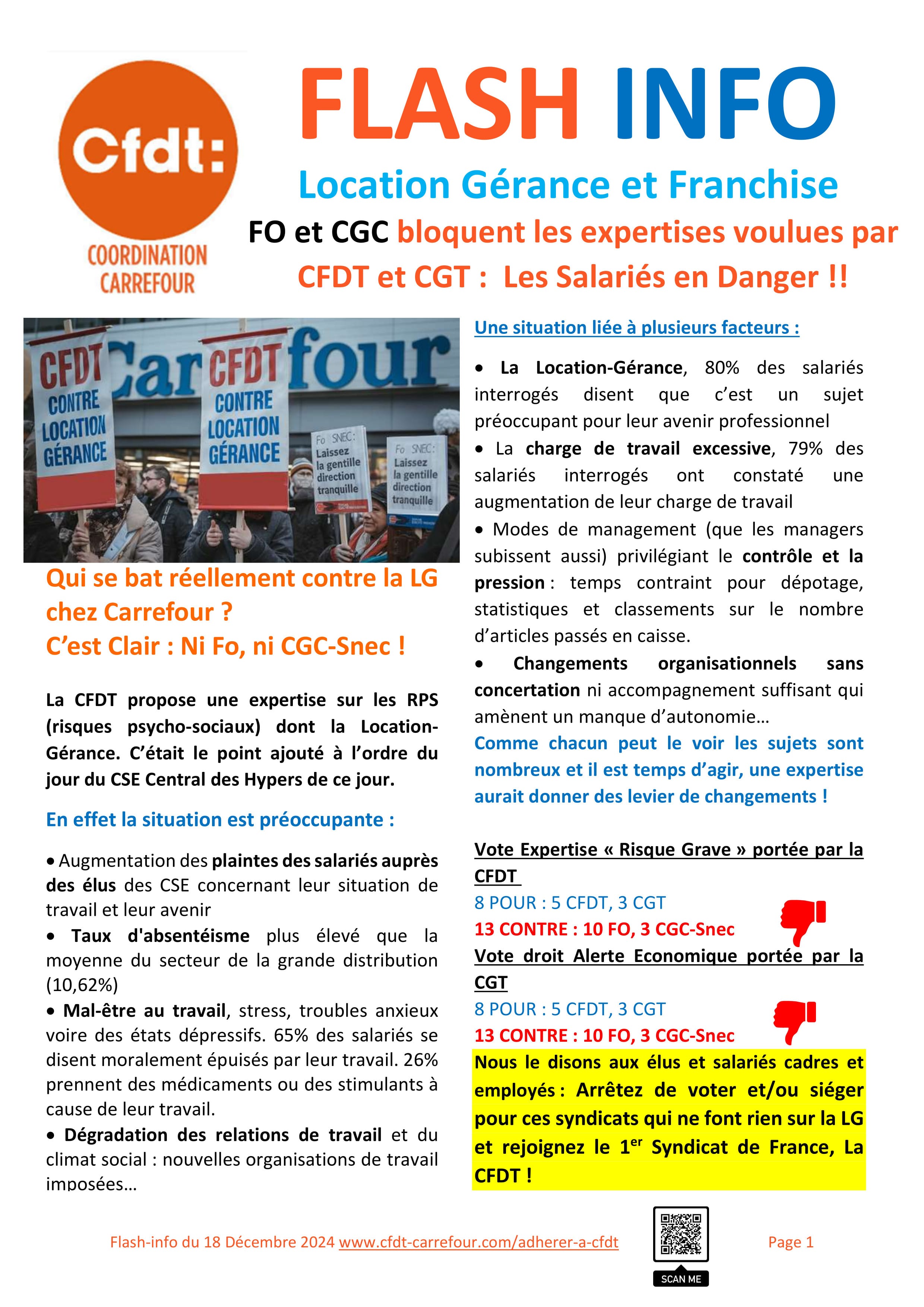
Carrefour is proceeding with plans to transition six former Cora hypermarkets into location-gérance agreements, despite reporting stronger-than-expected performance in the first quarter of 2026. The move is part of a broader strategy to shift dozens of stores to independent operators while retaining ownership of the real estate and brand. According to internal documents shared with unions in April 2026, the first wave includes 44 stores — 36 supermarkets and eight hypermarkets — affecting approximately 3,500 employees.
The decision has drawn sharp criticism from labor representatives, who argue that the location-gérance model shifts operational risks and labor costs onto independent franchisees while allowing Carrefour to remove underperforming assets from its consolidated financial statements. CFDT representatives confirmed that among the eight hypermarkets slated for change in this initial phase, six are former Cora locations recently acquired by Carrefour, along with three former Casino supermarkets. The remaining two hypermarkets in the group have not been publicly named.
Carrefour leadership maintains that the strategy is not about abandoning struggling stores but about preserving market presence in areas where full ownership may no longer be viable. Alexandre Bompard, who has led the group since 2017, reiterated in April 2026 that location-gérance has helped “avoid the closure of hypermarkets in difficulty,” a line echoed in statements to the AFP. The company emphasizes that it remains the legal owner of the fonds de commerce and the Carrefour brand, while day-to-day management is transferred to an independent operator who assumes responsibility for staffing, inventory, and local profitability.
Unions warn that the model often results in reduced wages, diminished benefits, and less job security for workers, even when the storefront continues to operate under the Carrefour sign. At a Carrefour Market in Alès, employees held a symbolic work stoppage in April 2026 to protest the impending change, citing fears of income loss and weakened representation. Similar concerns were voiced by CGT activists at the Givors location, where a call for a work stoppage was issued to block the transition, which they described as a “social catastrophe.”
Financial analysts note that the first-quarter 2026 results showed ex-Cora hypermarkets outperforming legacy Carrefour hypermarkets by two percentage points, a detail highlighted in LSA Conso’s reporting. Despite this relative strength, Carrefour is moving forward with the location-gérance shift for these six stores, suggesting the decision is driven more by long-term operational flexibility than immediate financial distress.
The company has set a target of converting 15 hypermarkets to location-gérance in 2026, which would bring the total number of such transitions since 2018 to over 388 stores, affecting more than 30,500 employees. A second list of seven additional hypermarkets under consideration for the model is expected to be shared with unions “by summer,” according to Carrefour’s confirmation to AFP. This phased approach allows the retailer to adjust based on regional performance and negotiation outcomes.
Location-gérance differs from franchising in that the operator does not pay an upfront franchise fee or ongoing royalties but instead pays a rent based on turnover and assumes full commercial risk. Carrefour retains control over national pricing, branding, and supply chain terms, while the independent operator manages local hiring, pricing adjustments within limits, and day-to-day operations. The model has become increasingly common in European retail as chains seek to optimize asset-light growth amid shifting consumer habits and rising labor costs.
As of April 2026, no official public list of the six specific former Cora hypermarkets has been released by Carrefour. Union sources remain the primary channel for store-level details, with updates expected as the summer review period approaches. Workers and local representatives continue to advocate for greater transparency and negotiated safeguards, including commitments to maintain existing wage scales and union recognition rights under the new management structure.
For ongoing updates on Carrefour’s location-gérance plan and its impact on employees and communities, readers are encouraged to follow official statements from the company’s investor relations portal and trusted labor monitoring sources.
Share your thoughts on this development in the comments below, and consider sharing this article to help others understand the evolving dynamics of retail employment in Europe.
Keep reading