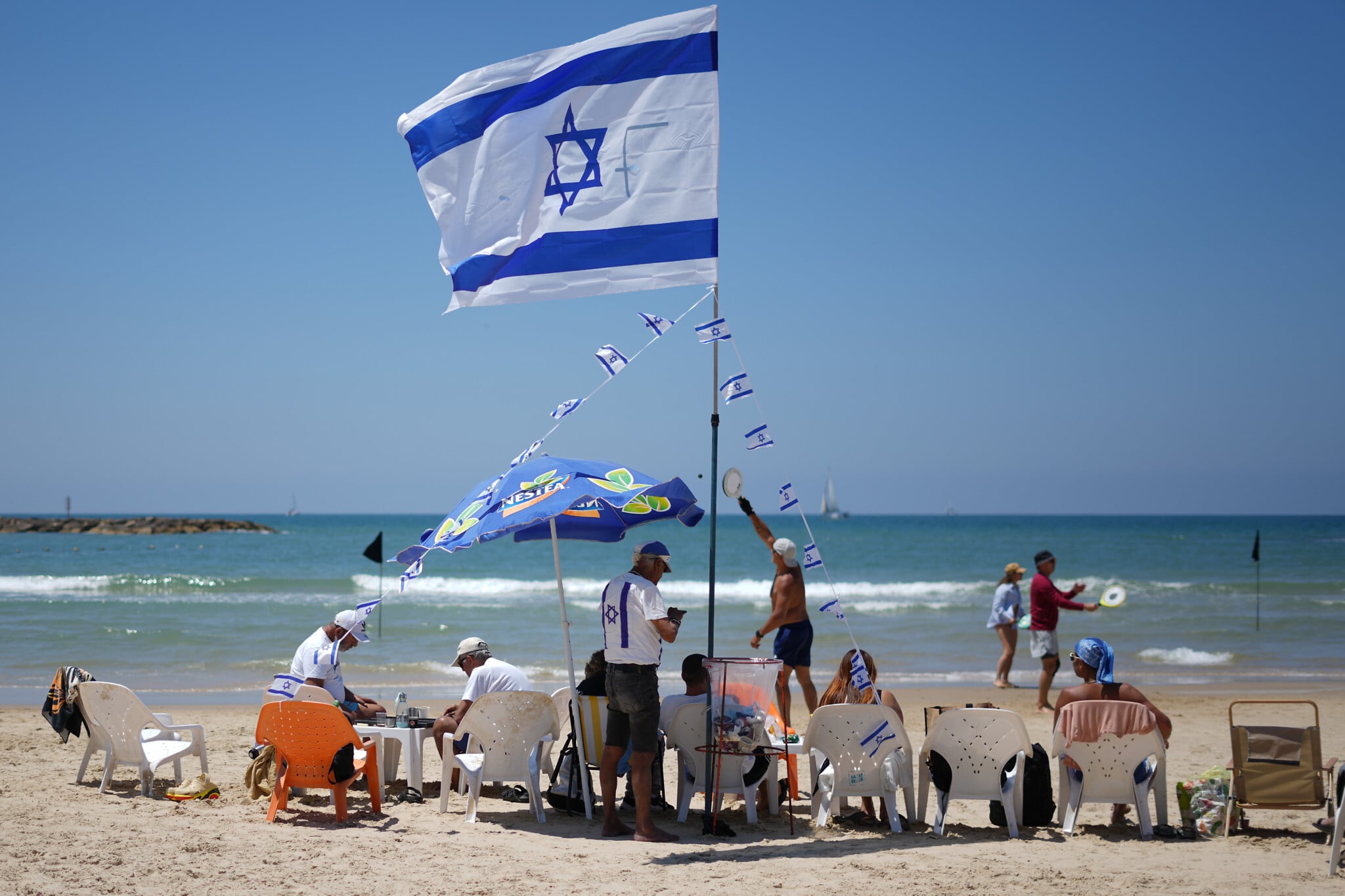
The silence that follows a ceasefire is rarely the restorative quiet of peace. In many parts of the world, and most acutely in Israel, this silence is heavy, textured by the absence of sirens but filled with the profound, vibrating tension of what might come next. For a nation caught in a cycle of intermittent violence and tenuous truces, the cessation of active combat does not necessarily signal the beginning of recovery. Instead, it often marks the onset of a different, perhaps more insidious, kind of psychological strain.
As the current landscape of regional security remains defined by what observers describe as “shaky truces” across multiple fronts, a fundamental question is emerging among mental health professionals and sociologists: can a population begin to heal when the very concept of stability is under constant threat? For many Israelis, the day-to-day reality is not one of active wartime, yet the persistent possibility of renewed conflict means that the psychological “off switch” remains elusive.
This state of existence—living in the liminal space between war and peace—creates a unique set of challenges for the national psyche. It is a condition characterized not by the acute terror of a strike, but by the chronic, draining uncertainty of its potential recurrence. As the geopolitical situation remains fluid, the distinction between a period of calm and a period of peace has become increasingly blurred, leaving a society in a state of perpetual readiness that experts warn may have long-lasting consequences.
The Paradox of the ‘Shaky Truce’
In traditional conflict models, there is a clear demarcation between the “hot” phase of war and the “cold” phase of peace. However, the current security environment suggests a third, more complex phase: the era of the intermittent truce. When truces are perceived as fragile or temporary, they fail to provide the psychological safety necessary for the human nervous system to exit a state of high alert.
Psychologically, this creates a phenomenon akin to “intermittent reinforcement,” a concept often studied in behavioral psychology where unpredictable rewards or stressors lead to heightened levels of engagement and anxiety. In a security context, the unpredictable nature of a ceasefire means that every moment of calm is shadowed by the expectation of the next eruption. This prevents the “de-escalation” of the individual’s internal stress response, keeping the body in a state of physiological readiness that is both exhausting and unsustainable.
According to research on trauma and stress responses recognized by the American Psychological Association, prolonged exposure to unpredictable threats can lead to a breakdown in the ability to regulate emotions and maintain a sense of safety. When the “peace” is seen as merely a pause in fighting rather than a structural change in the environment, the brain remains primed for survival rather than for living.
This uncertainty is compounded by the multi-fronted nature of the current tensions. The perception that conflict could emerge from several different directions simultaneously prevents the localized “settling” of anxiety. Even in areas far from immediate borders, the collective consciousness remains tethered to the possibility of a sudden shift in the security status quo.
The Science of Chronic Hypervigilance
For the individual, the most significant impact of living under the shadow of potential conflict is the development of chronic hypervigilance. Hypervigilance is a state of increased sensory sensitivity accompanied by an exaggerated intensity of behaviors whose purpose is to detect threats. While this is an evolutionary advantage in a direct combat zone, it becomes a pathological burden during periods of “shaky” stability.
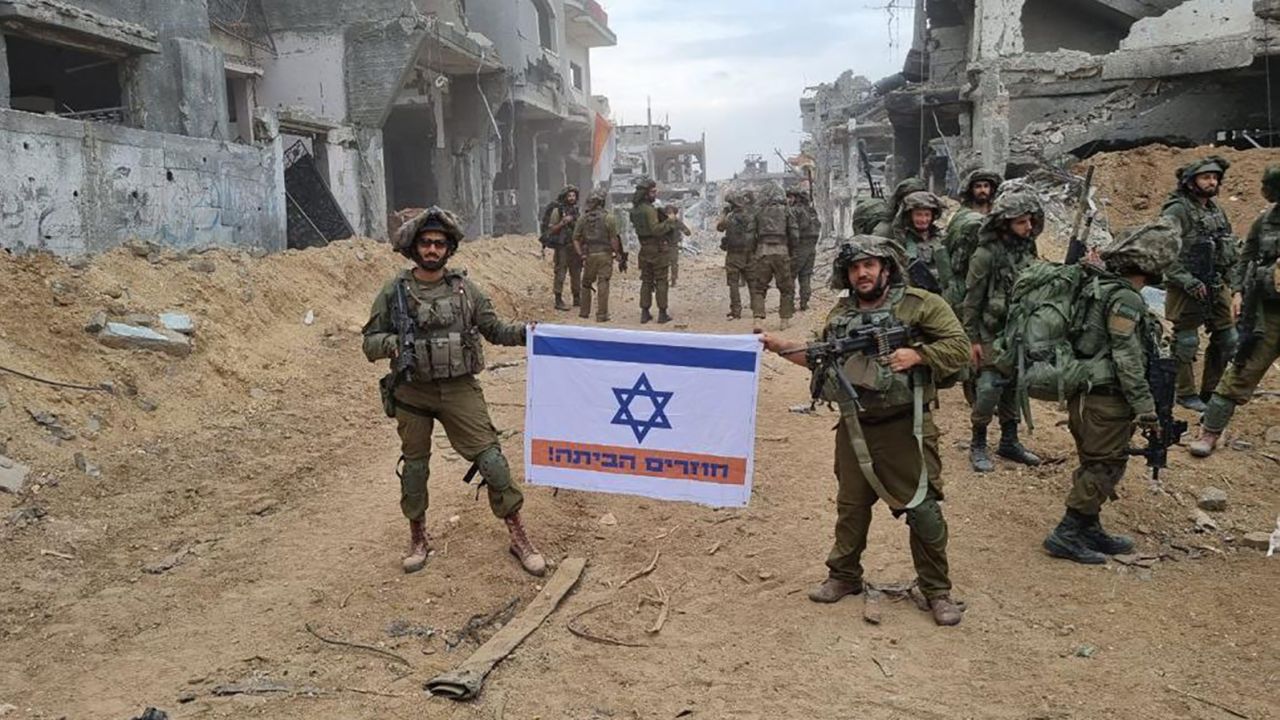
When a person is constantly scanning their environment—listening for specific sounds, monitoring news updates, or interpreting political rhetoric for signs of escalation—the body is effectively trapped in a perpetual “fight or flight” loop. This state is characterized by elevated cortisol and adrenaline levels, which, over time, can lead to a host of physical and mental health issues, including sleep disorders, cardiovascular strain, and severe anxiety.
The World Health Organization emphasizes that mental health in emergency and post-conflict settings is not merely about treating individual trauma, but about addressing the systemic stressors that prevent recovery. In a nation where the threat is “around the corner,” the systemic stressor is the lack of predictability. Without predictability, the cognitive processes required for long-term planning, emotional regulation, and social cohesion are compromised.
This “waiting for the other shoe to drop” creates a mental fatigue that is distinct from the exhaustion of active combat. It is a cognitive load that never lightens, a background process that consumes significant mental energy, leaving less capacity for the mundane but essential aspects of daily life, such as education, work, and community building.
Collective Trauma and the Erosion of Social Fabric
Beyond the individual, the psychological impact of these cycles extends to the level of the collective. Sociologists often speak of “collective trauma,” a phenomenon where a shared experience of threat or loss reshapes the identity and social dynamics of an entire population. In Israel, the recurring nature of these security tensions is weaving a specific type of communal experience: one defined by resilience, but also by a shared, underlying sense of vulnerability.
This collective state can have profound implications for social cohesion. While shared external threats can sometimes act as a unifying force, the prolonged nature of the uncertainty can also lead to increased social fragmentation. Different segments of the population may react to the instability in divergent ways—some through increased calls for decisive military action, others through a desire for diplomatic retreat, and others through a retreat into private life and emotional insulation.
the “intermittent” nature of the conflict can erode the social trust necessary for a functioning democracy. If the “normal” is constantly being disrupted, the ability of institutions to provide a sense of continuity and security is weakened. The social contract is inherently tied to a degree of predictability; when the state cannot guarantee a sustained period of peace, the psychological bond between the citizen and the state is tested.
- Impact on Youth: Children growing up in this environment may develop “normalized” anxiety, where the baseline for development is set by a state of hypervigilance rather than security.
- Economic Strain: The psychological toll manifests economically as a lack of long-term investment and a cautiousness in consumer behavior, driven by the underlying fear of sudden disruption.
- Community Resilience: While local communities often show remarkable strength during active crises, the “long-term uncertainty” phase tests the limits of social support networks.
Can a Nation Heal Without Stability?
The central challenge for psychologists and policymakers alike is the realization that a ceasefire, no matter how long it lasts, is not a substitute for stability. Healing requires more than the absence of violence; it requires the presence of security—a sense that the environment is once again predictable and that the future is something that can be planned for.
Current therapeutic approaches are increasingly looking at how to support populations in “liminal” states. This involves moving beyond traditional PTSD models, which focus on past events, toward models that address “continuous traumatic stress.” This approach recognizes that for many, the trauma is not a past event to be processed, but a current, ongoing condition to be managed.
For a society to move forward, the focus may need to shift from merely managing the symptoms of tension to addressing the structural causes of instability. This includes not only military and diplomatic efforts to secure lasting peace but also the creation of robust mental health infrastructures capable of handling a population that is perpetually “on edge.”
the ability of Israelis to move forward depends on whether the current “shaky truces” can evolve into a framework of genuine, predictable stability. Until the “possibility of conflict” is replaced by the “certainty of peace,” the nation remains in a state of suspended animation—capable of functioning, but unable to truly heal.
Next Checkpoint: Observers will be closely monitoring upcoming diplomatic negotiations and regional security developments to determine if the current period of relative calm has the potential to transition into a more stable phase.
What are your thoughts on the psychological impact of prolonged instability on modern societies? Share this article and join the conversation in the comments below.
Worth a look