
In the arid, sun-scorched landscapes of Sonora, Mexico, the sound of a metal detector clicking against the earth has become a rhythm of survival and mourning. For Cecilia Flores, this sound is not one of hope for treasure, but a desperate plea for closure. A mother whose life was fractured by the disappearance of her two sons, Flores has transformed her personal agony into a national movement, becoming one of the most visible faces of the madres buscadoras—the searching mothers of Mexico.
The plight of Cecilia Flores and the women she leads highlights a profound humanitarian crisis. In a region where organized crime and systemic institutional failure often intersect, these mothers have stepped into a void left by the state. Armed with shovels, probes, and an unbreakable resolve, they navigate dangerous territories to locate the remains of their children, often discovering mass graves that authorities had either overlooked or ignored.
Flores’ journey from a grieving parent to a prominent human rights activist reflects a broader struggle for justice in Mexico. Her work is not merely about recovery; This proves about demanding that the disappeared be recognized as human beings with names and histories, rather than statistics in a government ledger. By organizing other mothers, she has created a sisterhood of necessity, turning shared trauma into a collective force for political pressure.
As Mexico navigates a transition in leadership, the demands of the madres buscadoras have reached the highest levels of government. Cecilia Flores has emerged as a critical voice, urging the administration of President Claudia Sheinbaum to address the disappearance crisis with urgency and genuine forensic investment, particularly in the state of Sonora where the violence has left an indelible mark on thousands of families.
From Grief to Activism: The Journey of Cecilia Flores
The catalyst for Cecilia Flores’ activism was the disappearance of her own sons. The void left by their absence drove her to search for answers that the official channels were unable or unwilling to provide. In Mexico, the phenomenon of the “disappeared” (desaparecidos) is a complex tragedy; it refers to individuals who have been abducted or vanished, often by criminal cartels or through forced disappearances involving state actors, leaving families in a state of “ambiguous loss.”
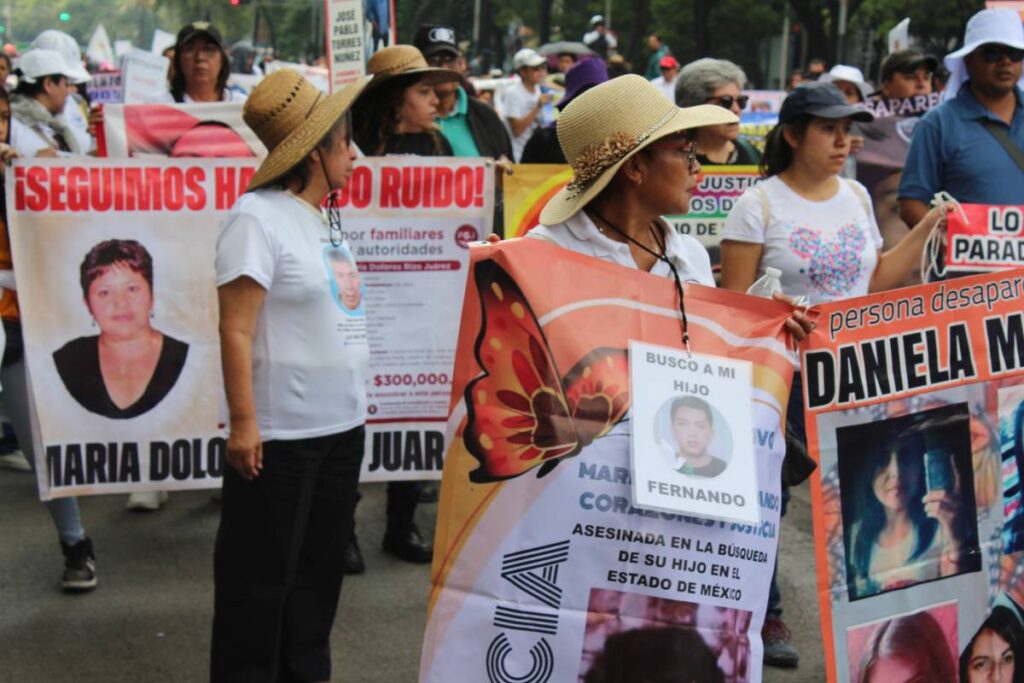
For Flores, the pain of not knowing was unsustainable. She has often spoken of the specific cruelty of disappearance—the torment of not knowing if a child is dead or alive. This emotional toll is captured in a sentiment often echoed within the movement: the idea that knowing a child is in prison is less painful than the void of a disappearance. This realization propelled her to stop waiting for government assistance and start digging.
Her efforts eventually led to the discovery of remains, a moment of devastating clarity that provided the closure she had sought for years. However, this personal resolution did not end her mission. Instead, it solidified her role as a leader. Flores recognized that her experience was not unique, but rather a symptom of a systemic collapse in public safety and judicial accountability across northern Mexico.
The ‘Madres Buscadoras’: A Grassroots Response to State Failure
The madres buscadoras are not a single formal organization but a widespread grassroots phenomenon. These women, often marginalized by society and ignored by law enforcement, have formed collectives to share resources, emotional support, and tactical knowledge. They use basic tools—metal detectors, GPS devices, and hand shovels—to search fields, forests, and urban lots.
The necessity of these collectives stems from a deep-seated mistrust of official institutions. Many mothers report that when they first filed missing persons reports, they were met with apathy, told their children had simply “run away,” or were even accused of being involved in criminal activity. By taking the search into their own hands, the madres buscadoras have uncovered hundreds of clandestine graves, often forcing the government to acknowledge the scale of the violence.
This work is fraught with extreme danger. Searching for the disappeared often means trespassing on land controlled by organized crime. Activists in this space have faced threats, surveillance, and in some cases, assassination. Despite these risks, the bond between the mothers provides a protective layer of visibility. By searching in groups and documenting their progress on social media, they attempt to create a shield of public attention that makes it harder for perpetrators to silence them.
A National Crisis: The Scale of Disappearances in Mexico
The struggle led by Cecilia Flores takes place against a backdrop of staggering numbers. Mexico is facing one of the world’s most severe crises of forced disappearances. While exact figures are often contested due to underreporting and administrative gaps, the scale is immense. According to data from the Office of the United Nations High Commissioner for Human Rights (OHCHR), the number of missing persons in Mexico has climbed into the tens of thousands, with some estimates suggesting over 100,000 people have vanished over the last two decades.
The crisis is not evenly distributed; states like Sonora, Tamaulipas, and Guerrero have seen disproportionate levels of violence due to their strategic importance for drug trafficking routes. In these regions, the “disappearance” is often used as a tool of terror by cartels to maintain control over local populations and intimidate rivals.
The challenge is compounded by a forensic backlog. Even when remains are found, the process of identification is agonizingly slow. Mexico lacks sufficient forensic anthropologists and geneticists to process the volume of remains discovered in mass graves. Which means that many mothers find the site where their children were buried, but must wait years for a DNA test to confirm the identity of the remains.
Demanding Accountability from the Sheinbaum Administration
With the inauguration of President Claudia Sheinbaum, the madres buscadoras have renewed their calls for a systemic shift in how the state handles the disappeared. Cecilia Flores has been vocal in her demands, specifically calling for the federal government to prioritize the crisis in Sonora.
The demands of the movement generally center on three key pillars:
- Increased Forensic Funding: Expanding the capacity of medical examiners and forensic labs to accelerate the identification of remains.
- Security for Searchers: Providing official protection for mothers and activists who are searching in high-risk zones.
- Judicial Reform: Moving beyond the “recovery” of bodies to the “prosecution” of the perpetrators, ensuring that the discovery of a grave leads to a criminal investigation rather than just a burial.
The transition to a new administration provides a window for these demands to be integrated into national security policy. However, the madres buscadoras remain cautious. They have seen previous administrations make promises of “humanist” security policies that failed to translate into a reduction in disappearances or an increase in solved cases.
The Human Cost of the ‘Search’
Beyond the politics and the statistics, the work of Cecilia Flores is defined by a profound human cost. The act of digging for one’s own child is a trauma that defies description. Yet, for many of these women, the search has become their primary identity and their only way to maintain a connection to their lost children.
Flores often speaks of the “true family” she found among the other searching mothers. This solidarity is the engine of the movement. When one mother finds a clue, the others mobilize. When a body is identified, the collective mourns together. This network of support transforms a private tragedy into a public demand for dignity.
The goal for Flores and her peers is not just to find bones, but to force the Mexican state to confront the reality of its failure to protect its citizens. Their persistence serves as a living archive of the violence that the state would prefer to forget.
The next critical checkpoint for the movement will be the ongoing dialogue between human rights collectives and the federal government regarding the implementation of new forensic protocols and the allocation of resources for the 2026 fiscal year. The madres buscadoras continue to monitor whether the promises of the Sheinbaum administration will manifest as tangible changes in the fields of Sonora.
We invite our readers to share their thoughts on the global struggle for human rights and the role of grassroots activism in the comments below. Please share this story to bring further visibility to the search for the disappeared.
Related reading